
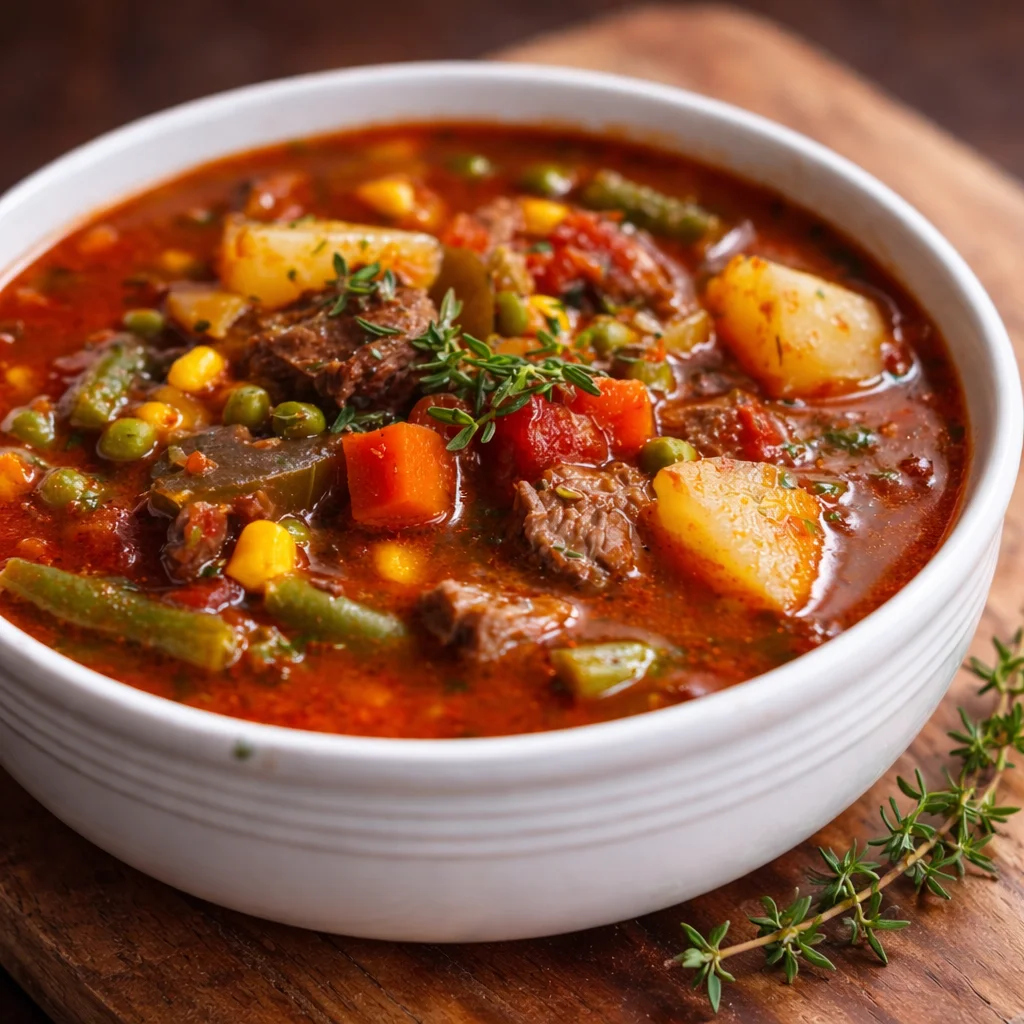
Beef soup is one of those meals you crave when your body needs something warm, filling, and easy to digest. Ever have days where your stomach feels off but you still want something comforting and real? This simple, old-fashioned vegetable beef soup delivers exactly that, a nourishing bowl that feels like home while supporting your digestion.
- The Ultimate Old-Fashioned Vegetable Beef Soup for Gut Health
- Why This Anti-Inflammatory Vegetable Beef Soup is Better for Your Digestion
- Key Ingredients for a Nutrient-Dense and Microbiome-Supportive Broth
- Selecting the Best Grass-Fed Beef for Bioavailable Protein and Collagen
- High-Fiber Root Vegetables: The Prebiotic Power of Carrots and Potatoes
- Essential Kitchen Tools for the Perfect Slow-Simmered Beef Soup
- Easy Step-by-Step Instructions for Stovetop or Slow Cooker
- Pro Tips for Extra Tender Beef and Richer Savory Flavor
- Common Mistakes That Make Homemade Vegetable Soup Bland
- Healthy Ingredient Substitutions: Low-FODMAP, Grain-Free, and Nightshade-Free Options
- Creative Recipe Variations: High-Protein, Keto-Friendly, or Ground Beef Versions
- How to Store, Reheat, and Freeze Vegetable Beef Soup for Meal Prep
- Perfect Serving Suggestions: Gut-Friendly Sides and Toppings
- Nutritional Highlights: Vitamins, Minerals, and Digestive Benefits per Serving
- Common Questions
- A Cozy Pot You Will Come Back To
- Old-Fashioned Vegetable Beef Soup
The Ultimate Old-Fashioned Vegetable Beef Soup for Gut Health
This is not a trendy soup. It is the kind of meal that quietly works in the background, giving you veggies, broth, and protein all in one bowl. When I say “gut friendly,” I mostly mean this: it is warm, hydrating, full of fiber, and easy to portion out for a few days. Plus, it is a great way to get more vegetables in without feeling like you are forcing it.
I also love pairing it with other gentle soup ideas when we are in a “soups all week” phase. If that is you, too, check out this cozy list of gut healing soups. It is the kind of page you bookmark and come back to when you are tired and hungry.
Why This Anti-Inflammatory Vegetable Beef Soup is Better for Your Digestion
When my stomach feels a little off, I want food that is not too greasy, not too spicy, and not loaded with hard to digest extras. My Mom’s Old-Fashioned Vegetable Beef Soup checks those boxes without being boring. You get tender beef, soft vegetables, and a broth that tastes rich but still feels clean.
A few digestion friendly reasons it works:
Warm broth can feel soothing and helps you stay hydrated.
Cooked vegetables are often easier on the stomach than raw ones.
A mix of protein, fiber, and a bit of healthy fat helps you stay full longer, so you are less likely to reach for snacks later in the evening.
If you like the idea of soups that lean anti-inflammatory, you might also enjoy this round-up style post about anti-inflammatory soup. I pull ideas from it when I want to switch up flavors without losing the cozy vibe.
Key Ingredients for a Nutrient-Dense and Microbiome-Supportive Broth
Let us talk ingredients, because this is where the magic really happens. My mom never measured like a scientist, but she always hit the same “core” list. I do the same now, and it still tastes like home.
Here is what I use most often:
- Beef: chuck roast is my favorite, but stew meat works in a pinch.
- Onion and garlic: for that deep, cozy base flavor.
- Carrots and potatoes: the classic old-fashioned combo.
- Celery: optional, but it adds a nice savory background.
- Diced tomatoes or tomato paste: adds body and a little tang.
- Beef broth plus water: I like a mix so it is flavorful but not too salty.
- Green beans, peas, or corn: whatever you have.
- Bay leaf, salt, pepper: simple seasonings that do a lot.
Quick tip, carrots bring a natural sweetness and depth that really shapes the flavor of this soup. If you enjoy carrot-based soups, you can take inspiration from similar cozy recipes to build on that taste.
Selecting the Best Grass-Fed Beef for Bioavailable Protein and Collagen
I am not here to make your grocery bill stressful. Use what you can afford. But when I can grab grass-fed beef, I do, mostly because I like the taste and it tends to feel a bit “cleaner” to me. For soup, collagen rich cuts are your friend because they break down slowly and give the broth that silky feel.
What to look for:
Chuck roast, shoulder, or labeled stew beef.
Some marbling, because fat equals flavor.
Cut it into chunks yourself if you can, since pre-cut stew meat can be a little random in texture.
High-Fiber Root Vegetables: The Prebiotic Power of Carrots and Potatoes
Carrots and potatoes are the heart of this soup, and they are also what makes it feel old-fashioned in the best way. They soak up the broth, soften into that perfect spoon-tender texture, and bring a natural sweetness that balances the beef.
My tip is to cut them into pieces that match the vibe you want. Big chunks feel rustic and hearty. Smaller pieces make it feel more “scoopable” and kid friendly.
If potatoes do not work for you, do not worry. I will share swaps in a later section.
Essential Kitchen Tools for the Perfect Slow-Simmered Beef Soup
You do not need fancy gear for My Mom’s Old-Fashioned Vegetable Beef Soup, but a few basics make it easier.
Here is what I reach for:
A big pot with a lid, or a slow cooker.
A sturdy cutting board because there is a lot of chopping.
A sharp knife that does not make you fight your carrots.
A wooden spoon for stirring and scraping up flavor.
If you have a ladle, great. If not, a big measuring cup works fine. I have done it. No shame.
Easy Step-by-Step Instructions for Stovetop or Slow Cooker
This is one of those recipes where you can relax. The soup does most of the work.
Stovetop method
1) Brown the beef in a little oil. Do it in batches if you need to. Sprinkle with salt and pepper.
2) Add onion and garlic. Stir for a minute or two.
3) Add broth, water, tomatoes, and bay leaf. Bring it to a gentle simmer.
4) Simmer covered until the beef is getting tender, usually 60 to 90 minutes depending on the cut.
5) Add carrots and potatoes. Simmer until they are tender, about 20 to 30 minutes.
6) Stir in green beans, peas, or corn near the end so they do not turn to mush.
7) Taste and adjust salt and pepper. Remove the bay leaf.
Slow cooker method
If I know I will have a busy day, I do this: brown the beef first if I have time, then toss everything except quick cooking frozen veggies into the slow cooker. Cook on low for 7 to 8 hours or high for 4 to 5 hours. Add peas or corn in the last 20 minutes.
Pro Tips for Extra Tender Beef and Richer Savory Flavor
If your soup ever tastes “fine” but not amazing, these little tips help a lot.
Brown the beef if you can. It adds depth fast.
Simmer low and slow. A rolling boil can make meat tough.
Salt in layers. A pinch early and a final adjustment at the end is better than dumping it all in at once.
Let it rest. This soup tastes better after it sits for 20 minutes, and it tastes even better the next day.
Common Mistakes That Make Homemade Vegetable Soup Bland
I have made all of these mistakes, especially when I am rushing. Here is what usually causes that bland, flat flavor.
Not using enough salt, or only salting at the end.
Skipping the onion and garlic base.
Adding all vegetables at the same time, so some turn watery and dilute the broth.
Using super watery broth and not letting it simmer long enough.
Forgetting acid. Even a spoon of tomatoes helps, or a tiny splash of vinegar at the end if it tastes dull.
Healthy Ingredient Substitutions: Low-FODMAP, Grain-Free, and Nightshade-Free Options
One thing I appreciate about My Mom’s Old-Fashioned Vegetable Beef Soup is how easy it is to adjust without losing the “homey” feel.
Low-FODMAP ideas: use garlic infused oil instead of garlic cloves, go lighter on onion, and choose veggies that work for you.
Grain-free: this soup is naturally grain-free unless you add pasta or barley.
Nightshade-free: skip tomatoes and use extra broth plus a little splash of lemon at the end for brightness. Also avoid white potatoes and use sweet potatoes instead if you tolerate them.
Creative Recipe Variations: High-Protein, Keto-Friendly, or Ground Beef Versions
Once you get the base down, you can play with it depending on what you need that week.
High-protein: add extra beef, or stir in a can of rinsed white beans if that works for you.
Keto-friendly: skip potatoes and corn. Add chopped zucchini, cauliflower, and extra green beans.
Ground beef version: brown ground beef with onion first, drain excess fat, then continue like normal. It is faster and still really satisfying.
If cauliflower soups are your thing, you might like this cozy dinner idea: best cauliflower chicken soup for a cozy healthy dinner.
How to Store, Reheat, and Freeze Vegetable Beef Soup for Meal Prep
This soup is basically made for leftovers. I swear it tastes better after a night in the fridge.
Fridge: store in airtight containers for up to 4 days.
Freezer: freeze in portion sized containers for up to 3 months. Leave a little room at the top because soup expands.
Reheating: warm it gently on the stove or microwave. If it thickens in the fridge, add a splash of broth or water and stir.
Perfect Serving Suggestions: Gut-Friendly Sides and Toppings
I keep toppings simple. This soup already has a lot going on, and I like letting the broth shine.
- Fresh parsley or chopped chives
- A squeeze of lemon if it needs brightness
- Grated parmesan if you want it a little richer
- Crackers, sourdough, or a simple rice side if you want to stretch it
If you are on a soup kick, this one is also a cozy companion recipe for later in the week: anti-inflammatory chicken soup thats cozy and easy to make.
Nutritional Highlights: Vitamins, Minerals, and Digestive Benefits per Serving
I am not a dietitian, but I can tell you what you are generally getting in a bowl and why it feels so nourishing.
Protein from beef to keep you full.
Iron, zinc, and B vitamins that support energy.
Fiber from vegetables to support regular digestion.
Fluids and minerals from broth to help with hydration, especially in cold season.
The best part is that it is real food you can recognize. Nothing weird, nothing fussy.
Common Questions
Can I make this soup ahead of time?
Yes, and you should if you can. My Mom’s Old-Fashioned Vegetable Beef Soup gets better overnight, like the flavors finally get to know each other.
What cut of beef works if I cannot find chuck roast?
Stew meat works, but pick pieces with some marbling if possible. Brisket or round can work too, just plan on a longer simmer for tenderness.
How do I fix soup that tastes bland?
Add a pinch more salt, a little pepper, and a small splash of acid like lemon juice or vinegar. Also let it simmer uncovered for 10 to 15 minutes to concentrate the broth.
Can I use frozen vegetables?
Totally. Add them near the end so they stay bright and do not turn mushy.
Is it okay to skip tomatoes?
Yes. Use extra broth and add a squeeze of lemon at the end to wake up the flavor.
A Cozy Pot You Will Come Back To
If you want a recipe that feels like home, My Mom’s Old-Fashioned Vegetable Beef Soup is the one I would hand you first. It is easy, flexible, and it turns simple ingredients into something that genuinely makes you feel taken care of. If you want to see another homey take, you can compare notes with My Mom’s Old-Fashioned Vegetable Beef Soup – Smile Sandwich and make it your own from there. Put on a big pot, let it simmer, and give yourself permission to enjoy a dinner that is both practical and comforting.
Old-Fashioned Vegetable Beef Soup
Ingredients
Method
- Brown the beef in a little oil until it is well-seared. Sprinkle with salt and pepper.
- Add onion and garlic, stirring for 1-2 minutes until fragrant.
- Pour in the beef broth, water, diced tomatoes, and add bay leaf. Bring to a gentle simmer.
- Cover and simmer until the beef is tender, about 60 to 90 minutes.
- Add chopped carrots and potatoes. Simmer until tender, about 20 to 30 minutes.
- Stir in green beans, peas, or corn in the last few minutes of cooking to avoid mushiness.
- Taste and adjust salt and pepper as needed. Remove the bay leaf before serving.
- Brown the beef in a skillet if time allows. Place the beef and all other ingredients except quick cooking vegetables into the slow cooker.
- Cook on low for 7 to 8 hours or on high for 4 to 5 hours.
- Add peas or corn in the last 20 minutes of cooking time.