
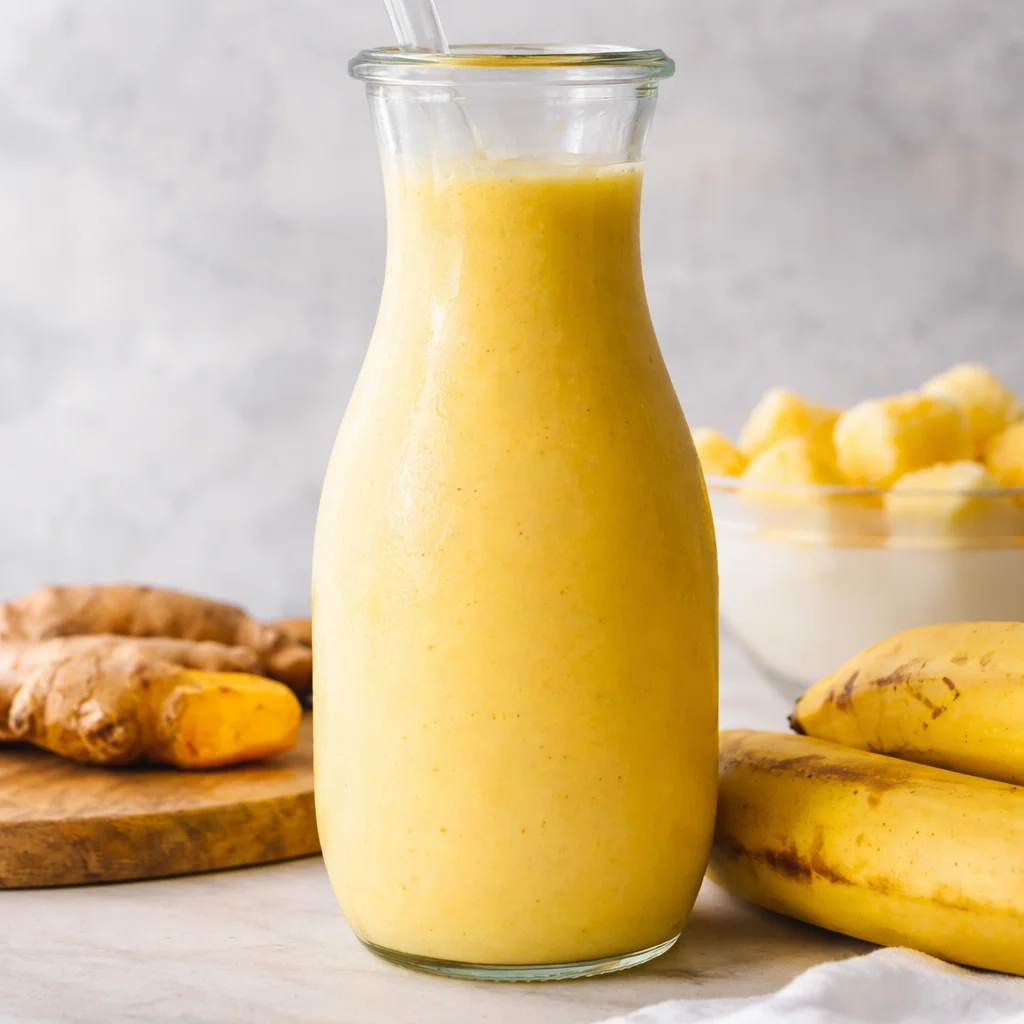
Anti-Inflammatory Turmeric Smoothie might be exactly what your gut needs after a heavy meal, a stressful week, or those mornings when your stomach feels a little off. Turmeric and ginger bring natural anti-inflammatory support, while pineapple and yogurt add gut-friendly nutrients that help digestion feel smoother. The best part is how simple it is. With just a few ingredients and a blender, you can make a creamy smoothie that supports gut health, helps reduce bloating, and still tastes bright and refreshing.
- Key Ingredients for the Best Anti-Inflammatory Pineapple Turmeric Smoothie
- Ingredient Substitutions (Dairy-Free, Vegan, Low-FODMAP, and Low-Sugar Options)
- How to Make a Pineapple Turmeric Smoothie Step-by-Step
- Pro Tips for the Creamiest and Most Flavorful Turmeric Smoothie
- Common Smoothie Mistakes That Can Reduce Nutritional Benefits
- Healthy Recipe Variations (High-Protein, Vegan, Detox, and Weight-Loss Options)
- Serving Ideas for a Healthy Breakfast or Post-Workout Smoothie
- Meal Prep and Storage Tips for Smoothies
- Nutritional Highlights: Anti-Inflammatory and Gut-Healing Benefits
- Best Add-Ins to Boost Gut Health (Probiotics, Fiber, and Superfoods)
- Related Gut Health Recipes You May Also Enjoy
- Common Questions
- A little pep talk before you blend
- Anti-Inflammatory Turmeric Smoothie
Key Ingredients for the Best Anti-Inflammatory Pineapple Turmeric Smoothie
This is my usual lineup because it balances healthy ingredients with flavors you will genuinely enjoy. The pineapple keeps it cheerful and sweet, and the turmeric gives it that warm golden vibe.
Here is what you will need for one big smoothie (or two smaller ones):
- Frozen pineapple (about 1 and 1/2 cups): makes it cold and thick without needing ice.
- Banana (1 small, fresh or frozen): makes it creamy and balances the turmeric.
- Turmeric (1 teaspoon ground or 1 tablespoon fresh grated): the star of this Anti-Inflammatory Turmeric Smoothie.
- Black pepper (a tiny pinch): sounds weird, but it helps your body use turmeric better.
- Ginger (1/2 teaspoon ground or a small knob fresh): adds a clean spicy kick.
- Greek yogurt (1/2 cup) or a dairy free yogurt: gives it protein and that milkshake texture.
- Milk of choice (3/4 to 1 cup): I usually do unsweetened almond milk.
- Optional: a squeeze of lemon or lime for extra brightness.
If you like the food as much as the “why,” you might also like this easy list of anti-inflammatory foods for gut health and energy. I refer back to it when I am building grocery lists.
Ingredient Substitutions (Dairy-Free, Vegan, Low-FODMAP, and Low-Sugar Options)
I love a recipe that does not fall apart the second you swap one ingredient. This smoothie is forgiving, so you can make it work for your needs.
Easy swaps that still taste great
Dairy free or vegan: Use coconut yogurt or almond milk yogurt instead of Greek yogurt. For extra creaminess, add 1 to 2 tablespoons of canned coconut milk.
Low-FODMAP: Skip the banana and use 1/2 cup frozen strawberries or dragon fruit for thickness. Pineapple is usually tolerated in reasonable portions, but listen to your body.
Low sugar: Use 1 cup pineapple instead of 1 and 1/2 cups, and add 1/2 avocado for creaminess. You can also use unsweetened kefir or plain yogurt and avoid sweetened milks.
No yogurt at all: Add chia seeds (1 tablespoon) plus a little extra milk, then blend longer. It thickens up nicely.
This smoothie also works well alongside a simple breakfast if you are trying to build a balanced morning routine. I keep a running list of warm and cold options, and these anti-inflammatory breakfast ideas are honestly a lifesaver when I get bored.
How to Make a Pineapple Turmeric Smoothie Step-by-Step
Blending this smoothie should stay simple and stress free. This is the easiest part of my day most mornings.
1) Add your liquid first. Milk goes in the blender before anything else so the blades do not get stuck.
2) Add yogurt (or your substitute). This helps everything blend into that creamy, spoonable texture.
3) Add frozen pineapple and banana. Frozen fruit is the secret to a thick smoothie without watery ice.
4) Add turmeric, ginger, and a pinch of black pepper. Start small with pepper. You do not want it tasting like soup.
5) Blend until smooth. If it is too thick, add a splash more milk. If it is too thin, add more frozen pineapple.
That is it. Your Anti-Inflammatory Turmeric Smoothie is ready in about two minutes, even with that quick pause while deciding how much ginger to add.
Pro Tips for the Creamiest and Most Flavorful Turmeric Smoothie
I have made this enough times to know what makes it great versus just okay.
Use frozen pineapple. Fresh pineapple tastes amazing, but frozen is what gives you that thick smoothie shop texture.
Grate fresh turmeric if you can. Ground turmeric works, but fresh turmeric has a brighter flavor. Just be careful because it stains cutting boards and fingers like crazy.
Add citrus. A squeeze of lemon or lime makes everything taste more awake and less flat.
Taste and adjust at the end. Some pineapples are super sweet, some are tart. If it tastes too sharp, add a bit more banana or yogurt.
Common Smoothie Mistakes That Can Reduce Nutritional Benefits
I have made all of these mistakes, usually when I am rushing.
Going heavy on juice. Juice can push the sugar up fast. I stick to milk, kefir, or water with a little yogurt for balance.
Skipping protein or healthy fat. If your smoothie is only fruit, it may not keep you full. Yogurt, chia, flax, or nut butter helps.
Using a ton of sweet add ins. Honey, sweetened yogurt, and sweetened milks stack quickly. Keep it simple, then sweeten only if you really need it.
Not blending long enough. If you are using fresh ginger or grated turmeric, blend a little longer so you do not get surprise chunks.
Healthy Recipe Variations (High-Protein, Vegan, Detox, and Weight-Loss Options)
This is where you can adjust the smoothie to fit your goals without making the recipe complicated.
High-protein: Add a scoop of plain protein powder or 1/2 cup cottage cheese. It turns your Anti-Inflammatory Turmeric Smoothie into a legit meal.
Vegan: Use plant yogurt and add hemp seeds for extra protein.
Detox-ish (gentle version): Add a handful of spinach and a squeeze of lemon. I am not big on extreme “detox” talk, but greens and fiber can help you feel lighter.
Weight-loss friendly: Use a smaller portion of pineapple, keep the banana to half, and add chia seeds plus cinnamon for flavor without extra sugar.
Serving Ideas for a Healthy Breakfast or Post-Workout Smoothie
Most days I drink it straight from a big glass. But if you want to make it feel like more of a moment, here are a few easy ways.
- Smoothie bowl: Make it extra thick, pour into a bowl, and top with sliced banana, pumpkin seeds, and coconut flakes.
- Post-workout: Add protein powder and a spoon of peanut butter for staying power.
- On-the-go: Pour into an insulated cup and bring a straw. It stays cold longer than you would think.
If you are in a phase where you are trying to keep dinners just as easy as breakfast, I also lean on these 30-minute anti-inflammatory dinners when my day gets chaotic.
Meal Prep and Storage Tips for Smoothies
I do not always meal prep, but smoothie packs are the one habit I stick with because they make busy mornings easier.
Freezer packs: Add pineapple, banana, and ginger into freezer bags. Then in the morning you dump, add liquid and yogurt, and blend.
Fridge storage: You can store the blended smoothie in a sealed jar for about 24 hours. It will separate a bit, so shake it well. The flavor is best fresh, but it is still totally drinkable the next day.
Stain warning: Turmeric stains. Rinse your blender right away with soap and warm water.
Nutritional Highlights: Anti-Inflammatory and Gut-Healing Benefits
I am not a doctor, but I do pay attention to what helps me feel good. This Anti-Inflammatory Turmeric Smoothie works for me because it covers a lot of bases without being complicated.
Turmeric plus black pepper is the classic combo people talk about for inflammation support.
Pineapple brings vitamin C and that fresh, happy flavor that keeps this from tasting “too healthy.”
Ginger is great when your stomach feels off or you want that warming, soothing feeling.
Yogurt or kefir can add probiotics, which is a nice bonus if your gut has been feeling dramatic lately.
Best Add-Ins to Boost Gut Health (Probiotics, Fiber, and Superfoods)
If you want to level it up, here are add ins I actually use and keep in my pantry.
Probiotic boost: Kefir instead of milk, or a spoon of plain yogurt with live cultures.
Fiber boost: Chia seeds, ground flax, or oats. Start with 1 tablespoon so it does not turn into pudding.
Superfood extras: Hemp seeds, cinnamon, cacao nibs (a little), or collagen peptides if you use them.
Greens: A handful of spinach disappears into the pineapple flavor. I promise.
Related Gut Health Recipes You May Also Enjoy
If you are currently focusing on anti-inflammatory foods, you are not alone. Once you start feeling better, you want more easy wins.
For a cozy dinner vibe, I love recipes like this anti-inflammatory chicken soup when I want something comforting that still feels supportive.
And if you want to go deeper on the “why,” the overview of anti-inflammatory diet benefits is a helpful read when you are trying to connect the dots between food choices and how you feel day to day.
Common Questions
1) Can I use fresh pineapple instead of frozen?
Yes. Just add a handful of ice, or freeze the banana so it still turns out thick and cold.
2) Will turmeric make my smoothie taste bitter?
Not if you keep it around 1 teaspoon ground. The pineapple and banana cover a lot. If it tastes too earthy, add a squeeze of lemon and a bit more pineapple.
3) Do I really need black pepper?
A tiny pinch is worth it for the classic turmeric pairing. If you hate pepper, you can skip it, but I recommend at least trying it once.
4) How can I make it more filling?
Add protein powder, chia seeds, or nut butter. Even 1 tablespoon of almond butter makes it feel like a full breakfast.
5) Can kids drink this?
Usually, yes. I would reduce the turmeric a little for picky eaters and keep the ginger mild.
A little pep talk before you blend
Anti-Inflammatory Turmeric Smoothie is one of the easiest habits you can add to a gut-friendly routine. It combines anti-inflammatory ingredients, probiotics, and natural fiber in a simple drink that supports digestion without feeling restrictive. Once you find the version that fits your taste, it quickly becomes a go to option for busy mornings, post-workout fuel, or a light breakfast that keeps your gut feeling balanced and energized.
Anti-Inflammatory Turmeric Smoothie
Ingredients
Method
- Add your liquid first by pouring the milk into the blender.
- Add yogurt (or your substitute) to help achieve a creamy texture.
- Add frozen pineapple and banana for thickness.
- Add turmeric, ginger, and a pinch of black pepper.
- Blend until smooth. Adjust the thickness by adding more milk or frozen pineapple as needed.