
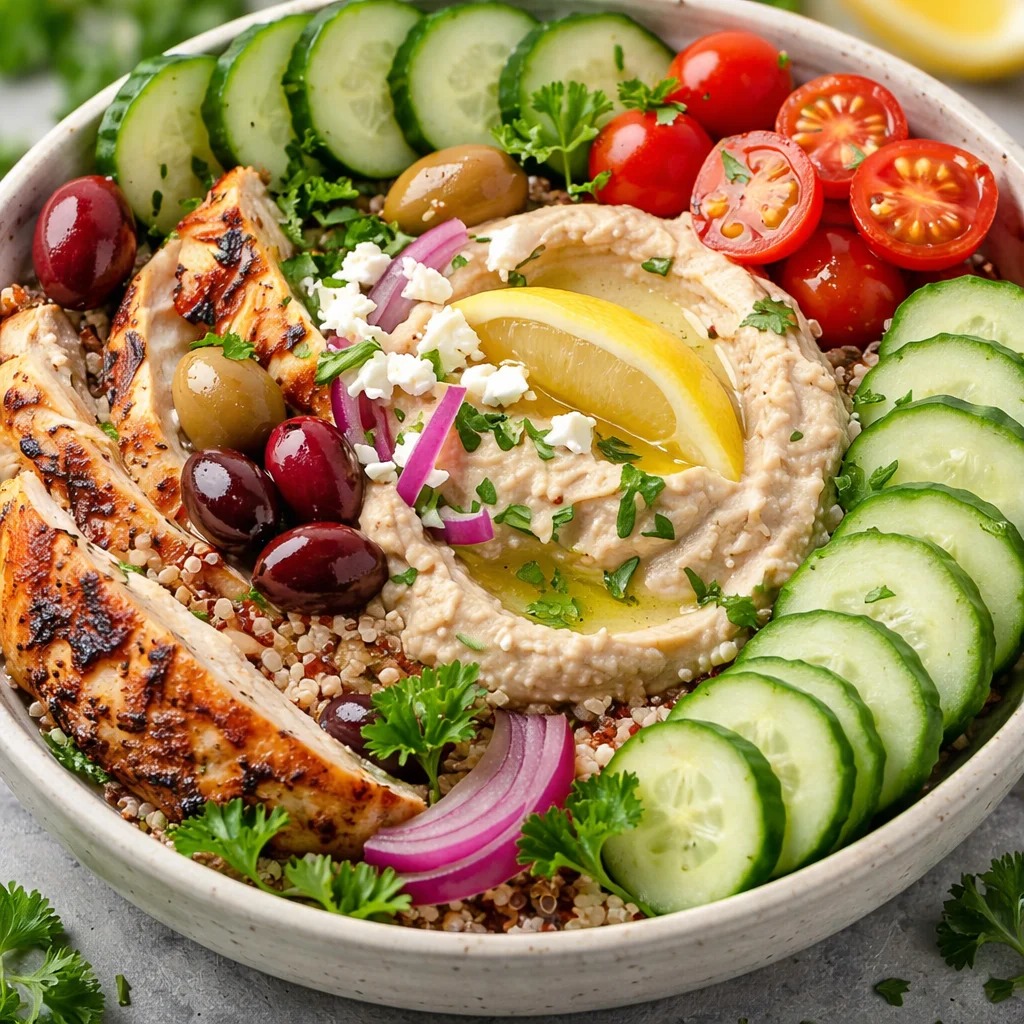
When my stomach feels off but I still want a real, satisfying dinner, this anti-inflammatory chicken bowl is the one I make. I’ve learned the hard way that “just snacking” usually leads to more cravings and more bloating. A balanced bowl like this keeps things simple, filling, and easy on digestion even on a busy weeknight. If you like having options, I also keep this roundup bookmarked because it is packed with ideas: 10 easy anti-inflammatory chicken recipes for a healthy gut. Today I am sharing my favorite Greek-style version with bright lemon, garlicky chicken, crunchy veggies, and a simple sauce you can tweak a hundred ways.
What Is an Anti-Inflammatory High-Protein Dinner? (And Why Your Gut Loves It)
An anti-inflammatory high-protein dinner is just a meal built around foods that tend to be easier on the body and supportive for digestion, while also giving you enough protein to feel satisfied. Think lean protein, colorful plants, fiber, and healthy fats, without a bunch of added sugar or heavy fried stuff.
For me, “gut-friendly” also means the meal does not leave me feeling puffy or sluggish afterward. This is why I love a bowl format. You can balance it, keep portions sensible, and add or skip ingredients depending on how your stomach is behaving that day.
This bowl checks all the boxes: lean protein, fiber-rich vegetables, and ingredients that feel nourishing instead of heavy.
How Chronic Inflammation Impacts Gut Health and the Microbiome
When inflammation sticks around for too long, it can mess with the way your gut feels day to day. Some people notice more bloating, irregular bathroom habits, or that “my stomach is mad for no reason” feeling. Your gut lining and your microbiome can get thrown off by stress, poor sleep, ultra-processed foods, and not enough fiber.
I am not here to diagnose anybody, but I do think it helps to know this: your gut loves consistency. When you give it steady meals that are not overloaded with sugar, alcohol, or greasy foods, it often calms down.
Meals like this work because they’re consistent. Nothing extreme just real food your body recognizes and handles well.
Why High-Protein Anti-Inflammatory Meals Support Digestion, Metabolism, and Hormone Balance
Protein is the “keep you full” nutrient. When I eat a high-protein dinner, I snack less later, I sleep better, and I wake up less ravenous. That alone makes it worth it.
High-protein meals can also be easier on digestion when the rest of the plate is balanced. Pair protein with fiber and healthy fats, and you tend to get steadier energy rather than a crash. It is also helpful for maintaining muscle, which matters for metabolism long-term.
If your hunger feels unpredictable, starting with a protein-forward dinner like this can make a noticeable difference.
Key Anti-Inflammatory Ingredients in This Greek Chicken Bowl
This is where the bowl really comes together simple ingredients, bold flavor, nothing complicated. Here are the stars:
Lemon and garlic bring flavor so you do not need sugary sauces.
Extra virgin olive oil adds satisfying fat and that classic Mediterranean vibe.
Cucumber, tomatoes, and greens add crunch, hydration, and fiber.
Red onion gives bite, but you can soak it in water for 10 minutes if it feels too strong.
Herbs like dill or parsley make everything taste fresh.
I also like adding a little turmeric and black pepper to the chicken sometimes. It is optional, but it fits the anti-inflammatory theme and tastes great with lemon.
Gut-Friendly Protein Sources: Choosing the Best Lean Proteins for Dinner
Chicken breast is my go-to for this bowl because it is easy, lean, and it soaks up flavor. But you have options if you want to switch things up.
If you want to switch things up while keeping the bowl gut-friendly and high in protein, these options work well:
- Chicken breast or tenderloins for the lean option
- Chicken thighs if you want juicier meat and a little more richness
- Turkey cutlets or ground turkey
- Salmon or sardines for omega-3 fats
- Tempeh if you want a plant-based swap with good protein
When I am in a “cook once, eat twice” mood, I use shredded chicken. If you want a simple guide for that, this is a solid reference I have used before: anti-inflammatory shredded chicken.
Fiber-Rich Carbs That Reduce Bloating and Support Healthy Digestion
Carbs are not the enemy. The trick is choosing carbs that come with fiber and do not spike your hunger an hour later. In this bowl, I like using brown rice, quinoa, or roasted sweet potato.
If you know certain grains make you bloated, listen to that. I have days where rice feels great and days where I would rather do greens and chickpeas. You can also cool cooked rice or potatoes and eat them later. Some people find that feels gentler, plus it is perfect for meal prep.
Easy, fiber-friendly base ideas:
Quinoa, brown rice, sweet potato, lentils, or a big bed of chopped romaine.
Healthy Fats That Fight Inflammation (Olive Oil, Omega-3s, and More)
Fats are what make a bowl satisfying, and they also help you absorb certain nutrients from veggies. For Greek flavors, olive oil is the obvious winner.
Other anti-inflammatory fats I rotate in:
Avocado slices, walnuts for crunch, and chia or ground flax stirred into a sauce if I am feeling extra.
If you want omega-3s specifically, fatty fish like salmon is great, but even adding a small sprinkle of hemp hearts can boost things. The key is not drowning the bowl in heavy creamy dressings. A little goes a long way.
Step-by-Step: How to Make the Ultimate Anti-Inflammatory Greek Chicken Bowl
This is how I make it at home, with minimal drama and maximum flavor.
Ingredients and simple prep
- 1 to 1.5 pounds chicken breast, sliced thin
- 2 tablespoons olive oil
- Juice of 1 lemon, plus zest if you want
- 2 to 3 cloves garlic, minced
- 1 teaspoon dried oregano
- 1 teaspoon turmeric (optional)
- Salt and pepper
- Base: cooked quinoa or rice, or chopped greens
- Toppings: cucumber, cherry tomatoes, red onion, olives (optional)
- Sauce: plain Greek yogurt or dairy-free yogurt, lemon, garlic, pinch of salt, dill
1) Mix olive oil, lemon, garlic, oregano, turmeric if using, salt, and pepper. Toss chicken in it. Even 15 minutes helps, but longer is great.
2) Cook chicken in a hot skillet for about 4 to 6 minutes per side depending on thickness, until cooked through. Let it rest a couple minutes so it stays juicy.
3) Stir up your sauce. I do yogurt, lemon, garlic, dill, salt, and a splash of water to thin it.
4) Build the bowl: base first, then chicken, then veggies, then sauce. Finish with olive oil drizzle and extra lemon if you like it bright.
The result is fresh, filling, and balanced exactly what I want for a satisfying dinner. It’s the kind of dinner that feels put-together without requiring much effort.
How to Meal Prep This High-Protein Gut-Healthy Dinner for the Week
If you want this to work for busy days, prep a few parts and keep them separate. I usually cook the chicken and the grain, then chop the veggies while everything cools.
Meal prep method that actually stays tasty
Here is the routine that works best for me:
Store the sauce separately so the veggies stay crisp.
Keep lemon wedges in a small container to wake everything up on day three.
Do not overdress the bowl until you are ready to eat.
If you like more structured meal prep tips, I found this helpful for planning portions and keeping things fresh: anti-inflammatory chicken meal prep.
Easy Variations: Gluten-Free, Dairy-Free, Low-Carb, and Plant-Based Options
This bowl is super flexible, which is why I never get bored of it.
Gluten-free: Use rice, quinoa, or potatoes as your base, and double-check any seasonings.
Dairy-free: Swap Greek yogurt sauce for a tahini lemon sauce or coconut yogurt.
Low-carb: Do a greens base with cucumber, tomatoes, olives, and extra chicken. Add avocado for satisfaction.
Plant-based: Use tempeh or chickpeas. Roast chickpeas with oregano, garlic powder, and a little olive oil for crunch.
My favorite “lazy variation” is using leftover chicken and turning it into a new vibe with different toppings. Same base recipe, new mood.
Foods to Avoid If You’re Trying to Reduce Inflammation and Heal Your Gut
No need to be perfect, but if you are trying to calm inflammation, some foods tend to make things harder. Everyone is different, so think of this as a starting point.
Common ones people scale back:
Sugary drinks and lots of candy
Heavy fried foods
Ultra-processed snacks that are basically engineered to make you keep eating
Alcohol, especially when your gut already feels irritated
Very creamy sauces that are high in added oils and not much else
I still eat treats, but when my gut is off, I notice I feel better when I keep things simple for a few days and lean on meals like this.
Common Mistakes That Can Make “Healthy” Bowls Less Gut-Friendly
Over time, I’ve noticed a few common mistakes that can make even a healthy bowl feel off.
Mistake 1: Not enough protein. Then you are hungry an hour later and rummaging for snacks.
Mistake 2: Going too heavy on raw veggies. If your stomach is sensitive, try mixing raw and cooked veggies. Roasted zucchini or cooked spinach can be gentler.
Mistake 3: Hidden sugar in dressings. Some bottled dressings are basically dessert. Read labels or keep it simple with lemon and olive oil.
Mistake 4: Skipping salt completely. A little salt makes healthy food taste good, and you are more likely to stick with it.
How to Build a Balanced Anti-Inflammatory Dinner Bowl (Formula Guide)
If you want a simple formula you can repeat without thinking, this is what I use:
1 palm of protein + 1 to 2 fists of veggies + 1 fist of fiber-rich carbs (optional) + 1 thumb of healthy fat + something bright (lemon, herbs, pickled onion).
That is it. You can apply this to so many dinners, even when your fridge looks empty. Once you learn the formula, you can throw together a bowl in 10 minutes and it still feels like a real meal.
Serving Tips: How to Add This Meal Into an Anti-Inflammatory Lifestyle Routine
I like to think of this bowl as a “default dinner,” meaning it is the thing I can fall back on when life is busy. Here are a few ways to make it part of your routine without getting bored:
Pick two nights a week that are your bowl nights. Less decision fatigue.
Prep one sauce and use it on different proteins and veggies.
Rotate the base between rice, quinoa, sweet potato, or greens.
Keep a flavor theme for the week like Greek, lemon herb, or turmeric.
When I am really on top of things, I make extra chicken and use it in lunches too. That is when you start feeling the “wow, I am actually feeding myself well” effect.
Common Questions
Can I make this anti inflammatory chicken bowl without yogurt?
Yes. Use tahini plus lemon and water, or mash avocado with lemon and salt for a creamy sauce.
What if I do not tolerate garlic or onion well?
Skip them or use garlic-infused olive oil for flavor. You can also add more herbs and lemon so it still tastes bold.
How long does it keep in the fridge?
Chicken and grains usually keep about 3 to 4 days. Keep veggies and sauce separate so everything stays fresh.
Is this good for weight loss?
It can be, because it is high-protein and filling. The big lever is portion size, especially for oils, cheese, and grains.
What is the best way to make the chicken juicy?
Slice it thin, do not overcook it, and let it rest a couple minutes before slicing. A quick lemon and olive oil marinade helps a lot too.
A Simple Dinner Your Gut Will Appreciate
This anti-inflammatory chicken bowl is one of those reliable meals you can return to anytime your digestion feels off or your week gets busy. Keep the structure the same, rotate the ingredients based on what you tolerate best, and adjust flavors to match your mood. Simple, balanced dinners like this are often the easiest way to stay consistent with a gut-friendly lifestyle.
Greek Chicken Bowl
Ingredients
Method
- Mix olive oil, lemon juice, garlic, oregano, turmeric (if using), salt, and pepper in a bowl.
- Toss chicken in the marinade and let it sit for at least 15 minutes, longer if possible.
- Cook chicken in a hot skillet over medium-high heat for about 4 to 6 minutes per side, or until cooked through.
- Let the chicken rest for a couple of minutes before slicing to retain its juices.
- Prepare the sauce by mixing yogurt, lemon juice, garlic, dill, and a splash of water to thin.
- In a bowl, layer the base first (quinoa/rice/greens), then add sliced chicken, followed by veggies, then drizzle with sauce.
- Finish with a drizzle of olive oil and additional lemon if desired.