
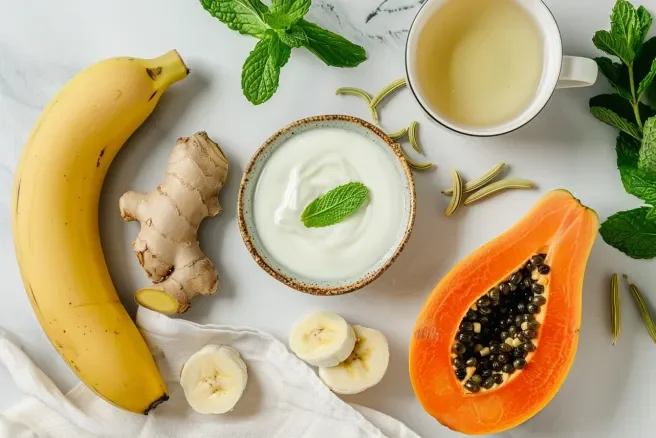
Bloating is one of the most common digestive complaints. Many people experience a swollen or tight stomach after eating, often caused by gas, slow digestion, or food sensitivities.
The good news is that simple changes in diet and lifestyle can make a big difference. In this guide, you’ll learn how to reduce bloating naturally using gut-friendly foods, healthier eating habits, and proven natural remedies.
What Causes Bloating and Poor Digestion
To reduce bloating naturally, focus on eating gut-friendly foods such as ginger, yogurt, bananas, and leafy greens. Drink enough water, avoid highly processed foods, eat slowly, and support your gut microbiome with probiotic foods. Simple habits like walking after meals and managing stress can also significantly improve digestion.
You know that tight, balloon-in-the-belly feeling? That’s bloating.
- It’s just your gut reacting to food, air, or even mood swings (thanks, hormones).
- In many cases, the abdomen may feel tight, swollen, or stretched after eating.
- Happens when gas, liquid, or food just hangs out in your stomach a little too long.
- It’s more common than you think like, almost everyone gets it now and then.
- What Causes Bloating and Poor Digestion
- The Gut Science Behind Bloating: Gas Production, Microbiome Balance, and Inflammation
- Common Causes of Bloating and Poor Digestion
- Hidden Triggers That Can Make Bloating Worse (Stress, Hormones, Gut Imbalance)
- Symptoms That Often Appear With Bloating (Gas, Pressure, Slow Digestion, Fatigue)
- The Microbiome Connection: How Gut Bacteria Affect Digestion and Bloating
- Foods That Help Reduce Bloating and Support Healthy Digestion
- Anti-Inflammatory Foods That Calm the Gut and Improve Digestive Comfort
- Foods That Commonly Cause Bloating and Digestive Discomfort
- Eating Habits That Improve Digestion and Reduce Gas Build-Up
- Natural Remedies for Bloating: Ginger, Peppermint, Fennel and Herbal Digestive Support
- Daily Lifestyle Habits That Support Gut Health and Reduce Bloating
- A Simple Daily Routine for Better Digestion and Less Bloating
- When Bloating May Signal a Digestive Disorder (IBS, Food Intolerance, SIBO)
- Common Questions
- Try These Gut-Smart Changes for Real Bloat Relief
The Gut Science Behind Bloating: Gas Production, Microbiome Balance, and Inflammation
Let’s chat about what’s happening inside.
- Bacteria in your gut break down food, releasing gas (TMI but true).
- If the gut’s balance is off, you get more gas, maybe lots of “noise.”
- Inflammation can slow digestion and make bloating last longer.
- A wobbly microbiome = you feel it, especially after eating certain foods.
Common Causes of Bloating and Poor Digestion
There’s no one culprit but plenty of sneaky suspects.
- Eating too fast, chewing gum, fizzy drinks (yep, even fancy sparkling water… sigh).
- Processed foods or too much fiber at once.
- Not enough water (guilty it’s always water).
- Food intolerances or not-so-obvious sensitivities.
Hidden Triggers That Can Make Bloating Worse (Stress, Hormones, Gut Imbalance)
Some less obvious factors can also trigger or worsen bloating.
- Stress cranks up the bloat like, triple time.
- Hormonal swings (PMS week: enough said).
- Too many antibiotics, or just bad sleep, throw your whole system off.
- Sometimes the digestive system simply reacts to changes in hormones, stress, or diet.
Symptoms That Often Appear With Bloating (Gas, Pressure, Slow Digestion, Fatigue)
Sometimes, it’s more than just a swollen belly.
- You’ll notice gassiness, burping, and that “full” feeling that lingers.
- Sluggish digestion things just…move…so…slow.
- Feeling tired or cranky (I once canceled plans ‘cause I felt so blah).
- Occasional stomach cramps or gurgles that sound like a coffee pot.
The Microbiome Connection: How Gut Bacteria Affect Digestion and Bloating
This is where it gets interesting. Your gut bacteria are running the show.
- A balanced gut microbiome helps digestion run smoothly and reduces excessive gas production.
- When the microbiome becomes imbalanced, bloating and digestive discomfort can become more frequent.
- Eating the right foods can help bring your gut back in line.
- The more you support your gut, the less “surprise bloat” moments you’ll have.
Foods That Help Reduce Bloating and Support Healthy Digestion
Okay, let’s get practical you want the foods, right?
- Cucumbers, ginger, and leafy greens are your tummy’s besties.
- Low-sugar yogurt (look for probiotics!), bananas, and ripe papaya.
- Peppermint tea can really help after a meal.
- If you want recipe ideas, you’ll love these gut-friendly smoothies for bloating relief.
Anti-Inflammatory Foods That Calm the Gut and Improve Digestive Comfort
Turn down the internal drama with these picks.
- Turmeric, blueberries, and wild salmon they fight inflammation.
- Chia seeds or flax (I throw ‘em in my oatmeal every morning).
- Avocado, olive oil, and sweet potatoes (just, wow).
- Cooked veggies usually go down easier than raw ones just saying.
Foods That Commonly Cause Bloating and Digestive Discomfort
Certain foods are more likely to trigger gas and bloating, especially for sensitive digestive systems.
- Beans and lentils (love them, but… consequences).
- Broccoli, cauliflower, cabbage (hello, gassy veggies).
- Dairy if you’re sensitive, fried foods, and far too much bread.
- Artificial sweeteners don’t even get me started.
Eating Habits That Improve Digestion and Reduce Gas Build-Up
It’s not just what you eat it’s how.
- Slow down when you chew and really taste your food.
- Eating smaller, balanced meals can reduce digestive strain and prevent excessive bloating.
- Hydrate! Like, actually drink the water you keep by your desk.
- Don’t eat late at night trust me, it matters.
Natural Remedies for Bloating: Ginger, Peppermint, Fennel and Herbal Digestive Support
When you need natural relief now.
- Sip ginger tea (or chew real ginger if you like strong flavors).
- Peppermint oil or tea calming, fresh, super soothing.
- Fennel seeds after meals work wonders.
- Keep a small stash of herbal teas in your kitchen (they save the day).
Daily Lifestyle Habits That Support Gut Health and Reduce Bloating
Switch things up outside the kitchen, too.
- Walk after meals, even if it’s just around the block.
- Don’t skip breakfast seriously, your gut wants fuel.
- Stress less I know, easier said than done, but meditation helps.
- Get good sleep (I set a strict bedtime… sometimes).
A Simple Daily Routine for Better Digestion and Less Bloating
Real-life rhythm for better gut days.
- Starting the day with a glass of warm lemon water may gently stimulate digestion.
- Eat some fermented food daily yogurt, sauerkraut, kefir.
- Stick with a regular meal schedule.
- Keep snacks simple handful of nuts, a banana, nothing wild.
When Bloating May Signal a Digestive Disorder (IBS, Food Intolerance, SIBO)
In some cases, persistent bloating may signal an underlying digestive condition.
- Persistent bloating, pain, weird bowel changes? Might be IBS or something similar.
- Food intolerances sneak in think dairy, gluten, or even garlic.
- SIBO (too much bacteria in the wrong spot) big culprit for chronic bloat.
- If it’s messing with your life, time to ask a doctor. Don’t just guess!
Common Questions
Q: Can exercise help with bloating?
A: Absolutely, even a slow walk after eating helps move things along.
Q: What about probiotics?
A: They can be super helpful, but pick the right type (some yogurts, or even supplements).
Q: Is sparkling water bad for bloating?
A: It’s bubbly! So, for some people, yes it adds more gas.
Q: Can I eat bread?
A: Yes, but keep it moderate. Too much, or the wrong kind (white, super-processed stuff), and you might regret it.
Q: Should I avoid all beans?
A: Nope, but soak or cook them really well makes a difference.
Try These Gut-Smart Changes for Real Bloat Relief
Reducing bloating naturally is possible with simple changes to your diet and daily habits. Choosing gut-friendly foods, eating more slowly, and supporting your digestive system can significantly improve how your stomach feels after meals.
Over time, these small adjustments help balance your gut and reduce uncomfortable gas and swelling. If you want to reduce bloating naturally, focus on anti-inflammatory foods, good hydration, and mindful eating.