
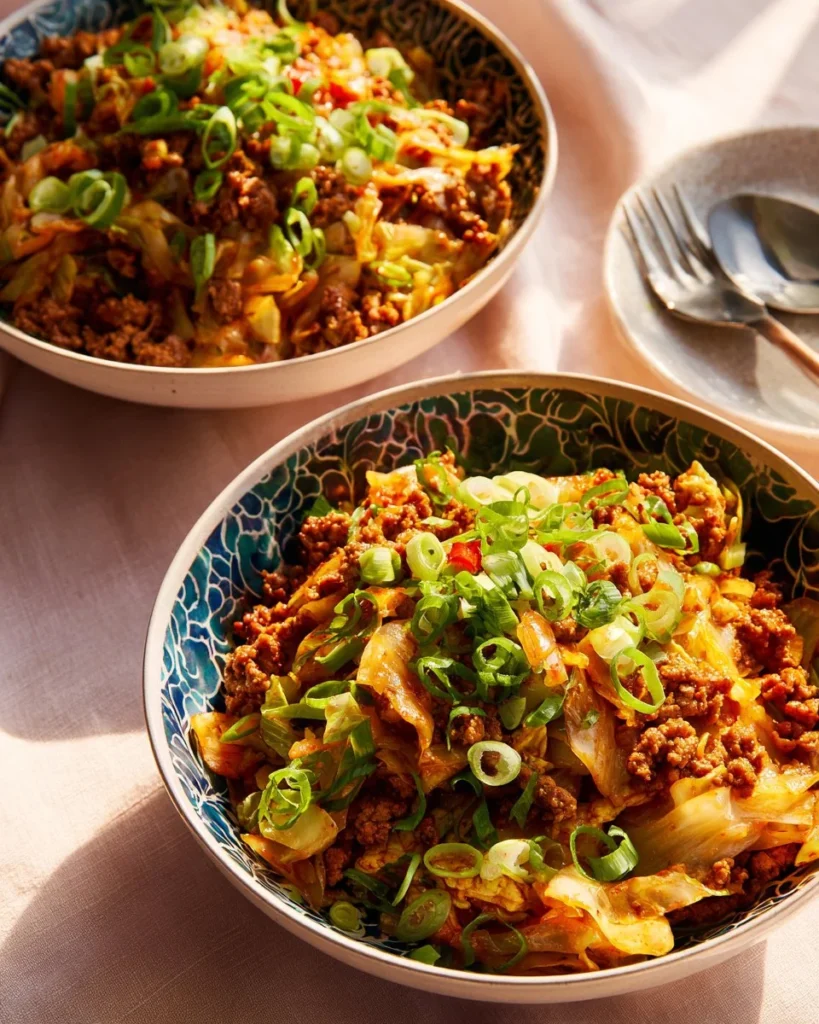
Paleo Egg Roll in a Bowl craving something savory but worried about how takeout affects your digestion. This simple skillet meal delivers the same bold flavor you expect from egg rolls without the heavy wrappers or inflammatory oils. Packed with cabbage, ginger, garlic, and quality protein, it is designed to support gut health while keeping carbs low. It is the kind of quick dinner that feels satisfying and still aligns with an anti-inflammatory way of eating.
It keeps the classic egg roll flavor but uses cleaner, anti-inflammatory ingredients that are easier on the gut. For another twist on takeout-style bowls, check out this Best Egg Roll in a Bowl salad for extra crunch and greens.
Think of it as an egg roll without the wrapper, built around lean protein, cabbage, and simple aromatics that are easier to digest. High in fiber, low in refined carbs, and loaded with anti-inflammatory spices, it supports digestion and stabilizes blood sugar.
Jump to Recipe
- Why Paleo Egg Roll in a Bowl Is Good for Gut Health
- Key Ingredients in Paleo Egg Roll in a Bowl and Their Gut Benefits
- Pro Tips for Cooking the Best Paleo Egg Roll in a Bowl
- Easy Variations of Paleo Egg Roll in a Bowl for Different Diets
- Storage and Meal Prep Tips
- Common Mistakes to Avoid
- Conclusion
- Final Thoughts
- Paleo Egg Roll in a Bowl
Why Paleo Egg Roll in a Bowl Is Good for Gut Health
Your gut bacteria thrive on fiber-rich foods that help produce beneficial short-chain fatty acids. This recipe includes cabbage a cruciferous vegetable that provides prebiotic fiber plus anti-inflammatory ginger and garlic that may support healthy digestion. Choosing high-quality pork or chicken helps keep the fat balance healthier and avoids unnecessary additives.
For a broader anti-inflammatory meal plan, you may enjoy our Anti-Inflammatory Glow Bowl, which pairs well with lighter sides or salads.
Key Ingredients in Paleo Egg Roll in a Bowl and Their Gut Benefits
- Ground pork or chicken: Easily digestible protein and satiating to stabilize blood sugar.
- Cabbage (green or napa): High in fiber and glucosinolates; supports beneficial gut bacteria.
- Carrots: Beta-carotene and fiber for microbiome diversity.
- Ginger: Anti-inflammatory compound (gingerol) that can soothe the gut.
- Garlic: Prebiotic properties that feed beneficial microbes.
- Coconut aminos: Soy-free, lower-sugar alternative to soy sauce that adds umami.
- Apple cider vinegar: May support digestion and balance pH after meals.
- Sesame oil (optional): Adds flavor and healthy monounsaturated fats (use sparingly).
For a seasonal twist with roasted veggies and warming spices, see our Savor the Season Harvest Glow Bowl.
Pro Tips for Cooking the Best Paleo Egg Roll in a Bowl
- High heat, short time: Cook on medium-high to get some caramelization on the meat and veggies without steaming them.
- Thinly shred the cabbage: Finely sliced cabbage softens faster and mixes uniformly with the sauce.
- Add a splash of broth or water to loosen the browned bits in the pan. Those bits add a lot of flavor.
- Taste before serving and adjust the salt or acidity so the flavors feel balanced.
- Use a wide skillet or wok: Gives better surface contact so ingredients brown evenly.
If you like a protein-forward version, check our guide to an anti-inflammatory chicken bowl for tips on timing and seasoning: The Best Anti-Inflammatory Chicken Bowl.
Easy Variations of Paleo Egg Roll in a Bowl for Different Diets
- Chicken instead of pork: Use ground chicken or diced thighs for a leaner option.
- Make it Whole30/Keto: Swap a small amount of honey for a compliant sweetener or omit; ensure coconut aminos are Whole30-compliant.
- Extra veg: Add shiitake mushrooms, bok choy, or bell pepper for more fiber and micronutrients.
- Vegan option: Use crumbled tempeh or seasoned tofu (not Paleo, but a plant-based swap).
- Spice it up: Add red pepper flakes, sriracha, or thinly sliced jalapeño.
Storage and Meal Prep Tips
- Refrigerate in airtight containers for up to 4 days.
- Freeze portions (without sauce) in freezer-safe containers for up to 3 months.
- Reheat gently in a skillet with a splash of broth to revive texture.
- For meal prep, keep the sauce separate and add it just before reheating to prevent soggy cabbage.
Common Mistakes to Avoid
- Overcrowding the pan: This causes steaming instead of browning.
- Adding cold ingredients directly to the hot pan: Let meat rest briefly so the temperature evens out.
- Using too much sauce early: Saves the sauce to finish so it reduces and clings to the meat and veggies.
- Cutting cabbage too coarsely: Large pieces take longer to soften and are harder to eat in a bowl.
Recipe (for WP Recipe Maker)
Prep Time: 10 minutes
Cook Time: 15 minutes
Total Time: 25 minutes
Servings: 4
Calories: 320 per serving (estimate)
Diet Type: Paleo, Gluten-Free, Dairy-Free, Low-Carb Option
Ingredients
- 1 lb ground pork (or ground chicken or turkey)
- 1 small head napa cabbage or 1/2 large green cabbage, shredded (about 6 cups)
- 2 medium carrots, julienned or grated
- 1 small yellow onion, thinly sliced
- 3 cloves garlic, minced
- 1 tbsp fresh ginger, grated
- 2 tbsp avocado oil or olive oil
- 3 tbsp coconut aminos
- 1 tbsp apple cider vinegar
- 1 tsp toasted sesame oil (optional)
- 1 tsp fish sauce (optional, omit for Paleo-strict)
- 1/2 tsp red pepper flakes (optional)
- Sea salt and black pepper, to taste
- 2 green onions, sliced, for garnish
- Sesame seeds, for garnish (optional)
Instructions
- Prep all vegetables: shred cabbage, grate carrots, slice onion, mince garlic and ginger.
- Heat a large skillet or wok over medium-high heat. Add avocado oil.
- Add ground pork and break into small pieces. Cook 5–7 minutes until nicely browned, then season lightly with salt and pepper.
- Push the meat to one side. Add the onion to the pan and cook 2 minutes until translucent.
- Add garlic and ginger; cook 30–45 seconds until fragrant.
- Stir in carrots and shredded cabbage, tossing to combine. Cook 3–4 minutes, stirring occasionally, until cabbage begins to wilt but still has texture.
- In a small bowl, whisk coconut aminos, apple cider vinegar, sesame oil (if using), fish sauce (if using), and red pepper flakes.
- Pour sauce over the skillet, toss everything together, and cook 1–2 minutes until the sauce reduces slightly and coats the ingredients.
- Taste and adjust salt/acid. Remove from heat and garnish with sliced green onions and sesame seeds.
- Serve immediately, on its own or over cauliflower rice for extra volume.
Chef Tips
- For extra crispness, remove cooked meat, sear cabbage in the hot pan alone for 1–2 minutes to caramelize, then return meat and sauce.
- If using ground chicken, add a splash of oil midway to prevent the pan from drying.
- Want more umami? Stir in a small amount of tomato paste with the sauce for depth.
Storage Tips
- Store in airtight containers for up to 4 days in the fridge.
- Reheat in a skillet over medium heat with 1–2 tablespoons of water or broth to loosen.
- For freezing, cool completely, freeze in meal-sized portions and thaw overnight in the fridge before reheating.
Variations
- Shrimp Egg Roll in a Bowl: Swap in peeled shrimp and reduce cook time to 4–6 minutes.
- Spicy Korean: Add gochujang (or fermented red pepper paste substitute) and top with kimchi for fermentation benefits.
- Low-FODMAP: Use garlic-infused oil and omit onion; keep ginger for flavor.
Gut Health Benefits
- Cruciferous vegetables like cabbage feed beneficial gut bacteria and support a healthier microbiome.
- Ginger and garlic provide anti-inflammatory and antimicrobial properties.
- Low in refined carbohydrates and processed oils, which helps reduce gut irritation and inflammation.
Estimated Nutrition Values (per serving, approximate)
- Calories: 320
- Protein: 24 g
- Carbohydrates: 12 g
- Fiber: 4 g
- Net Carbs: 8 g
- Fat: 20 g
FAQs
Can I make this recipe Whole30 or Keto?
Yes. Use coconut aminos as the sauce base (no added sugar) and skip any non-compliant ingredients. It’s naturally low-carb, making it Keto-friendly. For Whole30, omit honey and ensure coconut aminos are acceptable.Is cabbage good for digestion?
Yes. Cabbage offers prebiotic fiber and nutrients that support beneficial gut bacteria, but if you have a sensitivity to cruciferous vegetables, adjust portion size.How do I keep the cabbage from getting soggy?
Cook on medium-high heat and avoid overcrowding. Finish with the sauce at the end and avoid adding excess liquid early on.What’s the best protein swap for a vegetarian version?
Tempeh or crumbled seasoned tofu works, though these aren’t Paleo. If keeping Paleo, consider chopped mushrooms and extra nuts/seeds for texture.Can I prep ingredients ahead of time?
Absolutely. Shred cabbage and store in a sealed container, slice aromatics, and mix the sauce in advance for fast assembly.
Conclusion
If you love fast, savory, gut-friendly dinners that replicate takeout without the inflammation, this Paleo Egg Roll in a Bowl delivers. For an alternate protein-forward take with step-by-step meal ideas, see Paleo Egg Roll in a Bowl with Chicken {Whole30, Keto} for inspiration and variations.
Final Thoughts
Paleo Egg Roll in a Bowl proves that gut-friendly meals do not have to be complicated or bland. With crisp cabbage, aromatic spices, and clean protein, this bowl offers the comfort of takeout while supporting digestion and reducing inflammation. Keep it in your weekly rotation when you want a fast dinner that nourishes your gut and keeps you feeling energized.
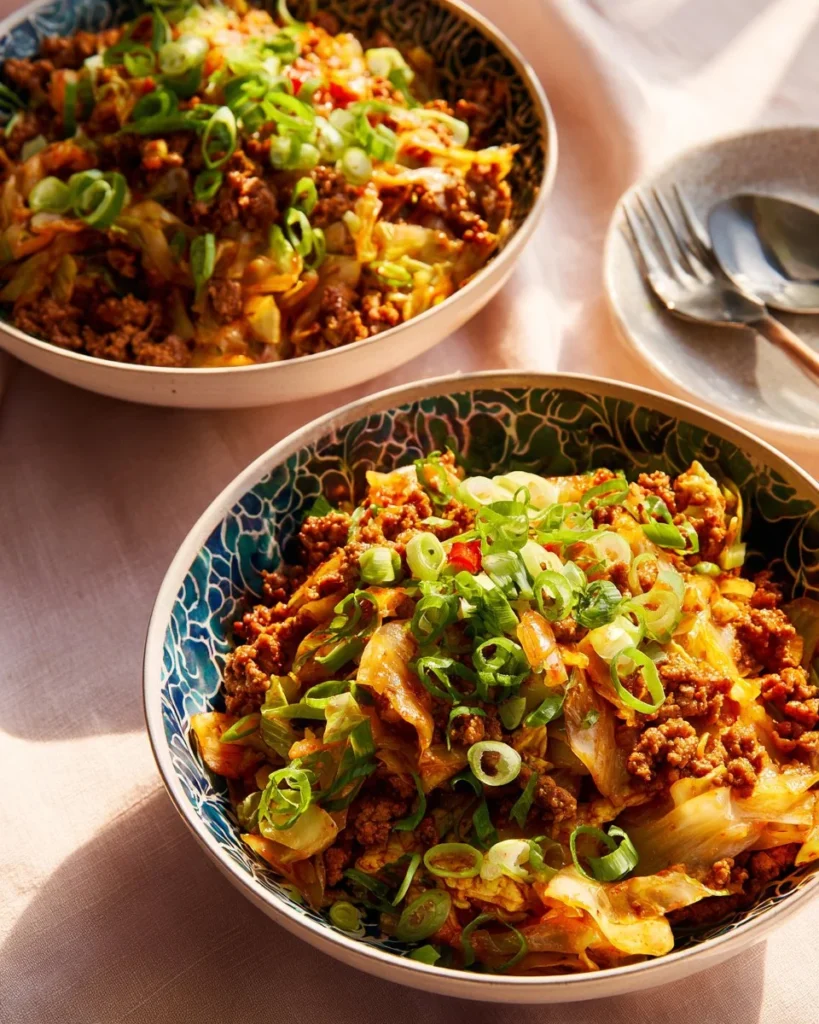
Paleo Egg Roll in a Bowl
Ingredients
Method
- Prep all vegetables: shred cabbage, grate carrots, slice onion, mince garlic and ginger.
- Heat a large skillet or wok over medium-high heat. Add avocado oil.
- Add ground pork and break into small pieces. Cook 5–7 minutes until nicely browned, then season lightly with salt and pepper.
- Push the meat to one side. Add the onion to the pan and cook 2 minutes until translucent.
- Add garlic and ginger; cook 30–45 seconds until fragrant.
- Stir in carrots and shredded cabbage, tossing to combine. Cook 3–4 minutes, stirring occasionally, until cabbage begins to wilt but still has texture.
- In a small bowl, whisk together coconut aminos, apple cider vinegar, sesame oil (if using), fish sauce (if using), and red pepper flakes.
- Pour sauce over the skillet, toss everything together, and cook 1–2 minutes until the sauce reduces slightly and coats the ingredients.
- Taste and adjust salt/acid. Remove from heat and garnish with sliced green onions and sesame seeds.
- Serve immediately, on its own or over cauliflower rice for extra volume.