
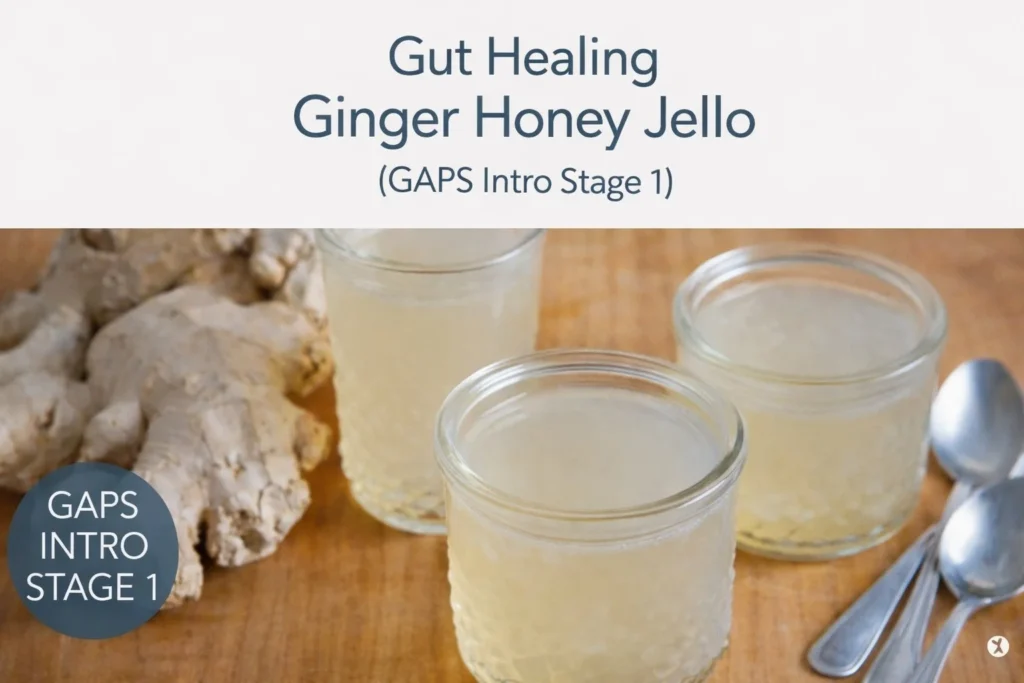
This gut healing ginger honey jello is a soothing recipe designed to calm inflammation and support gentle digestion. Perfect for sensitive stomachs and healing diets.
If your gut feels raw, bloated, or painfully reactive, you’re not alone. When digestion is fragile, even simple foods can trigger discomfort. That’s where gentle, healing foods come in nourishing the gut without overwhelming it. This Ginger Honey Jello, inspired by GAPS Intro Stage 1 ideas, is soothing, anti-inflammatory, and easy to digest. It can calm nausea, reduce inflammation, and feed the lining of your gut as you slowly rebuild tolerance.
Many people find comfort in warm broths and soft gelatin desserts when their gut needs a break. This recipe is built on those same principles: simple ingredients, natural anti-inflammatory power from ginger, and collagen from gelatin to support repair. If you’re looking for low-stress ways to start feeling better, this recipe is a tender place to begin. For more gentle gut-healing meal ideas, try my guide to the best gut-healing smoothie for a healthy gut.
What Is Happening in Your Gut
When your gut is irritated, several things can be happening at once. The lining of the intestines may be inflamed or more permeable than it should be. Beneficial bacteria can be out of balance. Digestive secretions like stomach acid or digestive enzymes might be low. And immune cells in the gut can be on high alert, creating pain, gas, and sensitivity.
Gelatin and broth-based foods help because they are easy to digest, help soothe the gut lining, and may provide amino acids like glycine and proline that support tissue repair. Ginger helps calm nausea and reduce inflammation, while raw honey (used carefully and in small amounts on GAPS Intro) offers gentle antimicrobial and soothing properties.
Main Causes of This Gut Problem
- Diet that’s high in processed foods and low in nutrients. These foods can irritate the gut and starve beneficial bacteria.
- Repeated antibiotic use. Antibiotics can wipe out helpful gut microbes, leaving room for harmful ones.
- Chronic stress. Stress reduces digestion quality and can disrupt the gut lining.
- Food intolerances or allergies. These can create chronic inflammation if the wrong foods are eaten regularly.
- Infections or imbalances such as small intestinal bacterial overgrowth (SIBO), Candida overgrowth, or parasites.
- Lack of sleep, poor hydration, and a sedentary lifestyle. All of these make digestion slower and repair harder.
Warning Signs Your Gut Needs Help
- Persistent bloating or gas after eating.
- Pain, cramping, or frequent indigestion.
- Loose stools, constipation, or alternating bowel habits.
- Food intolerances that develop or worsen.
- Low energy, brain fog, or skin problems that flare with food.
- Recurrent sugar cravings or poor appetite control.
If you see several of these signs, it’s time to simplify your diet and focus on gut-soothing foods while you work with a healthcare professional.
Best Foods to Heal and Repair Gut
Choose foods that are nutrient-dense, easy to digest, and supportive of the gut lining:
- Bone broth: Rich in collagen, minerals, and amino acids that support repair.
- Gelatin and plain grass-fed gelatin desserts: Gentle and soothing (like this Ginger Honey Jello).
- Cooked, non-starchy vegetables: Carrots, squash, zucchini are easier to digest.
- Fermented foods (when tolerated): Plain sauerkraut or kefir can help rebalance microbes once you’re stable.
- Healthy fats: Olive oil, avocado, and coconut in moderate amounts help with absorption and reduce inflammation.
- Easily digested proteins: Soft-cooked eggs, tender chicken, and white fish.
- Low-fructose fruits for intro phases: Ripe banana or stewed apples in small amounts.
- Natural anti-inflammatories: Fresh ginger, turmeric, and small amounts of raw honey if tolerated.
Aim to include a variety of these foods slowly. If you’re following GAPS Intro stages, move forward only as tolerance improves.
Also consider a gentle, warm meal like an AIP white chicken chili once your gut is more stable it’s nourishing and easy on digestion.
Worst Foods That Damage Gut Health
- Processed and packaged foods with additives, emulsifiers, and seed oils.
- Refined sugar and high-fructose corn syrup feed harmful microbes.
- Dairy (for many people), especially if lactose intolerant.
- Raw cruciferous vegetables if your gut is very sensitive they can be hard to digest.
- Alcohol and heavily caffeinated drinks they irritate the gut lining and disrupt sleep.
- High FODMAP foods if you have SIBO or severe sensitivity.
- Artificial sweeteners and sugar alcohols can cause bloating and disrupt microbes.
When healing, keep your diet simple and focus on whole, unprocessed foods that you tolerate well.
Natural Remedies That Actually Work
- Gelatin and bone broth: For lining support and easier digestion.
- Ginger: A natural anti-nausea and anti-inflammatory agent. Use fresh or brewed as tea.
- Slippery elm or marshmallow root (as a decoction): These herbs coat and soothe the gut lining.
- Probiotics and fermented foods: Reintroduce slowly to rebalance flora, but not during severe flare-ups without guidance.
- L-glutamine: An amino acid that can support intestinal cells useful short-term under supervision.
- Zinc carnosine: Shown to help gut lining repair in some studies.
- Small, frequent meals: Easier to digest than large, heavy meals.
- Stress-reduction practices: Deep breathing, gentle yoga, and short walks help digestion.
Always check with your clinician before starting supplements, especially if you’re taking other medications or have complex conditions.
Daily Habits That Improve Digestion Fast
- Start each morning with a warm cup of ginger tea or warm water with lemon to stimulate digestion.
- Chew thoroughly. Slow, mindful eating reduces gas and supports nutrient absorption.
- Avoid heavy meals late at night. Give your body 2–3 hours before bed after eating.
- Walk gently after meals. A 10–20 minute walk helps move food along.
- Hydrate steadily throughout the day. Sipping water supports digestion; avoid large volumes during meals.
- Prioritize sleep. Good rest supports immune and digestive health.
- Manage stress daily. Ten minutes of deep breathing or mindfulness reduces the stress markers that impair digestion.
- Keep a food and symptom journal. This helps you identify triggers and progress.
Small, consistent habits make a big difference faster than occasional intense efforts.
7-Day Gut Reset Plan
This gentle 7-day plan is built around soothing foods and consistent habits. Adjust portions and timing to your needs, and move slowly if you feel symptoms.
Day 1 Reset and Soothe
- Morning: Warm ginger tea; small portion of plain gelatin jello.
- Lunch: Bone broth with tender, slow-cooked squash.
- Snack: Stewed peeled apple (unsweetened).
- Dinner: Light chicken broth with soft white meat.
- Habits: Short walk after meals; bedtime wind-down routine.
Day 2 Add Gentle Protein
- Morning: Warm water with ginger; gelatin jello.
- Lunch: Bone broth with soft chicken and carrots.
- Snack: Small ripe banana or stewed pear.
- Dinner: Homemade broth-based soup, no raw veggies.
- Habits: Chew slowly; hydrate between meals.
Day 3 Nourish with Collagen
- Morning: Ginger tea; gelatin and a drizzle of raw honey if tolerated.
- Lunch: Broth with mashed squash and soft chicken.
- Snack: Unsweetened plain yogurt (if tolerated) or more gelatin.
- Dinner: AIP-style stew with slow-cooked chicken and root vegetables.
- Habits: Gentle 20-minute walk after dinner.
Day 4 Introduce Mild Ferments (If Stable)
- Morning: Ginger tea.
- Lunch: Bone broth and soft-cooked zucchini.
- Snack: 1 tablespoon unsweetened sauerkraut if you tolerate fermented foods.
- Dinner: Simple fish stew or chicken; cooked greens.
- Habits: Add light stretching or restorative yoga.
Day 5 Focus on Diversity
- Morning: Smoothie with well-tolerated ingredients or more gelatin for very sensitive guts.
- Lunch: Broth and tender vegetables.
- Snack: Small portion of fermented dairy or coconut kefir if tolerated.
- Dinner: AIP white chicken chili if you’re ready for heartier food.
- Habits: Sleep 7–9 hours goal; reduce screen time before bed.
Day 6 Reassess and Reintroduce
- Morning: Ginger tea.
- Lunch: Broth-based soup with a new tolerated vegetable.
- Snack: Soft-cooked egg or more stewed fruit.
- Dinner: Baked white fish and cooked greens.
- Habits: Maintain slow eating and post-meal walk.
Day 7 Plan for Maintenance
- Morning: Warm drink and a small gelatin snack.
- Lunch: Balanced broth and protein meal.
- Snack: Light fermented food if tolerated.
- Dinner: Maintain simple, nutrient-dense meal.
- Habits: Review your food journal and note what improved.
If you experience worsening symptoms, step back a day or two to easier foods like plain broth and gelatin and consult your healthcare provider.
Common Mistakes to Avoid
- Rushing reintroductions. Moving too quickly can trigger setbacks.
- Relying solely on supplements without addressing diet and lifestyle.
- Eating large meals or eating too quickly.
- Ignoring hydration and sleep healing needs both.
- Using over-the-counter antacids long-term without medical advice; they can hinder digestion and nutrient absorption.
- Assuming one solution fits everyone. Gut healing is personal listen to your body.
Expert Tips for Faster Gut Healing
- Start with the most tolerable foods and be patient. Consistency beats intensity.
- Use gelatin as a transition food: it’s both comforting and supportive.
- Track progress with small, measurable goals daily symptom notes or weekly pictures of meals.
- Work with a practitioner for persistent or severe issues; tests like stool analysis or SIBO breath tests can clarify causes.
- Rotate proteins and vegetables slowly to reduce sensitivity development.
- Add probiotics only when symptoms are stable; some people worsen if introduced too early.
- Incorporate gentle movement and stress reduction the gut-brain connection is powerful.
FAQs
Q: Is honey safe in a gut-healing intro phase? A: In small amounts, raw honey can be soothing and antimicrobial for some people. On strict GAPS Intro, honey is used carefully and sparingly. If you have candida overgrowth or reactive blood sugar issues, avoid honey until those are controlled.
Q: Can kids eat ginger honey jello? A: Yes, in many cases kids tolerate gelatin desserts well. Use age-appropriate amounts of honey and ensure no allergies exist. Always consult your pediatrician for severe gut issues.
Q: How often should I eat gelatin or bone broth? A: Many people find benefit from daily or every-other-day portions during healing. Even a small cup of broth or a serving of gelatin can be helpful.
Q: Will ginger upset reflux or acid reflux? A: Ginger usually calms nausea and supports digestion, but a few people with very sensitive reflux may notice irritation. Start with small amounts and monitor symptoms.
Q: How long until I see improvement? A: Everyone is different. Some people notice symptom relief in days with gentle foods, while deeper healing takes weeks to months. Consistency, rest, and removing triggers are key.
Final Thoughts
Healing your gut is a journey not a race. Gentle foods like Ginger Honey Jello can provide comfort and nourishment when other foods feel too harsh. Pairing simple, nutrient-dense meals with consistent habits and rest creates the best environment for repair. Be kind to yourself, track what helps, and move at a pace that respects your body’s signals.
Conclusion
For the original inspiration and a tried-and-true Intro Stage 1 version of this jello, take a look at the detailed recipe at Ginger Honey Jello (GAPS Intro Stage 1) at Raias Recipes. If you want a variation that turns gut-healing ginger into gummy-style bites appropriate for GAPS Intro, the creator of a popular recipe shares methods at GAPS Intro Gut-Healing Anti-Inflammatory Ginger Tea Gummies.
If you enjoyed this guide and recipe ideas, explore more gut-healing foods in my category collection at gut-healing foods to continue rebuilding your gut with confidence and care.