
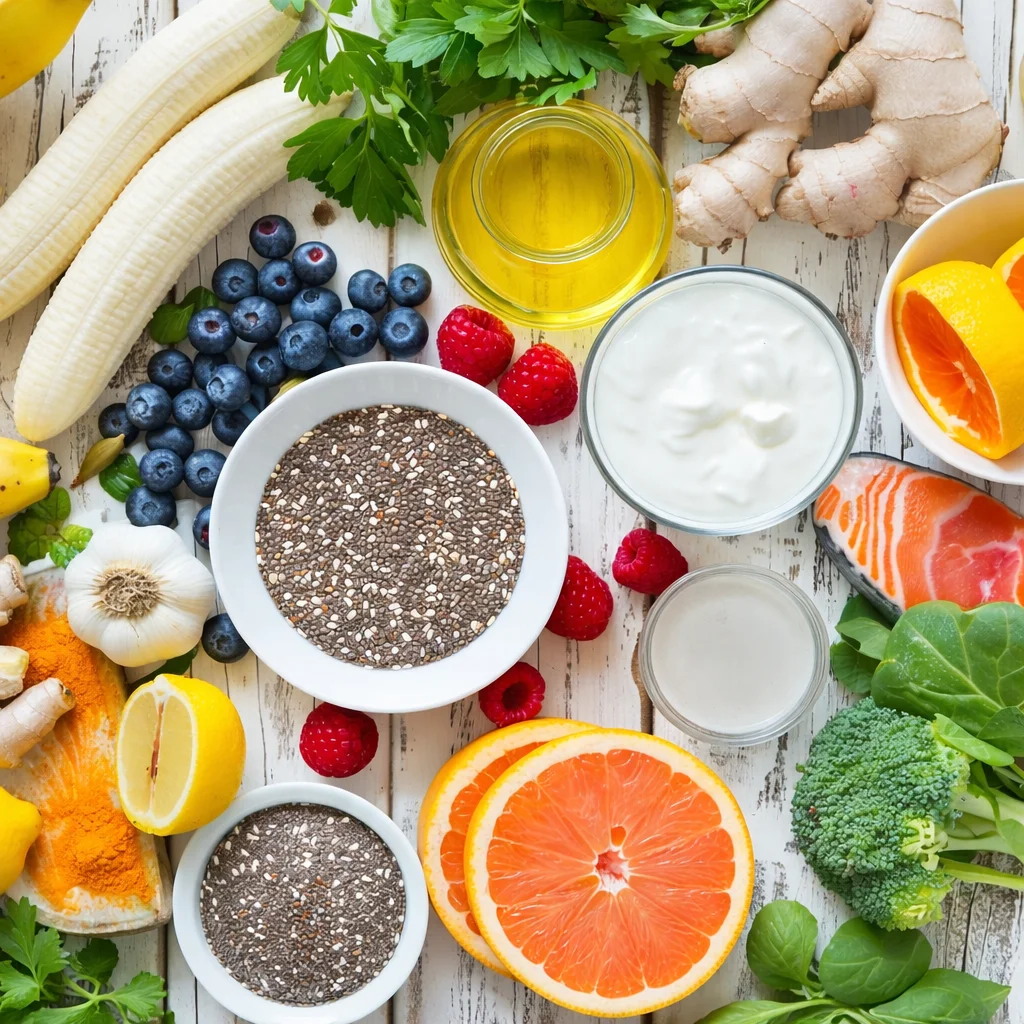
If you’re looking for a practical gut-friendly foods list, you’re likely dealing with bloating, irregular digestion, or low energy after meals. Your gut plays a central role in how you feel every day. The right foods can calm inflammation, restore healthy bacteria, and improve digestion naturally.
Gut-Friendly Foods List for Better Digestion
A gut-friendly foods list includes probiotic foods like yogurt and kefir, prebiotic-rich vegetables such as garlic and onions, high-fiber foods like oats and berries, and anti-inflammatory options like salmon and leafy greens. These foods support digestion, reduce bloating, and help maintain a balanced gut microbiome.
- Gut-friendly foods re easy to digest, rich in nutrients, and support the balance of healthy bacteria in your digestive system.
- They nourish your gut microbiome the trillions of beneficial bacteria that influence digestion, immunity, metabolism, and even mood.
- You feel better when you eat things your gut actually wants.
Why Gut Health Matters: Microbiome, Inflammation, and Whole-Body Wellness
- Your tummy bugs help with way more than you think even your mood!
- Mess up your gut, and the rest of your body will throw a fit (hello, skin issues, low energy, mood swings).
- Get it right, and everything (focus, energy, sleep) can just… flow better.
Common Signs Your Gut Needs Support (Bloating, Gas, Constipation, Fatigue)
- Bloated after, like, every meal? That’s your gut waving a red flag.
- Frequent gas, irregular bowel movements, and unexplained fatigue can all signal that your gut needs extra support.
- Sugar and stress usually make it worse. Wish I learned this sooner…
What Causes Poor Gut Health? (Diet, Stress, Antibiotics, Cortisol, Ultra-Processed Foods)
- Highly processed foods, chronic stress, and even necessary antibiotics can disrupt the balance of healthy gut bacteria.
- Eating out a lot? Ulta-processed stuff is everywhere. No shame it happens!
- Not moving enough makes things slower…in more ways than one.
The Complete Gut-Friendly Foods List for Better Digestion
- Yogurt, kefir, and kimchi I know, fermented stuff is having a moment.
- Lots of fiber: oats, chia seeds, apples, broccoli (not the most glamorous, but they work).
- Garlic, onions, and slightly green bananas contain prebiotics natural fibers that feed beneficial gut bacteria.
- Healthy fats, like olive oil and nuts, make everything smoother if you know what I mean.
- My pro tip? Rotate your foods; don’t stick to just one (your belly gets bored too).
Check out gut-friendly lunch recipes for inspo!
Best Probiotic Foods to Restore Healthy Gut Bacteria
- Greek yogurt yep, old-school, but unbeatable.
- Sauerkraut and kimchi yes they’re strong, but your gut loves a zing (try it in a sandwich, trust me).
- Kombucha (if you’re into fizz and tartness). I’m weirdly obsessed.
Prebiotic Foods That Feed the Microbiome and Improve Regularity
- Bananas (especially the just-barely ripe kind don’t look at me like that).
- Garlic and onions forget vampire warnings, your microbiome’s cheering for more.
- Asparagus and whole grains: boring? Maybe. But your gut thanks you!
High-Fiber Foods for Digestion, Microbiome Diversity, and Metabolic Health
- Lentils, beans just soak them, or you’ll sound like a brass band later.
- Berries: sweet, easy snack, and oh-so-good for diversity down there.
- Flaxseeds you can sprinkle it on everything. I do. Sometimes twice.
Anti-Inflammatory Foods That Calm Gut Inflammation Naturally
- Salmon and sardines the kind of fish that does you favors (no need to overdo it).
- Leafy greens like spinach, arugula add them to anything.
- Colorful stuff: turmeric, blueberries, even a bit of dark chocolate (finally, a win!).
Want the full anti-inflammatory lineup? See the anti-inflammatory foods list.
Gut-Healing Nutrients: Polyphenols, Resistant Starch, Collagen, and SCFAs
- Polyphenols: Found in green tea, olives, and cocoa (yes, chocolate again!).
- Resistant starch: cold potatoes, green bananas way tastier than they sound.
- Collagen from bone broth or supplements, and SCFAs (don’t stress, your gut makes ‘em once you eat fiber).
Foods to Avoid for Gut Health (Sugar, Seed Oils, Alcohol, Artificial Sweeteners)
- Sugar it’s delicious, but your gut hates it. Sorry!
- Excess seed oils (like soybean or canola oil), alcohol, and artificial sweeteners may irritate the gut lining and disrupt microbial balance.
- Ultra-processed snacks? They sneak in everywhere. Read the labels, but don’t obsess (nobody’s perfect).
How to Start a Simple Gut Reset Plan (7-Day Microbiome Support Framework)
- Start slow add, don’t subtract (no cold turkey!).
- Pick three gut-friendly foods and eat them daily (for a week).
- Drink more water seriously, just start now.
- Move your body a little every day even twenty minutes works wonders.
Daily Gut Health Routine: Morning, Midday, and Evening Habits for Better Digestion
- Morning: warm water, probiotics, and something with fiber (oats, toast, fruit).
- Midday: Add a veggie (even on pizza, do it!) and chew your food slower than you want to.
- Evening: Chamomile tea and a break from screens before bed can calm things down.
Long-Term Prevention: How to Maintain a Healthy Microbiome and Reduce Inflammation
- Rotate foods so your gut never gets stuck in a rut.
- Prioritize sleep and dial down stress where you can (deep breaths, people).
- Treat your gut like a friend…not the enemy. That’s a mindset shift for real results.
Common Questions
Q: How long does it take to improve gut health?
Most people notice reduced bloating within a week, but deeper microbiome improvements can take 3–4 weeks.
Q: Can I improve gut health without supplements?
Yes. Whole foods rich in fiber, probiotics, and prebiotics are often enough.
Q: Is coffee bad for gut health?
Moderate coffee is fine for many people, but excessive intake may worsen reflux or irritation.
Q: Are all fermented foods probiotic?
No. Only fermented foods with live active cultures provide probiotic benefits.
Ready for Happy Digestion? Let’s Go!
Following a balanced gut-friendly foods list doesn’t mean restricting everything you love. It means choosing foods that actively support digestion and reduce inflammation. You’ve got your gut-friendly foods list and easy daily habits to try out. And hey if you want more ideas, check out Crohn’s & Colitis Foundation’s gut friendly recipes-list for even more everyday inspiration. Also, don’t forget to peek at these practical gut-friendly breakfast ideas trust me, it’s way easier (and tastier) than you think. Your gut’s got this, and so do you!