
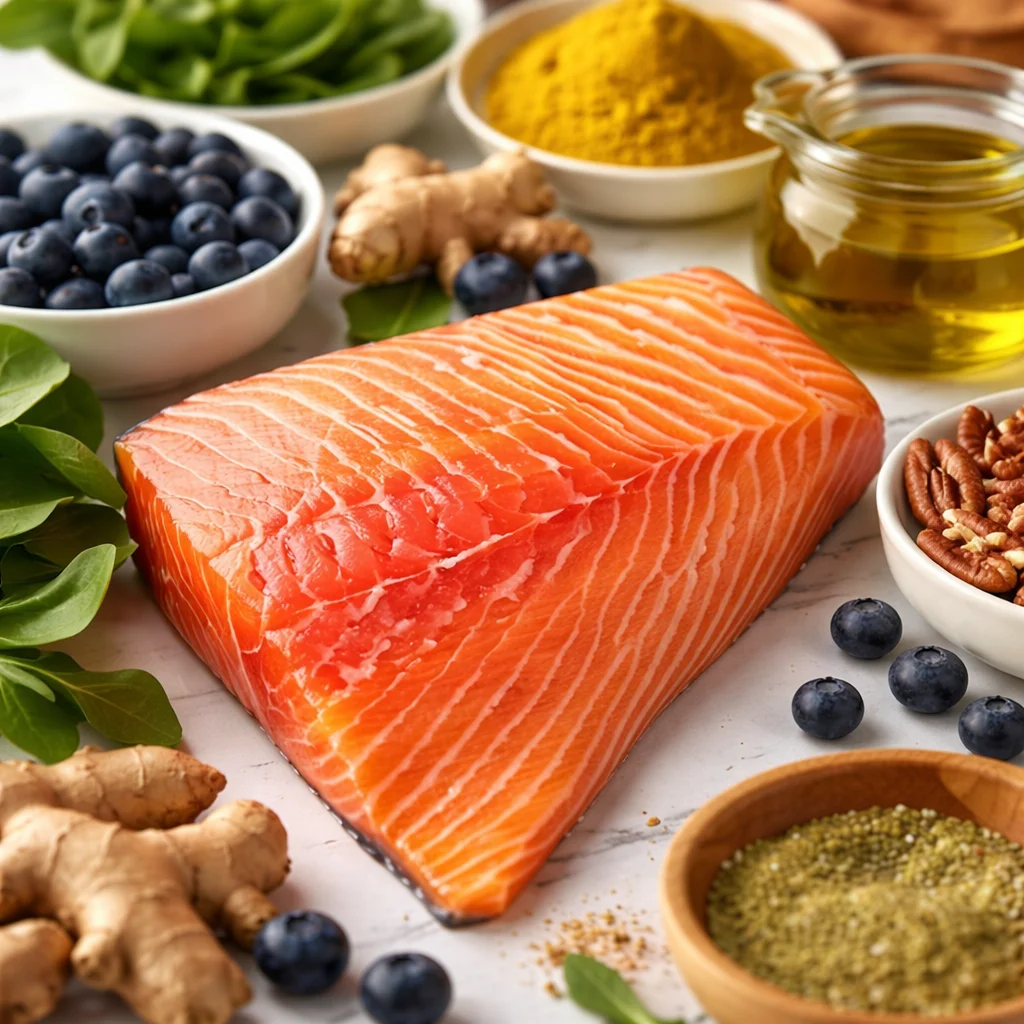
Anti-Inflammatory Foods List if you’ve been dealing with bloating, fatigue, brain fog, or stubborn digestive discomfort, the foods you eat every day could be a major factor. Chronic inflammation often starts in the gut, and your daily diet can either calm it down or quietly make it worse.
An anti-inflammatory foods list focuses on whole, nutrient-dense ingredients that help reduce inflammation, support the gut microbiome, and improve overall digestion. Foods like leafy greens, berries, fatty fish, olive oil, and fiber-rich grains contain compounds that naturally help the body fight inflammation.
In this guide, you’ll discover a complete anti-inflammatory foods list, learn which foods reduce inflammation naturally, and find simple ways to include them in your daily meals.
What Is an Anti-Inflammatory Foods List?
- Anti-inflammatory foods are ingredients that help cool down inflammation in your body, especially in your gut.
- Basically, this list gets you eating stuff that’s less likely to send your stomach and body into meltdown mode.
- Why care? A calm gut often means less bloat, better energy, and way fewer random aches. It’s not magic but the difference can feel surprisingly noticeable.
- Eating from this list isn’t a fad. It can seriously help if you’re tired of feeling crummy after every meal.
How Anti-Inflammatory Foods Reduce Chronic Inflammation and Support the Microbiome
Anti-inflammatory foods are ingredients that help reduce chronic inflammation in the body and support gut health. These foods include leafy greens, berries, fatty fish, olive oil, nuts, and fiber-rich whole grains. Eating them regularly helps nourish beneficial gut bacteria, improve digestion, and lower the risk of long-term inflammatory conditions.
- These foods feed your good gut bacteria and chill out your immune system.
- They’re packed with stuff like fiber and antioxidants, which your beneficial gut bacteria thrive on.
- Over time, regularly including these foods in your meals can keep your whole system humming along without as many digestive imbalances or discomfort.
- Gut feels better, mind feels clearer. Yes, it really does work over time.
Acute vs. Chronic Inflammation: Understanding the Root of Digestive Symptoms
- Acute inflammation: That’s your body fighting off a bug or healing a cut. It’s short-term and needed.
- Chronic inflammation: This is the the hidden long-term driver of many health problems long-term, quiet, starts messing with your gut and even your brain.
- Chronic issues (like bloating, fatigue, random pain) usually come from this subtle type.
- Most of us don’t realize our daily food choices can fuel this long-haul inflammation.
Common Symptoms of Inflammation (Bloating, Fatigue, Joint Pain, Brain Fog)
- Here’s the not-so-pleasant roll call: bloating, gassy belly, persistent digestive discomfort.
- Achy joints or waking up with stiff joints or unexplained fatigue Same camp.
- Brain fog the frustrating feeling when your thinking becomes slow or unclear.
- For me, oatmeal (high on the anti-inflammatory foods list) made a weirdly huge difference.
Root Causes and Triggers of Chronic Inflammation in the Gut
- Eating lots of processed junk, fried food, or sugar blitzes the gut.
- Stress (ugh), ongoing bad sleep, and even certain medications can aggravate inflammation.
- Food allergies or sensitivities can stir the pot.
- Not enough antioxidants or fiber? You’re missing the built-in “firefighters” for your system.
The Gut Microbiome, Leaky Gut, and Inflammatory Response Explained
- Your gut is like a garden: full of bacteria some good, some not so much.
- Feed your “good” bugs the right foods (think veggies, fiber) and they help protect your gut lining.
- When the gut lining gets damaged (aka “leaky gut”), more toxins sneak out and crank up inflammation.
- This domino effect is real and surprisingly common.
Complete Anti-Inflammatory Foods List: What to Eat Daily
- Leafy greens (kale, spinach, chard) throw ‘em in eggs or smoothies.
- Berries (blueberries, raspberries) way tastier than candy.
- Olive oil, salmon, tuna (hello omega-3s).
- Sweet potatoes and other root veggies, nuts and seeds, lentils, whole grains.
- More fun ideas? Here’s a complete anti-inflammatory foods list
Best Anti-Inflammatory Vegetables, Fruits, and Fiber-Rich Foods for Microbiome Diversity
- Cruciferous veggies: broccoli, cauliflower, brussels sprouts (they become surprisingly flavorful when roasted).
- Apples and pears fiber heroes, easier to grab than you’d think.
- Beans, lentils, oats. If your body tolerates ‘em, your microbiome gets so happy.
- Mix up your choices for more diversity don’t eat the same salad every day.
Healthy Fats, Omega-3 Foods, and Anti-Inflammatory Proteins That Lower Inflammation
- Wild salmon, sardines, flaxseeds, walnuts all gold stars for omega-3s.
- Eggs (especially pastured) and lean chicken great for protein without the extra junk.
- Avocado provides healthy fats that support inflammation control and gut health.
- Olive oil, not vegetable oil makes a huge difference for healthy cooking.
Herbs, Spices, and Functional Foods That Naturally Fight Inflammation
- Turmeric, ginger, cinnamon seriously, sprinkle these whenever you can.
- Garlic, onions, parsley flavorful and gut-friendly.
- Green tea, black tea, and even coffee (yup, it can help too, in moderation).
- Little swaps here go a long way for spicing up dull meals and fighting inflammation.
Inflammatory Foods to Avoid (Hidden Triggers That Disrupt Gut Balance)
- Processed snacks and seed oils (looking at you, chips and margarine).
- Sugar bombs: sodas, candy, “healthy” granola bars that aren’t really healthy.
- Excessive alcohol and artificial sweeteners sneaky troublemakers.
- White bread and pastries.
How to Build an Anti-Inflammatory Plate (Simple Daily Formula + Meal Examples)
- Half your plate = veggies (raw or roasted, it all counts).
- Add some quality protein (chicken, beans, fish).
- Don’t forget healthy fats (avocado, olive oil, nuts).
- Some quick dinner wins? Try these 30-minute anti-inflammatory dinners even if you hate cooking, they’re easy.
Anti-Inflammatory Daily Routine: Morning to Night Habits That Reduce Inflammation
- Start your morning with warm lemon water or ginger tea.
- Sneak in leafy greens at breakfast chopped spinach in scrambled eggs works even if you’re half-asleep.
- Prep snacks ahead apple with almond butter, little baggie of nuts, whatever keeps you honest.
- Get moving walk, stretch, or dance badly in your kitchen. All good.
Prevention Strategies: Long-Term Lifestyle Habits for Low Inflammation Living
- Prioritize sleep (trust me, the difference is, like, night and day).
- Stress less yoga, music, or yelling into a pillow if needed.
- Keep your diet colorful and varied. Rotating your anti-inflammatory foods list makes it way less boring.
- Build in social time and unplug a bit mental wellness counts too.
Common Questions
What foods reduce inflammation quickly?
Foods rich in antioxidants and omega-3 fats like berries, salmon, leafy greens, olive oil, and walnuts can help reduce inflammation when eaten regularly.
Are anti-inflammatory foods good for gut health?
Yes. Many anti-inflammatory foods contain fiber and polyphenols that support beneficial gut bacteria and help maintain a healthy gut microbiome.
Can diet really reduce chronic inflammation?
Yes. Long-term dietary patterns play a major role in inflammation levels. Diets rich in whole foods and low in processed products are strongly linked to lower inflammation.
How long does it take to see results?
Some people notice improved digestion and less bloating within a few weeks, while deeper changes in inflammation may take several weeks to months.
Wrapping It Up Eat Well, Feel Better (Even on Busy Days)
Improving your health doesn’t require a perfect diet. Small changes like adding berries to breakfast, cooking with olive oil, or including more leafy greens can gradually reduce inflammation and support gut health.
Start with a few foods from this anti-inflammatory foods list, build simple meals around them, and stay consistent. Over time, these small choices can make a noticeable difference in how you feel every day.