
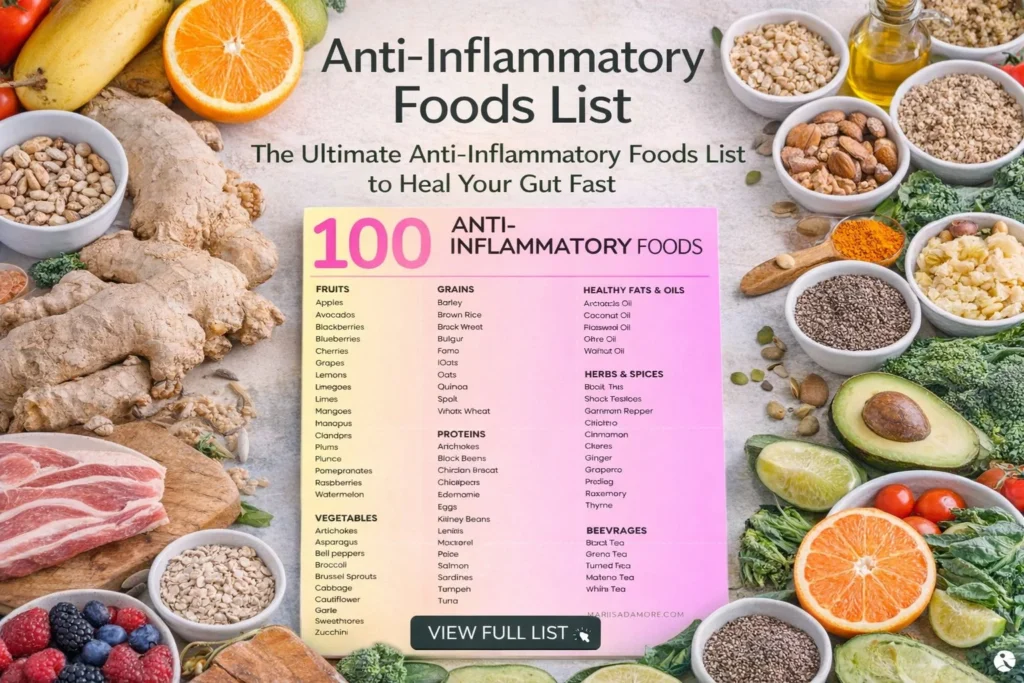
This anti inflammatory foods list will help you heal your gut and reduce inflammation naturally.
Feeling bloated, tired, or just “off” after meals? Chronic digestive discomfort, unpredictable bowel habits, or stubborn belly bloat are often signs your gut is inflamed and needs repair. You’re not alone — millions of people experience low-grade gut inflammation that can drain energy and make eating feel uncomfortable. With the right anti-inflammatory foods and simple habits, you can soothe your gut lining, support healthy microbes, and get back to feeling steady and energized.
If you’re looking for a focused list to shop from and simple swaps to make, this guide is for you. For more anti-inflammatory food ideas that boost energy and gut health, check our starter list here: 20 anti-inflammatory foods for gut health and energy.
H2: What Is Happening in Your Gut Your gut is home to trillions of microbes and the lining that absorbs nutrients and protects you from invaders. When the gut lining is stressed by poor diet, chronic stress, infections, or certain medications, it becomes inflamed. Inflammation is the body’s natural response to danger, but when it sticks around, it can damage the gut barrier and change the balance of helpful bacteria.
Think of it like a frayed rope: tiny holes let things through that shouldn’t, and the immune system keeps sounding the alarm. That chronic alarm produces chemicals that make digestion worse, cause pain, and affect mood and sleep. The right foods may help calm inflammation, support beneficial microbes, and promote a healthier gut lining over time.
Main Causes of This Gut Problem
- Chronic stress: It changes digestion and gut bacteria.
- Processed foods: High in refined carbs, sugar, and additives that feed harmful microbes.
- Frequent antibiotics or NSAIDs: Can damage beneficial bacteria and the gut lining.
- Food sensitivities: Ongoing reactions trigger inflammation.
- Poor sleep and sedentary lifestyle: These indirectly worsen gut inflammation.
- Infections or imbalanced microbiome: Overgrowths or pathogens cause chronic irritation.
Warning Signs Your Gut Needs Help
- Persistent bloating or gas
- Alternating constipation and diarrhea
- Food reactions (bloating, fatigue, rashes after eating)
- Brain fog, low mood, or poor sleep with no other cause
- Unexplained weight gain or loss
- Chronic fatigue or low energy
If you see several of these regularly, it’s time to switch to gut-healing foods and habits.
Best Foods to Help Heal and Repair Your Gut The foods below are known to support balanced inflammation, nourish beneficial bacteria, and assist gut lining repair. Aim to eat a variety daily.
- Leafy greens (spinach, kale)
- Why: Packed with vitamins and polyphenols that reduce inflammation.
- Pinterest-friendly: “Green power for a soothed gut spinach salad idea.”
- Berries (blueberries, strawberries, raspberries)
- Why: High in antioxidants and gut-friendly fiber.
- Pinterest-friendly: “Antioxidant-rich berry bowl for gut repair.”
- Fatty fish (salmon, mackerel, sardines)
- Why: Rich in omega-3s that calm inflammation systemically.
- Pinterest-friendly: “Omega-3 salmon dinner to reduce gut inflammation.”
- Fermented foods (yogurt, kefir, sauerkraut, kimchi)
- Why: Provide live beneficial bacteria to rebalance your microbiome.
- Note: Start slowly if you’re sensitive.
- Pinterest-friendly: “Kefir smoothie for gentle gut balance.”
- Prebiotic foods (onions, garlic, leeks, asparagus, bananas)
- Why: Feed beneficial bacteria so they can produce healing short-chain fatty acids.
- Pinterest-friendly: “Easy prebiotic snack ideas.”
- Turmeric
- Why: Contains curcumin, a powerful anti-inflammatory compound. Add black pepper to boost absorption.
- Pinterest-friendly: “Golden turmeric latte for gut calm.”
- Ginger
- Why: Soothes digestion and reduces nausea and inflammation.
- Pinterest-friendly: “Fresh ginger tea for an upset stomach.”
- Olive oil (extra virgin)
- Why: Heart-healthy fats and polyphenols that lower gut inflammation.
- Pinterest-friendly: “Drizzle-on olive oil for better digestion.”
- Nuts and seeds (walnuts, chia, flaxseed)
- Why: Provide fiber, omega-3s, and magnesium all supportive of gut health.
- Pinterest-friendly: “Crunchy seed topping for gut healing bowls.”
- Bone broth
- Why: Contains amino acids like glycine and collagen, which may help support connective tissue and overall gut integrity.
- Pinterest-friendly: “Comforting bone broth for gut repair.”
- Oats and whole grains (if tolerated)
- Why: Source of soluble fiber to feed good bacteria and soothe digestion.
- Pinterest-friendly: “Soothing oat bowl to start your day.”
- Fermented drinks (kombucha, water kefir if tolerated)
- Why: Can add diversity of microbes and support digestion.
- Pinterest-friendly: “Fizzy gut-friendly kombucha mocktail.”
- Beans and legumes (soak/cook well)
- Why: High in fiber and resistant starch that benefit gut bacteria when prepared properly.
- Pinterest-friendly: “Slow-cooker bean stew for gut health.”
For more detailed, science-backed lists of gut-supportive foods, explore our complete guide here: 15 best foods for gut health and digestion.
Foods That May Worsen Gut Inflammation Limit or avoid these regularly when healing your gut:
- Refined sugars and sweetened beverages
- Feed harmful microbes and increase inflammation.
- Ultra-processed foods and fast food
- Often contain additives, emulsifiers, and low-quality fats that harm the microbiome.
- Artificial sweeteners
- Can disrupt gut bacteria and cause digestive symptoms in some people.
- Excess alcohol
- Damages the gut lining and reduces microbial diversity.
- Trans fats and high omega-6 processed oils (some margarines, packaged snacks)
- Promote inflammation when consumed in excess.
- Excessive red or processed meats
- Can increase inflammatory markers when eaten frequently.
- Highly refined grains (white bread, pastries)
- Lack fiber and may spike blood sugar, fueling inflammation.
Natural Remedies That May Support Gut Healing Pair these remedies with anti-inflammatory foods for faster healing.
- L-glutamine
- An amino acid that supports gut lining cells. Often used to support gut lining cells, especially during periods of irritation
- Probiotics (specific strains)
- Lactobacillus and Bifidobacterium strains can help rebalance microbes. Choose quality brands or fermented foods.
- Prebiotic fiber (inulin, FOS) from food
- Feeds beneficial bacteria; start slowly to avoid gas.
- Omega-3 supplements
- When your diet lacks fatty fish, a high-quality fish oil helps reduce inflammation.
- Collagen or gelatin
- Supports connective tissue and gut lining repair.
- Herbal anti-inflammatories (turmeric, ginger, licorice root DGL)
- Can soothe and reduce gut irritation. Consult provider if on medications.
- Mind-body practices (yoga, guided breathing)
- Reduce stress-related inflammation and improve digestion rhythm.
Daily Habits That Improve Digestion Fast Small daily changes have big impact.
- Eat regular, balanced meals
- Keep blood sugar stable and support steady digestion.
- Chew thoroughly and slow down
- Bigger meals and rushed eating stress digestion.
- Hydrate throughout the day
- Water helps move food and supports mucosal health.
- Prioritize sleep (7–9 hours)
- Poor sleep increases inflammatory markers.
- Move daily (20–30 minutes)
- Walking aids digestion and supports microbial diversity.
- Manage stress (5–10 minutes daily)
- Short breathing breaks reduce gut inflammation.
- Limit late-night eating
- Eating too close to bedtime disrupts digestion and recovery.
7-Day Gut Reset Plan A simple, anti-inflammatory reset designed to support digestion and encourage healthier habits. Follow whole-food choices, simple meals, and soothing routines.
Day 1 Clean start
- Breakfast: Overnight oats with chia, blueberries, and a spoon of yogurt.
- Lunch: Mixed green salad with grilled salmon and olive oil.
- Dinner: Bone broth-based soup with vegetables and shredded chicken.
- Habit: 10-minute mindful breathing before each meal.
Day 2 Add prebiotics
- Breakfast: Smoothie with kefir, banana, spinach, and flaxseed.
- Lunch: Lentil soup with onions, garlic, and turmeric.
- Dinner: Steamed asparagus, quinoa, and baked mackerel.
- Habit: Short evening walk after dinner.
Day 3 Ferments and fiber
- Breakfast: Yogurt bowl with berries and walnuts.
- Lunch: Quinoa salad with chopped leeks and roasted vegetables.
- Dinner: Stir-fry with ginger, garlic, colorful veggies, and tamari.
- Habit: 15 minutes of gentle yoga.
Day 4 Gentle protein and greens
- Breakfast: Scrambled eggs with spinach and avocado.
- Lunch: Sardine salad with mixed greens and olive oil.
- Dinner: Baked salmon, steamed broccoli, and sweet potato.
- Habit: Prioritize 8 hours sleep.
Day 5 Soothing soups
- Breakfast: Bone broth with soft-cooked oats and cinnamon.
- Lunch: Miso soup with tofu and sea vegetables.
- Dinner: Slow-cooker bean stew with turmeric and rosemary.
- Habit: 10-minute relaxation before bed.
Day 6 Diversity day
- Breakfast: Smoothie with kefir, berries, and a tablespoon of ground flax.
- Lunch: Fermented vegetable bowl with brown rice and tempeh.
- Dinner: Grilled chicken, roasted root vegetables, and kale.
- Habit: Try a new vegetable or recipe from a slow-cooker anti-inflammatory collection: 40+ slow cooker anti-inflammatory recipes.
Day 7 Rebalance and reflect
- Breakfast: Yogurt parfait with mixed seeds and fruit.
- Lunch: Big salad with avocado, beets, and grilled shrimp.
- Dinner: Vegetable curry with turmeric, ginger, and lentils served over quinoa.
- Habit: Make a plan to continue the anti-inflammatory swaps learned this week.
Common Mistakes to Avoid
- Jumping straight into many fermented foods if you’re sensitive start slow.
- Assuming “low-fat” equals healthy healthy fats are vital for healing.
- Over-relying on supplements instead of whole foods.
- Skipping sleep and exercise they are essential for gut recovery.
- Cutting out all fiber at once during a flare instead choose gentle, soluble fibers.
Expert Tips for Faster Gut Healing
- Personalize: What works for one person may not work for another. Track symptoms and foods.
- Rotate foods: A varied diet supports diverse gut microbes.
- Test when necessary: Work with a clinician on tests if symptoms persist.
- Focus on consistency: Small daily wins beat large but short-lived changes.
- Combine diet with lifestyle: Sleep, stress reduction, and movement amplify food benefits.
- Use anti-inflammatory spices: Turmeric + black pepper, ginger, and cinnamon daily in cooking or drinks.
- Be patient: Microbiome balance and tissue repair can take weeks to months.
FAQs
Q: How long do anti inflammatory foods take to heal gut health?
A: Some people report improvements in days to weeks, such as better energy or less bloating, while deeper changes in gut health may take several weeks or longer depending on the individual. Consistency matters more than perfection.
Q: Can I eat all fruits while healing my gut? A: Most fruits are helpful because of fiber and antioxidants, but some people with severe sensitivity may need to limit high-FODMAP fruits (like apples or pears) until symptoms calm. Choose low-FODMAP options if needed.
Q: Are probiotics safe to take daily? A: Generally yes for most people, especially short-term. Choose quality products and consider strains with research for your symptom. If you have immune compromise, talk to your provider.
Q: Is gluten always inflammatory? A: Only in people with celiac disease or non-celiac gluten sensitivity does gluten reliably trigger inflammation. Otherwise, processed wheat and refined carbs can be inflammatory choose whole grains if tolerated.
Q: What role does sugar play in gut inflammation? A: High sugar intake feeds harmful microbes and increases inflammation. Reducing added sugars is one of the fastest ways to reduce gut irritation.
Final Thoughts Healing your gut doesn’t require drastic deprivation or gimmicks. Small, consistent swaps toward anti-inflammatory foods and daily habits can help reduce inflammation, support beneficial microbes, and promote overall gut health. Start with a few changes add leafy greens, swap processed snacks for nuts, include a serving of fatty fish each week, and practice a short nightly wind-down. Your gut will thank you with steadier digestion, better energy, and clearer focus.
For a quick reference to widely recommended anti-inflammatory foods, see this helpful round-up of the top 25 anti-inflammatory foods to improve your health overall. For clinical context on how an anti-inflammatory diet supports health, consider this overview from a major medical center: Anti Inflammatory Diet | Johns Hopkins Medicine.
Encourage gentle changes, listen to your body, and reach out to a healthcare provider if symptoms are severe or persistent. Small steps add up and a calmer gut is within reach.
Medical Note: This content is for educational purposes only and is not a substitute for professional medical advice. If you have persistent digestive symptoms, consult a qualified healthcare provider.