
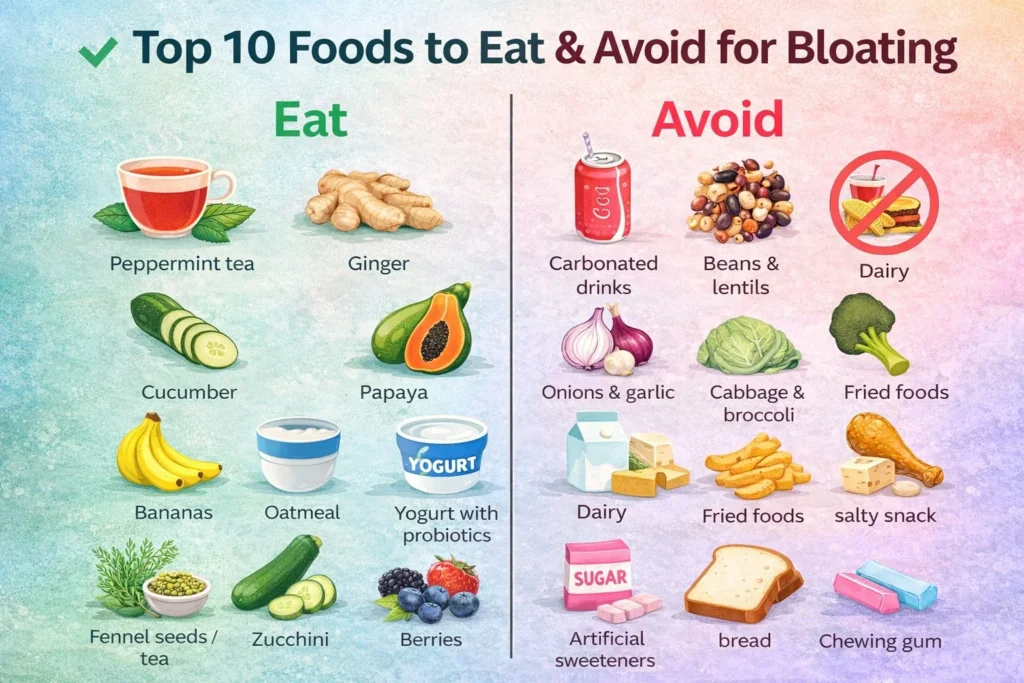
Bloating relief foods can make the difference between feeling heavy after meals and enjoying comfortable digestion throughout the day. Many people struggle with gas, abdominal pressure, or that tight feeling in the stomach after eating. Often the problem is not how much you eat, but what you eat. Certain foods calm the gut and support smoother digestion, while others trigger fermentation and gas. Learning which bloating relief foods help your gut can reduce discomfort and support a healthier digestive system.
- What Is Top 10 Foods to Eat & Avoid for Bloating Relief
- Common Symptoms and Warning Signs
- What Causes Top 10 Foods to Eat & Avoid for Bloating Relief
- How Top 10 Foods to Eat & Avoid for Bloating Relief Affects Gut Health and the Microbiome
- Natural Ways to Improve Top 10 Foods to Eat & Avoid for Bloating Relief
- Daily Habits That Support Better Digestion
- Common Mistakes That Can Make Gut Issues Worse
- Expert Tips for Long-Term Gut Health
- FAQ
- FINAL THOUGHTS
- Conclusion
What Is Top 10 Foods to Eat & Avoid for Bloating Relief
This term simply describes a practical list of foods that help reduce gas and pressure, along with foods that tend to make bloating worse.
The “foods to eat” are choices that typically support digestion, reduce fermentation, or soothe the gut lining. The “foods to avoid” are common triggers that increase gas, draw water into the bowel, or slow digestion, which leads to the uncomfortable feeling of bloating.
Common Symptoms and Warning Signs
Bloating often shows up as a feeling of fullness, pressure, or tightness in the abdomen. Other common signs include:
- Noticeably swollen or distended belly after meals
- Excess gas and belching
- Mild cramping or abdominal discomfort
- Feeling uncomfortably full after a small meal
- Irregular bowel movements, such as constipation or loose stools
If bloating is persistent, severe, or comes with weight loss, blood in the stool, or fever, get evaluated by a clinician. For most people, though, dietary changes and small habit shifts make a big difference.
What Causes Top 10 Foods to Eat & Avoid for Bloating Relief
Bloating comes from several common mechanisms:
- Fermentation: Certain sugars and fibers are fermented by gut bacteria, producing gas. Foods high in FODMAPs can cause this for sensitive people.
- Osmotic effects: Some sugars and sugar alcohols pull water into the bowel, causing distension and loose stools.
- Swallowed air: Eating quickly, drinking carbonated beverages, or chewing gum increases swallowed air, which can add to bloating.
- Slowed transit: Poor motility or constipation allows gas to build up.
- Dysbiosis: An imbalance in gut bacteria can increase gas production and inflammation.
Understanding what is triggering your bloating can make it much easier to choose foods that feel better for your digestion. For example, if you notice symptoms after beans or onions, FODMAPs may be the issue.
How Top 10 Foods to Eat & Avoid for Bloating Relief Affects Gut Health and the Microbiome
Your daily food choices directly influence the balance of bacteria living in your gut. Some foods feed beneficial bacteria and support a balanced microbiome, which helps with digestion and reduces inflammation. Some foods feed bacteria that produce more gas, which can increase fermentation and lead to uncomfortable bloating.
For example, fermented foods like yogurt or kefir can introduce helpful strains and improve digestion for many people. On the other hand, frequent intake of refined sugars and artificial sweeteners may promote an imbalance in favor of bacteria that produce more gas and low-grade inflammation. Over time, chronic bloating can also signal that the microbiome needs attention through diet, fiber balance, and lifestyle adjustments.
Natural Ways to Improve Top 10 Foods to Eat & Avoid for Bloating Relief
These simple food choices can help reduce bloating and support smoother digestion.
Gut-Friendly Foods That Help
- Plain low-fat yogurt or kefir, with live cultures
- These provide probiotics that often ease gas and improve stool consistency.
- Bananas
- Gentle on the stomach, they provide soluble fiber and help regulate bowel movements.
- Cooked carrots and zucchini
- Soft, low-FODMAP vegetables that are less likely to ferment in the gut.
- Oats and warm porridge
- Oats are a source of soluble fiber that can help normalize digestion without causing a lot of gas.
- Ginger and peppermint
- Natural carminatives that can calm the gut and reduce bloating-related discomfort.
- Firm tofu and well-cooked chicken
- Lean, easy-to-digest protein sources that do not typically cause excess gas. For simple recipes that are gentle on the gut, try some anti-inflammatory chicken recipes.
- White rice
- Bland and easy to digest, a safe staple during flare ups.
- Cucumbers without the peel
- Mostly water and low in fermentable fibers, they are refreshing and light.
- Fennel
- Traditionally used to reduce gas and help digestion.
- Papaya and pineapple in moderation
- Contain digestive enzymes that can aid protein digestion and reduce bloating for some people.
If you are trying new foods, introduce them slowly and pay attention to portion size. What helps one person might cause symptoms in another.
Foods That May Make Symptoms Worse
- Beans, lentils, and chickpeas
- High in fermentable carbs that often cause gas.
- Cruciferous vegetables raw or in large amounts (broccoli, cauliflower, cabbage)
- Contain complex sugars that ferment and create gas.
- Onions and garlic
- High-FODMAP foods that commonly trigger bloating in sensitive people.
- Apples, pears, and stone fruits in large portions
- Can be high in fructose and sorbitol, which may draw water into the bowels and ferment.
- Dairy for lactose-intolerant people
- Lactose not digested in the small intestine becomes fuel for bacteria and causes gas.
- Sugar alcohols and some artificial sweeteners (sorbitol, xylitol, mannitol)
- Often cause bloating and diarrhea even in small amounts.
- Carbonated beverages and sparkling water
- Add gas to the digestive tract and can worsen the feeling of bloating.
- Fried or greasy foods
- Slow gastric emptying and can make you feel heavy and bloated.
- Large portions of whole grains like barley or rye if sensitive
- Some people react to high amounts of certain fibers with increased gas.
- Highly processed foods and fast food
- Often low in fiber variety and high in ingredients that interrupt digestion and promote inflammation.
If you suspect a particular food is a trigger, try a simple elimination for two weeks and then reintroduce it to see how you feel.
Daily Habits That Support Better Digestion
The foods you eat matter, but your daily eating habits also play a big role in digestion. Try these daily practices:
- Eat slowly and chew thoroughly. This reduces swallowed air and helps digestion start in the mouth.
- Drink water throughout the day, but limit large amounts with meals if they make you feel too full.
- Move gently after meals, such as a 10- to 20-minute walk, to encourage motility.
- Keep portion sizes moderate. Even healthy foods can cause symptoms if you overeat.
- Practice regular meal timing. A consistent routine can help the gut regulate itself.
- Manage stress with breathing, meditation, or gentle yoga. Stress affects gut motility and bacterial balance.
- Track foods and symptoms in a simple journal. Patterns often emerge over a few weeks.
Even small daily habits can noticeably improve how your gut feels and functions.
Common Mistakes That Can Make Gut Issues Worse
- Cutting fiber too aggressively without replacing it with tolerated forms. Fiber helps regularity, but the type matters.
- Swapping real sugar for sugar alcohols and thinking it will solve the problem. Many sugar alcohols are common culprits for bloating.
- Relying on probiotics without addressing diet and lifestyle. Some products help, but they are not a fix-all.
- Ignoring portion size. A large plate of low-FODMAP food can still cause bloating.
- Overusing “gut-cleansing” or laxative products without medical supervision. They can create dependency or worsen imbalances.
- Not seeking medical advice when symptoms are severe or new. Conditions like celiac disease, IBS, or small intestinal bacterial overgrowth need professional evaluation.
Expert Tips for Long-Term Gut Health
- Try to include a wide variety of whole foods in your meals. A varied diet tends to support a richer and more resilient microbiome.
- Work with a registered dietitian if you have persistent bloating. They can help identify triggers and design a personalized plan.
- Try a short-term low-FODMAP approach under guidance if you suspect FODMAP sensitivity. It can be a useful diagnostic and management tool.
- Prioritize sleep. Poor sleep affects gut hormones and microbiome balance.
- Consider slowly introducing fermented foods or a high-quality probiotic, especially if you have had antibiotics or digestive upset.
- Be patient and incremental. Quick fixes rarely last. Build changes one at a time and monitor results.
FAQ
Q: How quickly should I expect bloating to improve after changing my diet? A: Many people notice improvement in a few days to two weeks, especially when they cut obvious triggers like carbonated drinks and sugar alcohols. For deeper microbiome changes, expect several weeks to months.
Q: Are probiotics helpful for bloating? A: Some probiotic strains can reduce bloating for certain people, but results vary. Look for clinically studied strains and try them for at least four weeks to assess benefit.
Q: Can drinking water reduce bloating? A: Yes, staying hydrated helps digestion and prevents constipation, a common cause of bloating. However, sipping water slowly during meals is better than drinking large amounts at once.
Q: Is the low-FODMAP diet safe long-term? A: The low-FODMAP approach is usually recommended short term to identify triggers. Long-term use should be supervised by a dietitian to maintain nutrient diversity and microbiome health.
Q: When should I see a doctor for bloating? A: See a clinician if bloating is severe, persistent, or accompanied by alarming signs like weight loss, blood in the stool, persistent vomiting, or fever.
FINAL THOUGHTS
Finding the right bloating relief foods is often the first step toward calmer digestion and better gut health. Small changes such as choosing easy to digest foods, limiting common gas triggers, and paying attention to portion size can quickly reduce bloating. Over time, building meals around gut friendly and anti inflammatory foods supports a stronger microbiome and more comfortable digestion. Listen to your body, introduce changes gradually, and focus on foods that consistently help your gut feel lighter and healthier.
Conclusion
If you are taking medications or have complex health conditions, always check potential interactions and side effects. For example, more information about specific medications and how they might affect digestion is available at Alendronate: MedlinePlus drug information.