
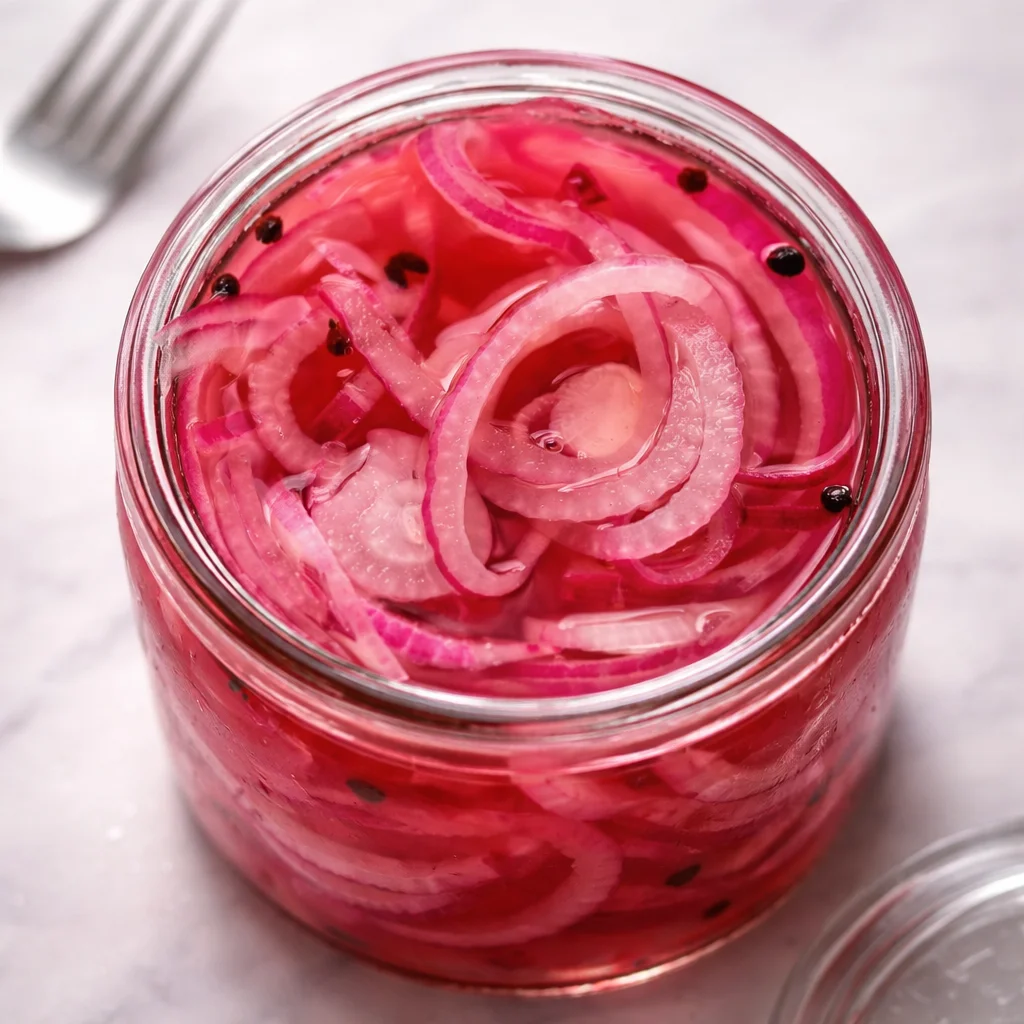
Fermented Onions might be the easiest gut-friendly food you can add to your meals, yet most people never think to keep a jar in the fridge. Have you ever finished cooking a bowl, taco, or sandwich and felt like something was missing? That bright, tangy bite that makes food come alive is often what your plate needs.
Fermented Onions bring that flavor while also supporting digestion thanks to natural fermentation. With just onions, salt, and water, you can create a crunchy topping that adds depth to simple meals. Once you learn the process, it becomes one of the easiest gut-friendly habits to keep in your kitchen.
- Key Ingredients for Fermented Onions and Their Health Benefits
- Best Onions to Use for Fermentation (Red, White, or Yellow)
- Simple Equipment Needed for Homemade Lacto Fermentation
- Step-by-Step How to Make Lacto Fermented Onions in a Mason Jar
- Pro Tips for Perfect Crunchy Fermented Onions Every Time
- Common Fermentation Mistakes to Avoid When Making Fermented Onions
- Flavor Variations and Add-Ins (Garlic, Herbs, Spices, Chili, Ginger)
- Dietary Adaptations: Low-FODMAP, Vegan, Gluten-Free, and Anti-Inflammatory Options
- How to Use Fermented Onions (Salads, Tacos, Burgers, Bowls, and Sandwiches)
- Storage, Fermentation Time, and Meal Prep Tips for Fermented Vegetables
- Nutritional Benefits of Fermented Onions (Probiotics, Digestive Support, Anti-Inflammatory Properties)
- Related Gut Health Recipes and Fermented Foods to Try Next
- Common Questions
- A little pep talk before you start your jar
- Lacto-Fermented Onions
Key Ingredients for Fermented Onions and Their Health Benefits
Let’s keep this super simple because that is the whole point. For Lacto-Fermented Onions, you only need a few basics, and each one matters.
- Onions: the star of the show. They soften a bit, but keep a nice bite.
- Salt: this is what helps the good bacteria thrive and keeps the bad stuff out.
- Water: preferably filtered if your tap water is heavily chlorinated.
- Optional flavor add-ins: garlic, peppercorns, herbs, chili, ginger.
Fermented vegetables are popular because natural fermentation can help support digestion. The onions also bring their own goodness like plant compounds and that familiar onion bite that works with almost everything. If you are building gut friendlier meals, this is one of those low effort habits that makes your plate more interesting.
If you like having simple add ons around for lunch, you might also like this easy, gut focused meal idea: anti-inflammatory lunch for gut health.
Best Onions to Use for Fermentation (Red, White, or Yellow)
I get asked this a lot, and honestly, you can ferment pretty much any onion. The best one is usually the one you already have. That said, they do taste a little different once fermented.
Red onions are my personal favorite for Lacto-Fermented Onions because they turn this gorgeous magenta color and taste a bit sweeter. White onions come out sharper and more classic deli style. Yellow onions land in the middle and work well if you want an all purpose jar for everything.
One quick tip: slice them evenly. Uneven slices ferment unevenly, and you end up with a few pieces that are too soft and a few that are still super crunchy.
If you are planning to pile these on a cozy bowl night, it pairs really well with simple protein and rice. I do that a lot with recipes like this anti-inflammatory chicken bowl.
Simple Equipment Needed for Homemade Lacto Fermentation
You do not need fancy gadgets for this. If you have a jar and a way to keep onions under the brine, you are good.
Here is what I actually use at home:
Mason jar (quart size is the easiest), lid (regular lid is fine), kitchen scale (helpful but not required), and a small weight (glass fermentation weight, or a smaller jar that fits inside).
Here is a quick cheat sheet to remember the fermentation time and salt ratios that people often forget.
Do not stress if you do not own a fermentation lid. Just “burp” the jar once a day for the first few days by cracking the lid briefly.
Step-by-Step How to Make Lacto Fermented Onions in a Mason Jar
This is where most people realize how simple the process really is. I will walk you through it like I am standing in your kitchen with you.
My go-to method (simple, reliable, and not fussy)
1) Slice the onions. Thin slices ferment faster and are easier to pile onto food. You can do rings or half moons.
2) Pack the jar. Add onions to your clean jar. Leave about an inch of space at the top.
3) Make a salt brine. A common beginner friendly brine is about 2 percent salt by weight. If you are not weighing, a decent everyday shortcut is roughly 1 and 1/2 teaspoons fine sea salt per cup of water. Stir until dissolved.
4) Pour brine over onions. Cover them fully. This part matters because anything sticking out can grow mold.
5) Weigh them down. Use a fermentation weight or a smaller jar to keep onions under the brine.
6) Ferment at room temp. Put the jar on a plate or small tray in case it bubbles over. Keep it out of direct sunlight.
7) Taste and chill. Start tasting around day 4. When it tastes tangy enough, move it to the fridge.
That is it. This Lacto-Fermented Onions routine becomes second nature fast, and then you will want a jar going all the time.
Pro Tips for Perfect Crunchy Fermented Onions Every Time
The goal is to keep the onions crisp and crunchy. Here is what actually helps, based on my trial and error.
Use fresh onions. Soft or older onions tend to go limp faster.
Keep everything under brine. This is the biggest crunch protector and the biggest safety habit.
Ferment cooler if your kitchen is hot. Warm rooms ferment faster and can soften veggies. If your kitchen runs hot, put the jar in a slightly cooler spot.
Do not rush the fridge step. Once it tastes good, refrigerate. The cold slows fermentation and helps keep texture.
I like to add fermented onions to warm food right before eating, not while cooking. Heat can dull the tang and soften them.
For a cozy dinner, I often pair them with something simple like anti-inflammatory chicken soup and spoon a little onion brine into my bowl. It sounds odd until you try it.
Common Fermentation Mistakes to Avoid When Making Fermented Onions
Most fermentation mistakes are simple to fix, so do not worry if your first jar is not perfect.
Mistake 1: Not enough salt. Too little salt can lead to mushy onions and higher spoilage risk.
Mistake 2: Using chlorinated water. It can slow fermentation. Filtered water helps.
Mistake 3: Letting onions float. Floating bits are where mold can start. Weights help a lot.
Mistake 4: Sealing the jar too tight with no burping. Gas builds up. If you do not have an airlock lid, loosen briefly each day at first.
Mistake 5: Throwing it out too fast. Cloudy brine is normal. A tangy, pleasantly sour smell is normal. Fuzzy mold on top is not. When in doubt, trust your senses, and if you see real mold, toss it.
Once you get past the first jar jitters, Lacto-Fermented Onions are honestly one of the easiest ferments to keep going.
Flavor Variations and Add-Ins (Garlic, Herbs, Spices, Chili, Ginger)
This is where you can turn the jar into your own signature flavor. I rotate flavors depending on what I am cooking that week.
Try one of these combos:
Garlic and peppercorn: super classic, goes with everything.
Dill and mustard seed: tastes a little pickle-ish, great on sandwiches.
Chili flakes and oregano: awesome for tacos and bowls.
Ginger and turmeric: warm and zingy, nice with rice and roasted veggies.
Bay leaf and coriander: subtle, kind of fancy without being fussy.
A quick tip from experience. Use whole spices instead of powdered ones whenever possible. Whole spices are easier to strain and tend to keep the brine clearer.
If you like anti-inflammatory flavors like turmeric and ginger, you might also like this turmeric anti-inflammatory chicken for an easy dinner situation.
Dietary Adaptations: Low-FODMAP, Vegan, Gluten-Free, and Anti-Inflammatory Options
Let’s talk real life dietary needs, because someone always asks.
Vegan and gluten-free: good news, Lacto-Fermented Onions are naturally vegan and gluten-free as long as you are using plain salt and clean tools.
Low-FODMAP: onions are typically high FODMAP. Fermenting can change foods, but it does not automatically make onions low-FODMAP. If you are sensitive, start with a tiny portion or skip and use a different fermented veggie that works for you.
Anti-inflammatory style eating: focus on simple ingredients, add ginger or turmeric, and pair with whole foods. I like these onions most with basic proteins, veggies, and healthy fats.
If you are dealing with belly discomfort and trying to keep meals gentle, you might appreciate these ideas too: easy dinner ideas when bloated.
How to Use Fermented Onions (Salads, Tacos, Burgers, Bowls, and Sandwiches)
This is my favorite part because once you have a jar, you will find excuses to put them on everything. The tang wakes up boring food fast.
Here are easy ways to use them:
Salads: toss a forkful into greens plus olive oil. Add a spoon of brine as part of the dressing.
Tacos: swap raw onion for fermented onion and your tacos instantly taste “finished.”
Burgers: pile them on at the end so they stay crisp.
Bowls: rice bowls, chicken bowls, quinoa bowls, all of it.
Sandwiches and wraps: especially good with turkey, tuna, hummus, or leftover chicken.
Snack plate: add a small side of fermented onions with olives, crackers, and cheese if you do dairy.
When I have crispy chicken thighs, I throw these on top like a quick little acidic salad. If that sounds good, this is a solid pairing: anti-inflammatory chicken thighs.
Storage, Fermentation Time, and Meal Prep Tips for Fermented Vegetables
Room temperature fermentation usually takes about 4 to 10 days, depending on how warm your kitchen is and how tangy you like it. I usually land around 6 days because I like a clear sour punch but still want crunch.
Once you refrigerate, they keep for weeks, often longer. Use clean utensils every time so you are not introducing stray bacteria from your fingers or food bits.
Meal prep tip I swear by: make two jars. One plain and one spicy. The plain jar goes on everything, and the spicy jar is for taco nights and bowls. If you are a person who forgets what is in your fridge, stick a little piece of tape on the jar with the start date.
Lacto-Fermented Onions are also great because the brine is useful. A teaspoon in salad dressing, a splash in soups, or stirred into mayo makes it taste more alive.
Nutritional Benefits of Fermented Onions (Probiotics, Digestive Support, Anti-Inflammatory Properties)
Fermented foods are valued because they may contain beneficial microbes, often called probiotics, along with organic acids created during fermentation. That said, results vary by method, temperature, time, and storage, so I always frame this as “supportive” rather than magical.
Here is what makes fermented onions worth keeping around:
Probiotic potential: lacto fermentation encourages beneficial bacteria to grow.
Digestive support: many people find small servings of fermented veggies help meals feel easier to handle.
Anti-inflammatory properties: onions contain plant compounds, and adding more plants and fermented foods can be part of an overall anti-inflammatory eating style.
Flavor satisfaction is often overlooked, but it makes a big difference. When food tastes good, it is easier to stick with nourishing meals.
Just keep portions reasonable at first. If you are new to fermented foods, start with a tablespoon and see how you feel.
Related Gut Health Recipes and Fermented Foods to Try Next
If you get hooked on having a jar of onions in the fridge, welcome to the club. The next step is building meals that make those toppings feel useful, not like a random extra project.
I like planning simple dinners where one flavorful topping does a lot of work. A few gut friendly ideas I rotate through are easy gut-friendly meals and quick chicken options like anti-inflammatory chicken recipes for a healthy gut.
Once you are comfortable with this, you can try other ferments too, like carrots, cabbage, or even a mixed veggie jar using the same brine method.
Common Questions
Why are my onions turning blue or green?
This can happen when onions react with minerals in water or certain spices like garlic. It is usually harmless, but if you see fuzzy mold or smell something rotten, toss the jar.
How do I know when fermented onions are done?
Taste is your best guide. They should taste tangy, a little salty, and pleasantly sharp. If it still tastes like plain salty onion water, give it more time.
Do I need a special lid or airlock?
No. It is helpful, but not required. A regular lid works if you keep onions under brine and burp the jar briefly during the first few days.
Can I reuse the brine?
You can use a little leftover brine to kick start a new jar, but I would not keep reusing the same brine forever. For best results, make fresh brine and use a splash of old brine as a starter.
How much should I eat at first?
Start small, like 1 tablespoon with a meal, especially if you are new to fermented foods. Build up slowly if it feels good for you.
A little pep talk before you start your jar
Fermented Onions are a small addition that can make a big difference in everyday meals. Their tangy flavor adds brightness to simple foods, while the natural fermentation process supports a gut-friendly way of eating.
Keeping a jar of Fermented Onions in the fridge means you always have an easy topping ready for salads, bowls, sandwiches, or tacos. Start with a small batch, taste as it ferments, and adjust the flavor to your liking. After the first jar, it quickly becomes one of those simple kitchen habits that supports digestion and makes healthy meals far more exciting.
Lacto-Fermented Onions
Ingredients
Method
- Slice the onions into thin rings or half moons.
- Pack the sliced onions into a clean mason jar, leaving about an inch of space at the top.
- In a mixing bowl, combine water and salt to make a brine. Stir until the salt is fully dissolved.
- Pour the brine over the onions, ensuring they are completely submerged.
- Weigh the onions down with a fermentation weight or a smaller jar to keep them under the brine.
- Place the jar on a plate to catch any overflow. Keep the jar at room temperature, out of direct sunlight.
- Check the onions daily for 4-10 days. Start tasting around day 4 until they reach your preferred tanginess.
- Once they taste tangy enough, move the jar to the refrigerator to slow down the fermentation process.