
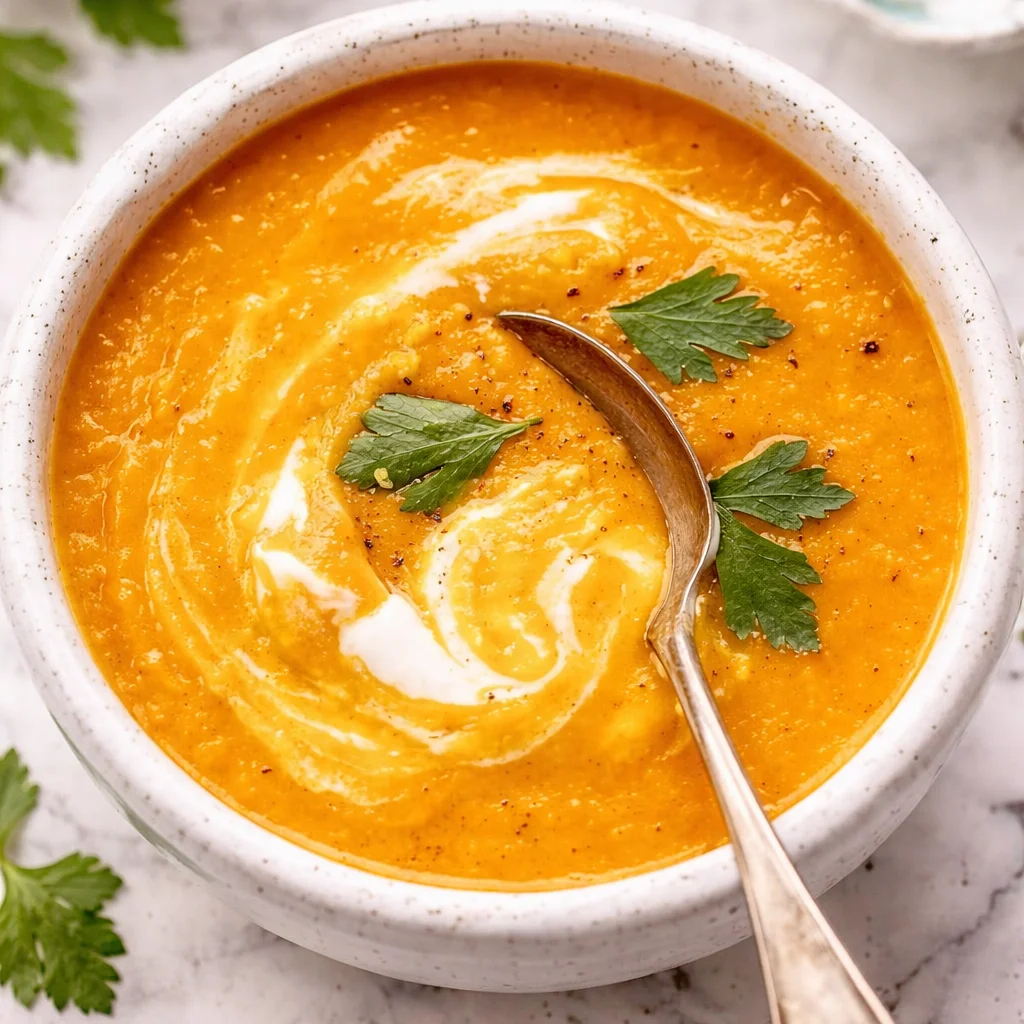
Anti inflammatory carrot soup ever feel like exactly what your stomach needs after a heavy day of eating. When bloating creeps in and digestion feels slow, a warm bowl made with ginger, turmeric, and carrots can feel surprisingly comforting. This simple anti inflammatory carrot soup is packed with gut friendly ingredients that support digestion while still tasting rich and satisfying. The best part is that it comes together with basic pantry staples and turns into a creamy, cozy meal without relying on dairy.
- Best Anti-Inflammatory Ingredients for Healing Soups (Turmeric, Ginger, Garlic & More)
- How to Choose Gut-Friendly Ingredients for Anti-Inflammatory Soup Recipes
- Essential Kitchen Tools for Making Healthy Homemade Soups
- Step-by-Step Guide to Making the Perfect Anti-Inflammatory Soup
- Pro Cooking Tips for Rich Flavor and Maximum Nutrient Benefits
- Common Mistakes to Avoid When Cooking Anti-Inflammatory Soups
- Ingredient Substitutions (Gluten-Free, Dairy-Free, Low-FODMAP, and Vegan Options)
- Anti-Inflammatory Soup Variations (Vegan, High-Protein, Low-Carb, and Detox Options)
- What to Serve with Anti-Inflammatory Soup for a Complete Healthy Meal
- Meal Prep, Storage, and Freezing Tips for Anti-Inflammatory Soup Recipes
- Nutritional Highlights: Gut Health, Fiber, Anti-Inflammatoy Compounds, and Immune Benefits
- Related Gut Health Recipes You May Also Love (Internal Linking Opportunities)
- Common Questions
- A Cozy Bowl Worth Repeating
- Anti-Inflammatory Ginger & Turmeric Carrot Soup
Best Anti-Inflammatory Ingredients for Healing Soups (Turmeric, Ginger, Garlic & More)
For a soup that actually feels nourishing, the ingredients matter far more than any fancy cooking trick. I keep it simple and focus on a few staples that show up again and again in my kitchen when I want a gentle, nourishing meal.
These are the ingredients I rely on for this Anti-Inflammatory Ginger & Turmeric Carrot Soup and the reason they work so well together.
Turmeric brings that golden color and a warm, earthy flavor. I always add a little black pepper because it helps your body use turmeric better.
Ginger adds a clean bite that makes the whole soup feel “awake.” It is also one of those ingredients that tends to feel soothing after a heavy day of eating.
Garlic gives depth and that savory backbone. Even just two cloves makes a difference.
Carrots are the heart of this soup. They blend up creamy without any dairy, and the sweetness balances the spice.
Onion is the base note. It makes the whole pot taste like it simmered longer than it did.
Olive oil helps you bloom those spices and makes the soup taste richer.
And if you want a bigger picture list of foods that support gut health and steady energy, I bookmarked this for myself and come back to it often: anti-inflammatory foods for gut health and energy.
How to Choose Gut-Friendly Ingredients for Anti-Inflammatory Soup Recipes
I try to think of “gut friendly” as simple, not restrictive. For this soup, I pick ingredients that cook down soft, blend smoothly, and do not rely on dairy or lots of flour to feel satisfying.
A few practical tips that help:
Choose carrots that feel firm and look bright. Limp carrots still work, but the flavor is better with fresher ones.
Use fresh ginger if you can. Powdered ginger works in a pinch, but fresh gives a cleaner taste.
If broth bothers you (some store brands are salty or full of weird flavors), use a low sodium broth or even water plus a little extra salt at the end.
If onions and garlic feel like too much for your stomach some days, you can scale them down and still have a great soup.
This is the kind of recipe you can tweak based on how you feel, and it will still turn out great.
Essential Kitchen Tools for Making Healthy Homemade Soups
You do not need a professional kitchen, but a few basic tools make the process much easier.
- Big pot or Dutch oven: you want enough room to stir without splashing
- Sharp knife and a cutting board: carrots are not hard to cut, but sharp helps
- Measuring spoons: for turmeric, cumin if you use it, and salt
- Blender or immersion blender: immersion is less messy, blender is extra smooth
- Ladle: especially if you are transferring hot soup to a blender
If you are using a countertop blender, just remember to vent the lid a little and blend in batches. Hot soup plus a sealed lid can turn into a kitchen moment you do not want.
Step-by-Step Guide to Making the Perfect Anti-Inflammatory Soup
This is exactly how I make it at home. Nothing complicated, just good steps in the right order.
Ingredients I use most often (you can tweak as needed):
- 2 tablespoons olive oil
- 1 medium onion, chopped
- 2 to 4 garlic cloves, minced
- 1 to 2 tablespoons fresh ginger, grated
- 1 to 2 teaspoons turmeric (or 1 tablespoon fresh grated turmeric)
- 1/4 teaspoon black pepper
- 6 to 7 medium carrots, peeled and sliced
- 4 cups low sodium vegetable broth (or chicken broth)
- Salt to taste
- Optional: squeeze of lemon, coconut milk, pinch of cumin
Directions:
1) Warm the olive oil in a pot over medium heat. Add onion and cook until soft, about 5 minutes.
2) Add garlic and ginger. Stir for about 30 seconds to 1 minute. You want it fragrant, not burnt.
3) Sprinkle in turmeric and black pepper. Stir again so the spices toast lightly in the oil.
4) Add carrots and broth. Bring it to a gentle boil, then lower to a simmer.
5) Simmer until carrots are very tender, usually 15 to 25 minutes depending on how thick you cut them.
6) Blend until smooth. Taste, then add salt. If you like brightness, add a squeeze of lemon.
That is it. This Anti-Inflammatory Ginger & Turmeric Carrot Soup turns silky and thick, and it feels like it should have cream in it even when it does not.
Pro Cooking Tips for Rich Flavor and Maximum Nutrient Benefits
A few small cooking choices can noticeably improve the flavor of this soup.
Bloom the spices in oil before adding liquid. That step makes turmeric taste warmer and less dusty.
Do not rush the onion. If you give it 5 to 7 minutes, the soup tastes naturally sweeter.
Add acid at the end. Lemon wakes the whole pot up, especially if your carrots are super sweet.
Balance heat and sweetness. If ginger feels too strong, add a splash more broth or a little coconut milk. If it feels too sweet, add more black pepper and lemon.
Also, if you are trying to build more easy anti-inflammatory dinners into your week, I like pulling ideas from quick lists like this: 30-minute anti-inflammatory dinners. Soups like this fit right in.
Common Mistakes to Avoid When Cooking Anti-Inflammatory Soups
I have done all of these at least once, so learn from me.
Burning the garlic. It turns bitter fast. Add it after the onion softens and keep stirring.
Under cooking the carrots. If they are not fully tender, the soup blends grainy and feels less cozy.
Overdoing turmeric. A little is great, too much can taste chalky. Start smaller, add later if you want more.
Forgetting salt. This is the difference between okay and wow. Add gradually at the end.
Blending hot soup unsafely. Always vent your blender lid and do it in batches.
Ingredient Substitutions (Gluten-Free, Dairy-Free, Low-FODMAP, and Vegan Options)
This soup is naturally flexible, which is one reason I make it so often.
Gluten-free: you are good as written, just check your broth label.
Dairy-free: also good as written. If you want creamy, use coconut milk or cashew cream.
Low-FODMAP: use garlic infused olive oil instead of garlic, and reduce or skip onion. You can use the green tops of scallions for a similar vibe.
Vegan: use vegetable broth. That is it.
If you want to add protein without changing the vibe, stir in shredded chicken or white beans after blending. I do this when I need the soup to hold me until a late dinner.
Anti-Inflammatory Soup Variations (Vegan, High-Protein, Low-Carb, and Detox Options)
After you make Anti-Inflammatory Ginger & Turmeric Carrot Soup once, you will probably start experimenting with your own variations.
Vegan creamy version: blend in 1/2 cup coconut milk and add lime instead of lemon.
High-protein version: add shredded rotisserie chicken, or blend in a can of rinsed white beans for extra thickness.
Low-carb version: swap half the carrots for cauliflower florets. It stays creamy but less sweet.
Detox-ish version: add a big handful of spinach at the end and blend again. The word detox gets overused, but sometimes you simply want a lighter, greener bowl.
What to Serve with Anti-Inflammatory Soup for a Complete Healthy Meal
I am a soup and something crunchy person. Here are easy pairings that feel like a real meal.
- Simple salad with olive oil and lemon
- Brown rice or quinoa on the side, or stirred right in
- Toasted sourdough if you tolerate it, or gluten-free toast
- Roasted chickpeas sprinkled on top like croutons
And if you are in a cozy comfort food mood but still want gut friendly ideas, I have used recipes from here when I am planning: anti-inflammatory comfort food dinners.
Meal Prep, Storage, and Freezing Tips for Anti-Inflammatory Soup Recipes
This soup is a meal prep champion. It tastes even better the next day, like the ginger and turmeric settle in and get friendly.
Fridge: store in airtight containers for up to 4 to 5 days.
Freezer: freeze in single portions so you can grab one on busy days. It keeps well for about 2 to 3 months.
Reheating: warm it gently on the stove. If it thickens a lot, add a splash of broth or water and stir.
One tip: if you add coconut milk, it can separate slightly after freezing, but it usually blends back together once you reheat and stir.
Nutritional Highlights: Gut Health, Fiber, Anti-Inflammatoy Compounds, and Immune Benefits
This soup will not magically fix everything, but it does bring some solid nutritional benefits.
Fiber from carrots helps keep digestion moving and supports a healthy gut environment.
Ginger and turmeric are well known in everyday cooking for their anti-inflammatory compounds, and they are a simple way to add more of that style of eating without making things complicated.
Hydration counts too. A warm, broth based meal can be easier to get down when you are not feeling your best.
Immune support: garlic, onion, and all those colorful plants are the kind of basics I try to eat regularly, especially in colder months.
For me, the biggest “benefit” is that this bowl helps me stay consistent. It is easier to eat well when the food actually tastes good and feels comforting.
Related Gut Health Recipes You May Also Love (Internal Linking Opportunities)
If you are on a soup kick, you are not alone. Once the weather turns even a little cool, I start rotating cozy recipes like it is my job.
If you want another cozy option, this one is worth saving: anti-inflammatory chicken soup that is cozy and easy to make.
And if you are planning a week of dinners and want more ideas that stay on the anti-inflammatory theme, this roundup can help you mix it up: easy anti-inflammatory chicken recipes for a healthy gut.
Common Questions
Can I make this soup if I only have ground turmeric and ground ginger?
Yes. Fresh tastes brighter, but ground spices still make a really good pot of soup. Start with smaller amounts and adjust after blending.
How do I make it extra creamy without dairy?
Blend it longer, and add coconut milk or a spoonful of tahini. Both make it feel richer fast.
Is Anti-Inflammatory Ginger & Turmeric Carrot Soup spicy?
It has a warm kick from ginger and pepper, but it is not “hot” spicy. If you are sensitive, use less ginger and go easy on black pepper.
Can I add protein without changing the flavor too much?
Shredded chicken, white beans, or red lentils work well. Beans and lentils will also make it thicker.
Why does my soup taste a little bitter?
Usually it is burnt garlic or too much turmeric. Next time, stir constantly when you add garlic and keep turmeric modest, then add more only if you need it.
A Cozy Bowl Worth Repeating
A bowl of anti inflammatory carrot soup is one of those meals that proves healthy food can still feel comforting. With ginger, turmeric, and naturally sweet carrots, this recipe supports digestion and fits perfectly into a gut friendly anti inflammatory way of eating. It is simple enough for weeknight cooking, easy to store for meal prep, and flexible enough to adjust based on what your body needs. Once you try it, this anti inflammatory carrot soup is the kind of recipe that quietly becomes part of your regular rotation.
Anti-Inflammatory Ginger & Turmeric Carrot Soup
Ingredients
Method
- Warm the olive oil in a pot over medium heat. Add onion and cook until soft, about 5 minutes.
- Add garlic and ginger. Stir for about 30 seconds to 1 minute until fragrant.
- Sprinkle in turmeric and black pepper. Stir again to lightly toast the spices.
- Add carrots and broth. Bring to a gentle boil, then lower to a simmer.
- Simmer until carrots are very tender, usually 15 to 25 minutes.
- Blend until smooth. Taste and add salt, and a squeeze of lemon if desired.