
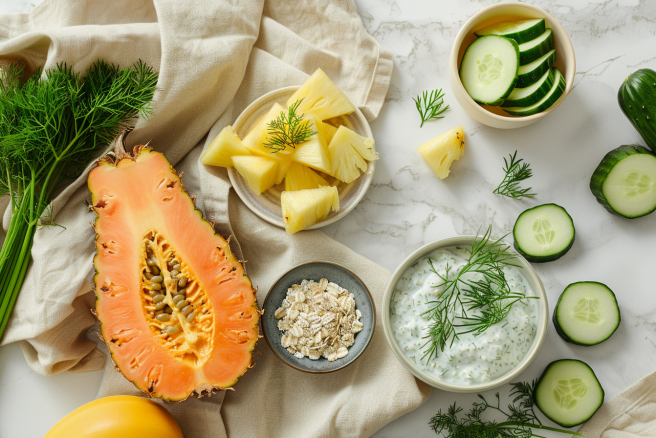
Bloating is a common digestive issue that can make your stomach feel swollen, tight, or uncomfortable after meals. Fortunately, certain anti-bloating foods can help support digestion and reduce gas buildup.
In this guide, you’ll discover the best foods that help reduce bloating naturally and support a healthier digestive system.
- What Causes Bloating and Digestive Discomfort
- The Gut Science Behind Bloating: Gas Production, Digestion, and the Role of the Microbiome
- Common Causes of Bloating and Digestive Discomfort
- Hidden Triggers That Make Bloating Worse (Inflammation, Food Intolerances, Stress)
- Symptoms That Often Come With Bloating (Gas, Pressure, Slow Digestion, Fatigue)
- How Gut Bacteria and Microbiome Balance Affect Bloating
- 15 Best Foods That Help Bloating and Support Healthy Digestion
- Anti-Inflammatory Foods That Calm the Gut and Reduce Digestive Inflammation
- Fruits and Fiber-Rich Foods That Support Gut Motility and Reduce Gas
- Foods That Often Cause Bloating and Digestive Irritation
- Eating Habits That Improve Digestion and Reduce Bloating
- Natural Digestive Remedies From Foods (Ginger, Fermented Foods, Herbs)
- A Simple Daily Routine to Prevent Bloating and Support Gut Health
- When Bloating May Signal a Gut Health Condition (IBS, Food Intolerance, SIBO)
- Related Guides for Better Digestion (Internal Links: Reduce Bloating Naturally, Best Teas for Digestion, 7-Day Gut Reset Plan)
- Common Questions
- Let's Beat the Bloat One Meal at a Time
What Causes Bloating and Digestive Discomfort
Certain anti-bloating foods can help reduce gas buildup and improve digestion. Ginger, yogurt, bananas, cucumbers, and fermented foods support gut bacteria and help food move smoothly through the digestive system. Adding these foods regularly may help reduce stomach swelling and digestive discomfort.
Bloating is a common digestive issue that causes the abdomen to feel swollen or tight due to gas buildup or slow digestion. It happens when your gut is holding onto air or water, usually after eating.
- Eating certain foods can calm things down by supporting gentle digestion.
- Foods high in fiber or water can help move things along and keep you regular.
- Anti-inflammatory eats are a game-changer for a less swollen feeling.
- Sometimes, just swapping out one food can stop the puff up in its tracks.
The Gut Science Behind Bloating: Gas Production, Digestion, and the Role of the Microbiome
Many people notice stomach sounds or gas after meals as bacteria break down food in the digestive system. (Not just me, right?) That’s mostly gut bacteria on the job.
- Your gut bacteria break down food, sometimes making gassy byproducts.
- Foods that help bloating can tip your gut bacteria toward less gas, more comfort.
- Good bacteria love prebiotic and fermented foods.
- A funky microbiome (too much bad stuff) usually equals more bloat.
Common Causes of Bloating and Digestive Discomfort
Certain foods and eating habits can make bloating more likely for sensitive digestive systems. Here’s what usually sets off the bloating circus:
- Eating too fast (guilty as charged, especially on Taco Tuesday).
- Certain foods hello, dairy and beans that just sit there and ferment.
- High salt or super processed snacks (grow up, potato chips, I’m looking at you).
- Hormones, stress, or just not drinking enough water.
Hidden Triggers That Make Bloating Worse (Inflammation, Food Intolerances, Stress)
Honestly, half the time it’s not the food, but what’s going on behind the scenes.
- Inflammation ramps up water retention and gut sensitivity.
- Food intolerances (dun-dun-duuun: gluten, lactose, weird things like apples) can sneak in and mess you up.
- Stress? Does “stomach in knots” ring a bell?
- Even healthy foods can trigger bloating if your gut is feeling cranky.
Symptoms That Often Come With Bloating (Gas, Pressure, Slow Digestion, Fatigue)
Let’s call it as we see it. Bloating loves to bring its buddies:
- Gas (yep, we all do it, let’s not pretend otherwise).
- A “heavy” belly think: food baby status.
- Feeling tired because your gut is working overtime.
- Digestion that feels like a traffic jam.
How Gut Bacteria and Microbiome Balance Affect Bloating
A balanced gut microbiome plays an important role in maintaining smooth digestion.
- Balanced microbiome equals smoother digestion and less bloat.
- Fermented foods (yogurt, kimchi, kefir) help good bacteria grow.
- Overgrowth of the “wrong” bugs? Bloating city, population: you.
- Consistent fiber helps the microbiome thrive. (No fiber = grumpy gut.)
15 Best Foods That Help Bloating and Support Healthy Digestion
These anti-bloating foods support digestion and may help reduce stomach swelling.
- Ginger boil a few slices into tea, and bam: bye bye gas.
- Cucumber & celery crazy hydrating, basically nature’s de-puffers.
- Pineapple & papaya they have natural enzymes (bromelain, papain) for easy digestion.
- Peppermint tea soothes everything, and I mean everything.
- Yogurt with active cultures goodbye, gut drama.
- Berries, kiwi, spinach, zucchini fiber, hydration, antioxidants.
- Ginger, mint, fennel these are the heavy hitters for me.
- Try adding oats, chia seeds, and bananas for real-deal gut comfort.
- Fermented foods (this stuff is magic): sauerkraut, kimchi, kefir.
- For even more inspo, here’s a science-backed foods for gut health and digestion guide.
Anti-Inflammatory Foods That Calm the Gut and Reduce Digestive Inflammation
Digestive inflammation can increase gut sensitivity and worsen bloating symptoms. Calm it down with these eats:
- Turmeric try adding a pinch to scrambled eggs or smoothies.
- Leafy greens and avocado packed with calming nutrients.
- Olive oil drizzle on toast, or just dunk plain bread (no shame).
- Wild salmon and walnuts hello, omega-3s for gut zen.
- See the complete anti-inflammatory foods list if you want to nerd out.
Fruits and Fiber-Rich Foods That Support Gut Motility and Reduce Gas
Fiber plays a key role in supporting regular digestion and reducing gas buildup. It’s like sweeping out your insides:
- Apples (peel on), pears, and prunes for steady, gentle fiber.
- Berries and kiwi small but mighty.
- Whole grains (like oats), plus chickpeas and lentils (if your body says yes).
- Water + fiber = the dream team for regular bathroom visits.
Foods That Often Cause Bloating and Digestive Irritation
Some foods just have it out for sensitive tummies. I keep my distance most days:
- Beans and lentils delicious, but sometimes they really “announce themselves.”
- Dairy lactose, why are you like this?
- Cruciferous veggies: cabbage, broccoli, cauliflower…they can be sneaky bloaters.
- Carbonated drinks they literally put air in your belly.
Eating Habits That Improve Digestion and Reduce Bloating
Digestive comfort depends not only on what you eat but also on your eating habits.
- Chew. Seriously, chew like you mean it.
- Avoid gulping drinks (and air) with your food.
- Take it slow rushed eating is the enemy.
- Try eating smaller meals more often, instead of three monster feasts.
Natural Digestive Remedies From Foods (Ginger, Fermented Foods, Herbs)
If my grandma could see my spice shelf now! Here’s what truly helps:
- Ginger tea massages the bloat away, basically.
- Fennel seeds chew after meals (really, it works).
- Fermented stuff (kimchi, miso, real pickles).
- Peppermint or chamomile tea before bed.
A Simple Daily Routine to Prevent Bloating and Support Gut Health
Simple daily habits can help prevent bloating and support better digestion.
- Start your day with warm water and lemon, then eat breakfast slowly.
- Pack in fruit, fiber, and hydration through lunch.
- Move your body just fifteen minutes of walking can help.
- Try swapping one snack a day with fermented yogurt or berries.
When Bloating May Signal a Gut Health Condition (IBS, Food Intolerance, SIBO)
Sometimes, it’s more than “oops, too many chips.”
- If you get bloated every single day, talk to someone (not just Google).
- IBS and SIBO are nothing to mess with get checked if symptoms linger.
- Sudden, painful bloat or lasting fatigue? Call your doc, for real.
- Food intolerances can switch things up and be weirdly specific.
Related Guides for Better Digestion (Internal Links: Reduce Bloating Naturally, Best Teas for Digestion, 7-Day Gut Reset Plan)
If you need more ideas or want to dig deeper, I’ve linked a couple of favorites:
- For a simple plan, my reduce bloating naturally guide is honestly packed with practical tips.
- Ever tried a tea-for-digestion lineup? Highly recommend!
- My 7-day gut reset plan (let me know if you want details I actually did it and survived).
Common Questions
Is there a miracle food for bloating?
Ha I wish! But ginger or peppermint tea is about as close as I’ve found. Try them after a heavy meal.
What should I avoid if I get bloated easily?
I’d skip beans, onions, and fizzy drinks. Also, keep dairy in check if lactose puts you on the struggle bus.
How soon will I feel better after changing my diet?
I usually notice a difference in a couple of days. Your gut can turn around fast, but stick with it for a week for major improvement.
Can stress seriously cause bloating?
Absolutely, 100%. When I’m stressed, my gut lets me know fast. Deep breaths no joke sometimes help more than anything.
What if nothing is helping my bloating?
Don’t tough it out. See your doc, especially if you have pain, major fatigue, or big changes in your digestion.
Let’s Beat the Bloat One Meal at a Time
Bloating is uncomfortable, but the right dietary choices can make a big difference. Adding more anti-bloating foods such as ginger, yogurt, berries, and leafy greens can help support digestion and reduce gas buildup.
Start with small dietary changes, pay attention to how your body responds, and focus on foods that support a balanced gut and healthier digestion.