
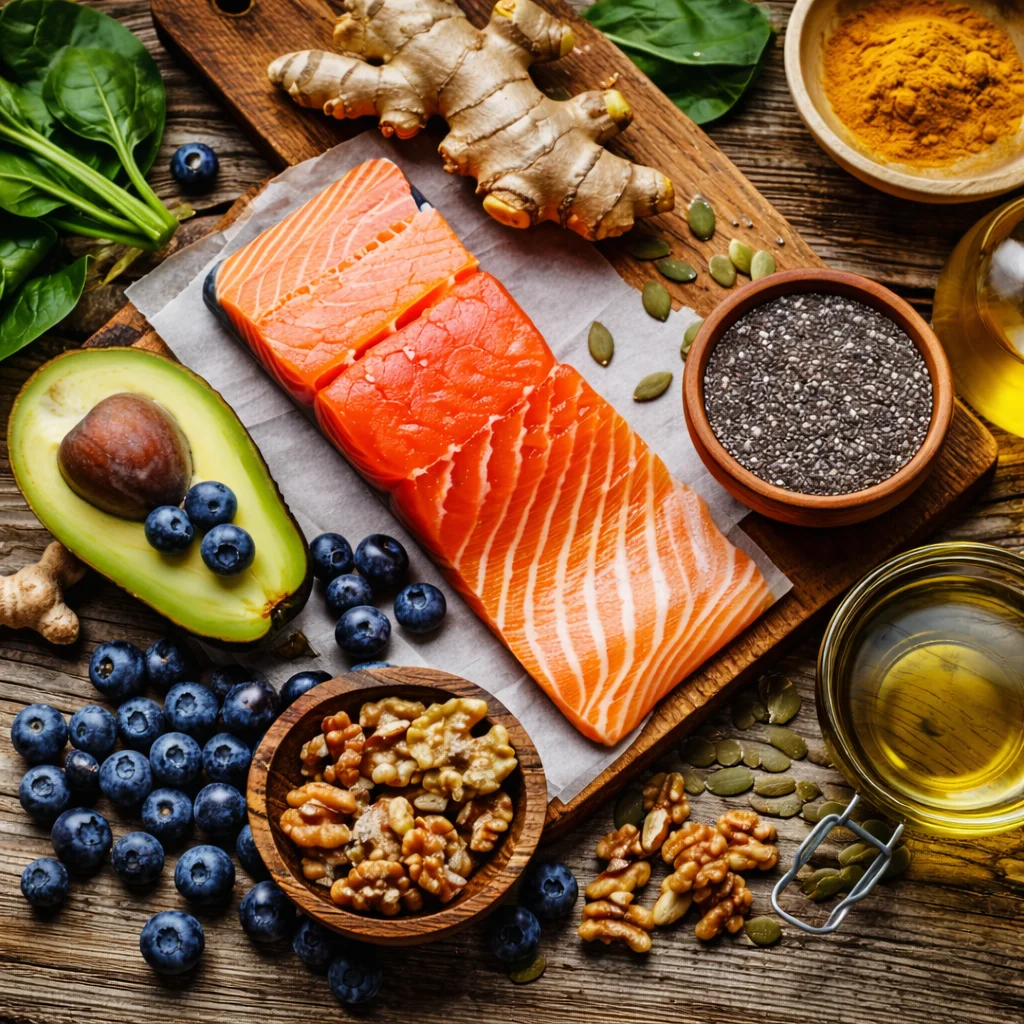
Most people don’t wake up thinking about inflammation. But if you’re dealing with bloating, low energy, or stubborn joint pain, your food choices may be playing a bigger role than you realize. An anti-inflammatory diet isn’t a trend it’s a practical, research-backed way to calm your body and support gut health. In this complete guide, you’ll learn exactly what to eat, what to avoid, and how to make it simple in real life.
What Is an Anti-Inflammatory Diet?
An anti-inflammatory diet focuses on whole, minimally processed foods that reduce chronic inflammation in the body. It emphasizes vegetables, berries, olive oil, fatty fish, nuts, and fiber-rich foods while limiting sugar, refined grains, and processed oils. This approach supports gut health, immune balance, and long-term metabolic wellness.
- Basically, it’s about eating foods that don’t make your body go haywire.
- The focus is on whole foods think loads of veggies, berries, olive oil, fish, nuts, and beans.
- Guts love this style because it helps your “good” bacteria thrive (and who doesn’t want happy gut bugs?).
- This isn’t another short-term trend. It’s a long-term eating pattern rooted in whole, minimally processed foods and supported by modern research.
How Chronic Inflammation Impacts the Gut Microbiome
- Inflammation that won’t quit messes with your gut’s balance.
- Your friendly microbes? They take a hit, leading to problems like bloating or worse (no one enjoys that kind of drama).
- Foods that spark inflammation can let nasty bacteria take over, and suddenly, you’re in gut chaos.
Acute vs. Chronic Inflammation: Why It Matters for Digestive Health
- Acute inflammation short and sweet, like that ankle you twisted running for the bus.
- Chronic, though? That’s like a neighborhood fire alarm that never shuts off; it messes up digestion big time.
- Chronic gut inflammation can trigger IBS, leaky gut, and even metabolic problems.
Root Causes and Triggers of Chronic Inflammation
- Processed foods and sugar yeah, I said it.
- Chronic stress (like tax season… every year!).
- Lack of sleep, overuse of antibiotics, and not enough fiber can all fan the flames.
Common Symptoms of Inflammation (Digestive + Whole-Body Signs)
- Bloating, gassy gut, irregular bowel movements or noticeable digestive changes
- Joint pain, brain fog, and feeling super sluggish after meals.
- Some folks notice skin flare-ups too your body loves sharing its displeasure in creative ways!
The Gut-Inflammation Connection: Leaky Gut, Dysbiosis, and Immune Response
- When inflammation’s running wild, your gut lining can start leaking (real thing basically, it’s not waterproof anymore).
- Dysbiosis occurs when harmful bacteria outnumber beneficial microbes, disrupting digestion and immune balance.
- Your immune system gets cranky, triggering even more issues everywhere.
Proven Benefits of an Anti-Inflammatory Diet for Gut and Metabolic Health
- Eat this way and you’ll probably notice better digestion, smoother energy, maybe less bloating.
- Many people with chronic pain, autoimmune conditions, or metabolic concerns report noticeable improvements when they consistently follow an anti-inflammatory eating pattern.
- The research says it can even help with heart health. That’s kind of a big deal.
Anti-Inflammatory Foods List: What to Eat Daily for Microbiome Support
- Berries, leafy greens, nuts/seeds, extra virgin olive oil, oatmeal, beans.
- Wild salmon, sardines, avocado yum.
- Herbs and spices like turmeric and ginger (not just for curry night!).
- Check out the 15 best foods for gut health and digestion if you wanna nerd out more.
Inflammatory Foods to Avoid (Hidden Triggers in the Standard American Diet)
- Most packaged snacks, fried food, and soda yep, the usual suspects.
- Cheap oils (corn, soybean, canola).
- Loads of white bread, pastries, sugar bombs disguised as “healthy” bars.
- Watch out for additives If a product contains a long list of artificial additives and preservatives, it’s best to limit or avoid it.
7-Day Anti-Inflammatory Diet Plan (Beginner-Friendly Framework)
- Start with simple swaps swap white rice for quinoa, chips for nuts.
- Focus on building a plate: veggies + protein + healthy fat.
- Check out this 7-day anti-inflammatory meal plan for specific day-to-day ideas.
Daily Anti-Inflammatory Routine: Morning to Night Habits That Lower Inflammation
- Morning: Warm water with lemon, fiber-rich breakfast.
- Afternoon: Quick walk, maybe a green tea.
- Evening: Chill-out time no screens, meditate or listen to chill music, early bedtime.
Supplements That Support an Anti-Inflammatory Lifestyle (Evidence-Based)
- Omega-3s (yay, fish oil), turmeric/curcumin, and good probiotics are commonly trusted.
- Vitamin D and magnesium are basics if you’re always inside (hello, all winter long).
- Ask your doc before popping pills body chemistry isn’t one-size-fits-all!
Anti-Inflammatory Diet vs. Mediterranean Diet: What’s the Difference?
- Mediterranean diet is kinda the “OG” anti-inflammatory approach lotta overlap.
- Mediterranean style is big on olive oil, fish, and beans, with less red meat.
- Anti-inflammatory stuff is a bit wider more gut focus, more restriction of “bad” oils and packaged foods.
Prevention Strategies: How to Maintain Long-Term Low Inflammation
- Don’t mess it up Monday-Friday, then go wild on weekends. Balance, folks!
- Cook at home more restaurant oils are sneaky.
- Stay hydrated, move your body, get enough zzz’s.
Anti-Inflammatory Diet FAQs (How Long to See Results, Is Coffee Inflammatory, Best Diet for Bloating, Can It Help Autoimmune Conditions, Does It Support Weight Loss)
- “How long till I feel better?” sometimes a week, sometimes a month. Tune in, be patient.
- “Is coffee bad?” One or two cups is usually fine (just skip the sugar avalanche and the fake creamers).
- “Does this help bloating?” Often yes, especially if you ease up on processed stuff.
- “Good for autoimmune?” Loads of folks see improvements, but check with your doc.
- “Can I lose weight?” If you’ve been holding onto inflammation-related bloat, weight might shift too.
Common Questions
Q: Is this gonna be super expensive or take forever to prep?
A: Not really. Buy in-season produce, shop sales, meal prep a couple lunches, and you’re golden.
Q: Do I have to say goodbye to all bread forever?
A: Nope try whole grain or sprouted. It’s the ultra-white stuff you wanna avoid.
Q: Is this diet for picky eaters?
A: If you hate kale, don’t eat kale! Loads of options berries, sweet potatoes, nuts, fish, whatever you vibe with.
Q: Can I actually eat chocolate?
A: Dark chocolate (70% or higher) makes the cut. Just don’t eat the whole bar. Learned that the hard way.
Q: Will this help my kids or older family members?
A: Definitely worth a shot. The basics more plants, less junk work for nearly everyone.
Your Gut Will Thank You: Let’s Wrap It Up
If you’re tired of guessing what’s “healthy,” start with one simple change today. Add one anti-inflammatory food to your next meal and remove one processed item. Over time, those swaps reshape your gut health and energy levels. Your body responds to consistency so begin now.