
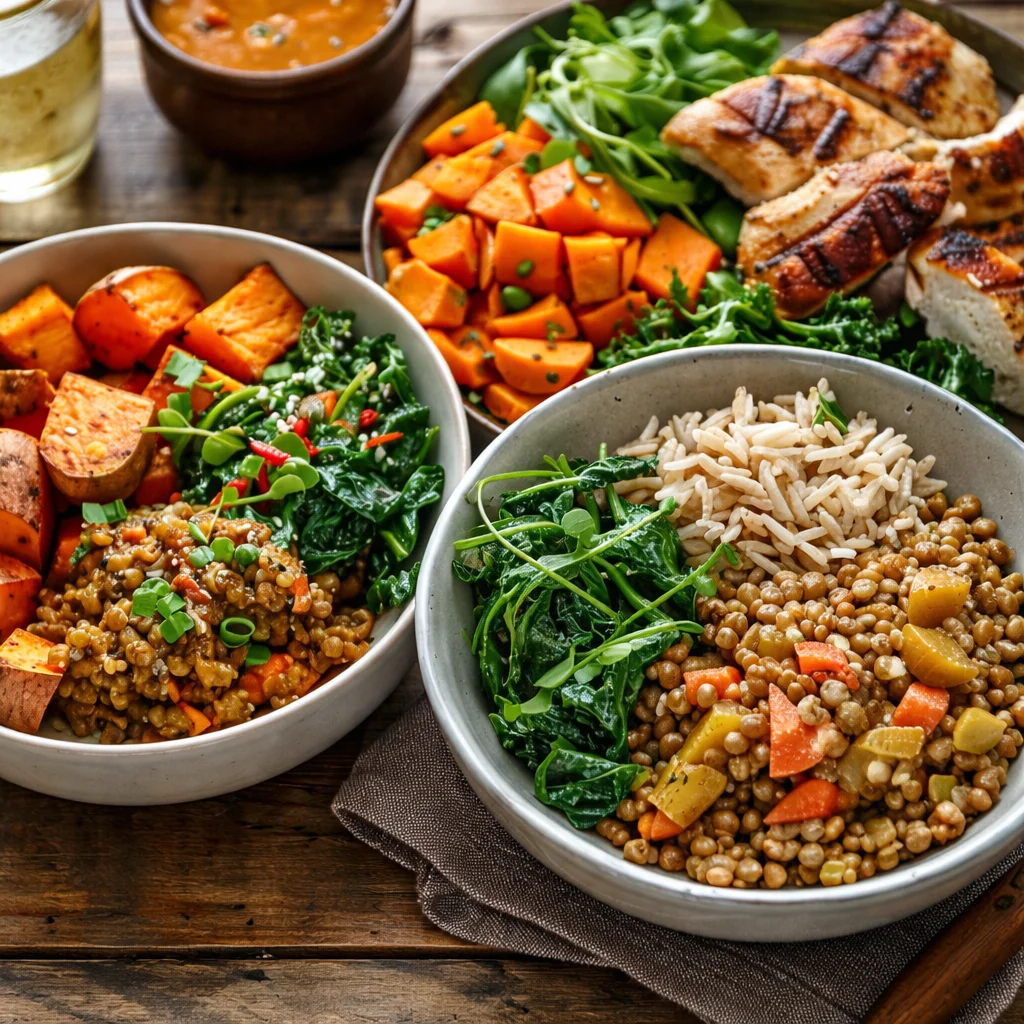
Anti-inflammatory dinner on a budget sounds complicated. It isn’t. You don’t need expensive superfoods or a perfectly curated pantry. You need a repeatable system built around affordable staples that support digestion and steady energy. Once you simplify the formula, dinner becomes easier, cheaper, and better for your gut.
Can You Eat an Anti-Inflammatory Dinner on a Budget?
For me, eating anti inflammatory does not mean chasing perfection. It means I try to build dinners around a few basics that tend to make my body feel better: fiber, healthy fats, and simple proteins, plus lots of color. When I stick to that, my digestion is calmer and I do not feel that heavy, puffy feeling after dinner.
I also learned something the hard way: the more complicated I make dinner, the more likely I am to abandon the plan and grab something random. So my version of an anti inflammatory dinner on a budget is a repeatable routine, not a brand new recipe every night. You will see a lot of rice bowls, sheet pans, and soups at my house.
Before we dive in, here’s the good news: you don’t need specialty stores or trendy health shops to eat this way. Most of what I buy comes from a regular grocery store, and sometimes even a discount store.
Why Simple, Whole Foods Reduce Inflammation
An anti-inflammatory dinner on a budget focuses on affordable whole foods like beans, lentils, brown rice, frozen vegetables, eggs, and olive oil. By building meals around fiber-rich carbs, simple proteins, and healthy fats, you can reduce inflammation, support gut health, and keep dinner under $5 per serving.
Yes, you can. The biggest pattern you will see in anti inflammatory eating is not an expensive ingredient list. It is a focus on minimally processed foods, especially plants, plus healthy fats like olive oil, nuts, and seeds.
Research often points to Mediterranean style eating patterns being linked with lower inflammation markers. The helpful part for budgeting is that Mediterranean style does not mean constant salmon and pricey cheese. It can be beans, lentils, canned fish, frozen vegetables, oats, and olive oil used wisely.
Here’s what actually saves money: buy ingredients you can reuse in at least two or three meals that week. A bag of oats and a big tub of plain yogurt can do more for your routine than one trendy item you forget in the fridge.
Also, frozen produce is your best friend. It is picked at peak ripeness, it is usually cheaper, and it helps you avoid food waste.
How Budget-Friendly Anti-Inflammatory Meals Support Gut Health and Digestion
When my dinners are built around fiber rich foods, my gut is just happier. Fiber feeds beneficial gut bacteria, and that can support regular digestion. I notice less bloating when my plate is not just white bread and a random protein.
Budget friendly gut support usually looks like this in real life: beans, lentils, oats, brown rice, sweet potatoes, cabbage, carrots, and frozen berries. They may not look impressive on Instagram, but they consistently support digestion and keep grocery bills low.
If you like digging into the why behind it, I keep a tab open to resources like this science-backed guide to gut healthy foods when I am planning groceries. It helps me stay focused on what matters, not what is trendy.
And yes, an anti inflammatory dinner on a budget can still be cozy. Soup nights and rice bowls are basically my love language.
Why Cheap Processed Foods Increase Inflammation and Bloating
I am not here to shame anybody for frozen pizza nights. I have been there. But if those meals become your default, your body might start pushing back.
Many ultra processed foods are high in refined carbs, added sugars, and certain oils, and low in fiber. That combo can leave you feeling hungry again fast, and for some people it can worsen bloating. Also, super salty meals can make you feel puffy the next day.
What I do instead is keep a few “fast but better” options around. Think: canned beans, bagged salad, frozen veggies, eggs, and microwave rice. You can still get dinner on the table in 15 minutes, but it leaves you feeling satisfied instead of sluggish.
The Most Affordable Anti-Inflammatory Foods to Buy Each Week
If you want the simplest shopping plan, buy a small set of repeat items and rotate flavors. Here are my most reliable budget picks that still feel like real food.
My weekly low cost staples:
- Frozen broccoli, spinach, and mixed veggies
- Cabbage, carrots, onions, and garlic
- Sweet potatoes or regular potatoes
- Canned tomatoes and tomato paste
- Beans and lentils, canned or dry
- Oats and brown rice
- Plain yogurt or kefir if you tolerate dairy
- Lemons, when they are on sale
This simple list gives you endless combinations without adding extra cost. You can turn it into curry, chili, stir fry, soups, and bowls without buying a million extras.
Budget Protein Sources That Help Reduce Inflammation
Protein is where people assume the budget will explode, but it does not have to. I mix animal and plant proteins depending on what is on sale and what I have time for.
Affordable proteins I actually buy: eggs, canned tuna or sardines, chicken thighs, dry lentils, canned chickpeas, and occasionally tofu. If chicken breast is expensive, I skip it. Thighs are usually cheaper and honestly more forgiving to cook.
When I want a dead simple win, I use lemon, garlic, and olive oil to make chicken taste like I tried harder than I did. I have made versions inspired by this lemon garlic anti-inflammatory chicken, and it is a big crowd pleaser even with picky eaters.
15 Cheap Anti-Inflammatory Dinner Recipes Under $5 Per Serving
This is the section where I would normally dump a giant list, but I will be real with you. The “recipe” is often just a simple formula plus one good sauce. Still, here are 15 dinner ideas that can stay under $5 per serving in many areas if you shop store brands and use frozen produce.
My cheap dinner idea list:
1) Lentil tomato soup with spinach
2) Chickpea curry over brown rice
3) Black bean tacos with cabbage slaw
4) Sheet pan chicken thighs with carrots and onions
5) Tuna and white bean salad bowls
6) Egg fried brown rice with frozen veggies
7) Sweet potato and black bean chili
8) Oat topped turkey or lentil meatballs with marinara
9) Greek-ish bowls with cucumber, chickpeas, yogurt sauce
10) Cabbage stir fry with eggs
11) Tomato sardine pasta with garlic and herbs
12) Vegetable soup with cannellini beans
13) Baked potatoes with salsa and beans
14) Peanut butter ramen upgrade with frozen veg and soft boiled egg
15) “Harvest bowl” with grains, roasted veggies, and tahini lemon sauce
If you want a bowl that feels like something you would buy for $16 downtown, I love a cozy seasonal combo like this anti-inflammatory harvest glow bowl. At home, it is way cheaper.
30-Minute Budget Anti-Inflammatory Dinners for Busy Weeknights
On true chaos nights, I aim for dinner in 30 minutes or less. The trick is choosing foods that cook fast: eggs, canned beans, quick grains, frozen veggies, and thin cut chicken.
My three fastest patterns are: bean bowls, egg scrambles, and quick skillet meals with frozen veggies. If you need more ideas that fit that exact vibe, I have pulled inspiration from these 30-minute anti-inflammatory dinners when I am stuck.
Also, do not underestimate breakfast for dinner. An omelet with leftover veggies and a side of fruit counts. Your body does not know it is “breakfast.”
How to Build a Balanced Anti-Inflammatory Dinner Plate for Less
When I am trying to keep inflammation down without spending more, I stop thinking about perfection and start thinking about balance.
Here is my easy plate guide:
Half the plate: vegetables (fresh or frozen)
One quarter: protein (beans, eggs, chicken, fish)
One quarter: fiber rich carbs (brown rice, potatoes, oats, whole grain pasta)
Add: a little healthy fat (olive oil, nuts, seeds, avocado when on sale)
If you build your plate this way most nights, you’ll naturally lower inflammatory load without overthinking every ingredient. This is basically the backbone of an anti inflammatory dinner on a budget because it helps you use cheaper staples without feeling like you are eating “diet food.”
Pantry Staples for Easy, Low-Cost Anti-Inflammatory Cooking
My pantry isn’t curated for social media, but it’s built for consistency and low-cost cooking. And when the pantry is stocked, I spend less because I am not buying random last minute stuff.
These are my non negotiables:
Pantry basics: olive oil, canned tomatoes, canned beans, lentils, brown rice, oats, tuna, tomato paste, peanut butter, vinegar, salt, pepper.
Spices that make cheap food taste amazing: turmeric, cumin, smoked paprika, cinnamon, chili flakes, Italian seasoning.
I keep turmeric because it is an easy add to soups, rice, and chicken. If you want a specific dinner idea built around it, check out this turmeric anti-inflammatory chicken. It is the kind of flavor that makes plain rice feel exciting.
Foods to Avoid When Eating Anti-Inflammatory on a Tight Budget
This is not about never eating a treat again. It is about noticing which cheap foods tend to leave you feeling worse, especially if you deal with bloating.
Things I personally try to limit when I am doing anti inflammatory dinners:
Sugary drinks, frequent deep fried foods, packaged snacks that replace meals, and lots of processed meats. Some of these are cheap upfront, but they can make you snack more later because they are not filling.
If you are craving something crunchy, try popcorn you make at home or roasted chickpeas. It is cheaper and you control the oil and salt.
Common Budget Cooking Mistakes That Increase Inflammation
I have made all of these mistakes, so no judgment.
Mistake 1: buying “health” snacks instead of meal ingredients. You end up with pricey bars and still no dinner.
Mistake 2: skipping fiber. If your dinner is just protein and bread, you might feel hungry fast.
Mistake 3: forgetting flavor. If your food is bland, you are more likely to order takeout.
Mistake 4: wasting produce. This is why frozen veggies and cabbage are so clutch.
The solution is simple: stick to a short grocery list, rotate a few dependable meals, and create one flavorful sauce each week to keep things interesting.
$50 Anti-Inflammatory Grocery List (Sample Weekly Plan)
Prices vary a lot, but this gives you a realistic starting point. Think of it as a template you can adjust based on sales.
Sample $50 list: brown rice, oats, dry lentils, 2 cans beans, canned tomatoes, eggs, chicken thighs or canned fish, frozen spinach, frozen mixed veggies, cabbage, carrots, onions, garlic, plain yogurt, bananas, and a bag of apples.
What that can make: lentil soup, veggie egg scramble, rice bowls with beans and cabbage, chicken and roasted carrots, yogurt breakfast, and oatmeal nights when you need something super gentle.
If you already have olive oil and spices at home, you can stretch this even further.
Meal Prep and Storage Tips to Save Money and Reduce Food Waste
I am not a “meal prep everything on Sunday” person. I do mini prep, and it actually sticks.
Here is what works for me:
Cook one big pot of rice or lentils and use it in 2 to 3 dinners.
Wash and chop one veggie like cabbage so you can throw it into anything.
Store leftovers fast so they stay safe and taste better. I aim for the fridge within 2 hours.
Freeze extra portions of soup or chili in single serve containers for future you.
This is where an anti inflammatory dinner on a budget really becomes sustainable. Less waste equals more money for better basics like olive oil, fruit, and proteins.
Common Questions
What is the cheapest anti-inflammatory dinner I can make tonight?
Lentil tomato soup with frozen spinach is one of the cheapest and most filling. If you have rice, serve it on the side and you are set.
Are canned beans and frozen vegetables still healthy?
Yes. Canned beans are great, just rinse them to remove extra sodium. Frozen vegetables are usually picked and frozen quickly, so they are a solid option.
How do I keep anti-inflammatory meals from tasting boring?
Use a “flavor helper” every night: lemon, garlic, yogurt sauce, salsa, vinegar, or a spice blend. Even cheap staples taste fresh with one bold flavor.
Can I do anti-inflammatory dinners if I do not eat fish?
Absolutely. Eggs, beans, lentils, tofu, and chicken can all fit. You can still get healthy fats from olive oil, nuts, and seeds.
What if my family hates “healthy food”?
Start with familiar formats like tacos, rice bowls, pasta, or soup. Then quietly upgrade the ingredients, like adding beans, extra veggies, and better fats.
A quick pep talk before you cook tonight
Eating an anti-inflammatory dinner on a budget isn’t about perfection. It’s about consistency. Choose three meals from this list, repeat them next week, and build from there. The more predictable your routine becomes, the easier it is to protect your gut and your grocery budget at the same time.
Budget-Friendly Anti-Inflammatory Dinner
Ingredients
Method
- Rinse canned beans and prepare brown rice according to package instructions.
- Chop vegetables, including sweet potatoes, into bite-sized pieces.
- In a large pan, heat olive oil over medium heat and sauté the sweet potatoes and any fresh vegetables for about 5-7 minutes.
- Add the canned beans and canned tomatoes to the pan, stirring to combine and cooking for another 5-10 minutes.
- Meanwhile, cook chicken thighs in a different pan until golden brown and cooked through.
- In a separate pot, also scramble the eggs for additional protein.
- Serve cooked rice as a base, top with the sweet potato and bean mixture.
- Add sliced chicken thighs and scrambled eggs on top.
- Finish with a dollop of yogurt and a squeeze of lemon for extra flavor.