
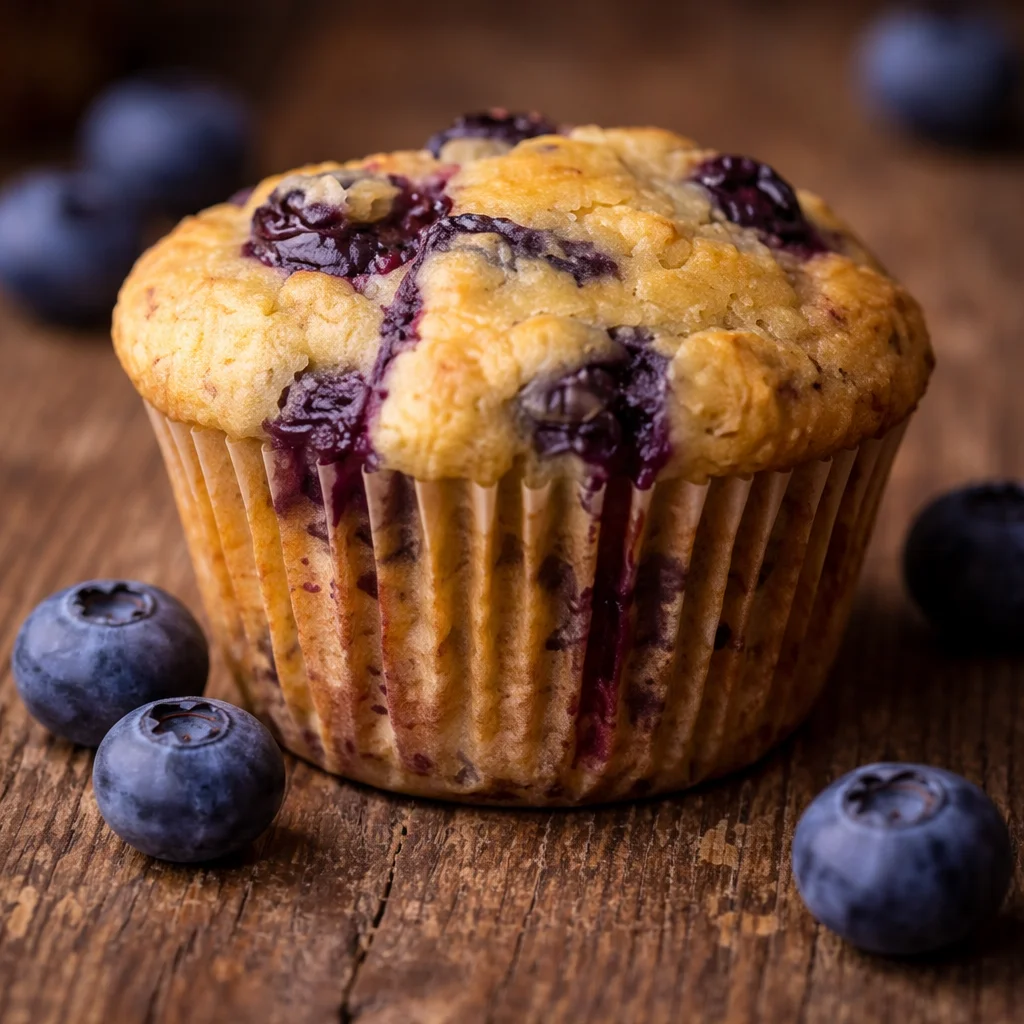
Healthy Greek Yogurt Blueberry Protein Muffins are my answer to busy mornings when I want something cozy, filling, and easy on digestion. They are soft, lightly sweet, and made with oat flour, Greek yogurt, and fiber-rich add-ins that actually keep you satisfied. If you have ever wanted a blueberry muffin that tastes like a treat but feels like a smart breakfast, this one delivers.
Key Gut-Friendly Ingredients: Blueberries, Greek Yogurt, Fiber, and Anti-Inflammatory Add-Ins
These muffins are one of those ‘safe breakfasts’ I keep coming back to especially on weeks when my stomach feels sensitive. The combo of Greek yogurt + oats keeps them filling without that heavy, overly-sweet muffin feeling.
Blueberries are the star. They bring natural sweetness, moisture, and they are loaded with antioxidants. I like fresh when they are in season, but frozen blueberries work great too. Just keep them frozen until you fold them in so they do not turn the batter purple.
Greek yogurt is my not so secret weapon. It adds protein, a soft texture, and that slight tang that makes the muffin taste “bakery” without needing a ton of sugar. If you tolerate dairy, plain Greek yogurt is a gut friendly staple for a lot of people.
Fiber is what makes these more satisfying. I use oats or oat flour plus little add ins like chia or flax. Fiber helps keep things moving, and it also helps with steadier energy so you are not crashing an hour later.
And if you want to nudge the flavor into cozy territory without extra sugar, try anti inflammatory add ins like:
Cinnamon, vanilla, and a tiny pinch of ginger. Not too much. Just enough to make the blueberry flavor pop.
Ingredient Swaps to Make the Muffins Gluten-Free, Low Sugar, and Microbiome Friendly
One thing I love about this recipe is how flexible it is. I have made it in a “use what I have” moment more times than I can count, and it still turns out good.
If you need gluten free, use certified gluten free oats or oat flour. You can also use a good 1 to 1 gluten free flour blend, but I still like adding some oats for that hearty, gut friendly feel.
If you are trying to keep things low sugar, do not worry, these muffins do not need a lot. Ripe bananas or unsweetened applesauce can add sweetness without going overboard. If you do add a sweetener, I prefer a small amount of maple syrup or honey. I avoid going heavy with sugar alcohols because they can bother some people.
For microbiome friendly choices, think simple:
Choose plain yogurt instead of flavored. Add fiber slowly if you are sensitive. And use gentle fats like olive oil or avocado oil instead of super processed options.
If you have been trying to understand your own digestion better, I shared a simple guide on common signs your gut may need extra support. It is a helpful next step if you are connecting the dots.
How to Make Healthy Greek Yogurt Blueberry Protein Muffins
I make these on a Sunday when I want my weekday self to feel taken care of. The batter comes together fast, and you do not need fancy tools. Just a bowl, a whisk, and a muffin pan.
What you will need
- 1 and 1/2 cups oat flour (or blend oats into flour)
- 1/2 cup old fashioned oats (optional for texture)
- 1 tablespoon chia seeds or ground flaxseed
- 1 teaspoon baking powder
- 1/2 teaspoon baking soda
- 1 to 2 teaspoons cinnamon
- Pinch of salt
- 2 eggs (or see variations below)
- 1 cup plain Greek yogurt
- 1/3 cup maple syrup or honey (or 1/4 cup if you like it less sweet)
- 2 tablespoons olive oil or melted coconut oil
- 1 teaspoon vanilla
- 1 and 1/4 cups blueberries (fresh or frozen)
Directions
- Heat oven to 350 F and line a muffin pan.
- In one bowl, mix oat flour, oats, chia or flax, baking powder, baking soda, cinnamon, and salt.
- In another bowl, whisk eggs, Greek yogurt, maple syrup, oil, and vanilla.
- Pour wet into dry and stir until just combined. Do not overmix.
- Fold in blueberries gently.
- Scoop into muffin cups. Fill about 3/4 full.
- Bake 18 to 22 minutes, until the tops spring back and a toothpick comes out mostly clean.
- Cool 10 minutes before eating. They set as they cool.
For me, the biggest win is that one muffin actually keeps me satisfied. Protein and fiber together make it feel like real breakfast, not dessert pretending to be breakfast.
Expert Baking Tips for Moist, High-Protein, Low-Inflammation Muffins
I am not a pastry chef. I just bake a lot, and I have made every muffin mistake possible. Here is what actually helps.
Do not overmix. When you stir too much, muffins get tough. Mix until you do not see dry flour streaks, then stop.
Use thick Greek yogurt. If your yogurt is runny, the batter can get loose. Thick yogurt makes the crumb tender and helps the muffins feel more filling.
Watch the bake time. Overbaking dries them out fast. Pull them when the center is set and they spring back lightly.
Do not overload the batter. I learned the hard way that too many mix-ins make the centers gummy. Blueberries plus one simple fiber add-in is usually perfect.
If you are building a small rotation of meals that feel good on your stomach, I also put together a simple list of gut-friendly dinners that are easy enough for busy nights.
Common Muffin Mistakes That Can Trigger Bloating or Digestive Issues
Everyone’s digestion is different, but I have noticed a few patterns that can make muffins feel heavier than they need to.
Too much sweetener is a big one. A sugar bomb muffin can hit your blood sugar hard, then you crash, then you snack again. It can also leave you feeling puffy.
Lots of ultra processed ingredients can do it too. Some packaged muffins are basically cake with a marketing team. I try to keep my ingredient list short enough that I can explain it to my kid.
Going wild with protein powder can backfire. I know, it sounds like a good idea. But too much can make muffins dry and some powders do not sit well for people. If you want to add it, start small, like one scoop, and add a splash of milk to balance the texture.
Not letting muffins cool is another sneaky issue. Hot muffins can feel heavier. Let them cool so the crumb sets and they digest a bit easier.
Best Add-Ins for Gut Health: Chia Seeds, Flaxseed, Oats, and Prebiotic Fiber
This is the fun part because you can customize without messing up the recipe.
Chia seeds make the muffins more filling and help hold moisture. Ground flaxseed adds a subtle nutty taste and more fiber.
Oats are my favorite for that steady energy feeling. They make the muffin feel like a real breakfast, not a dessert in disguise.
If you want to try prebiotic fiber, start slow. A small spoon of inulin or acacia fiber can work for some people, but it can also cause gas if you add too much too fast. I usually skip it unless I know my stomach is in a happy place that week.
Anti-Inflammatory Variations: Vegan, Dairy-Free, Gluten-Free, and High-Fiber Options
These are the swaps I have tried or tested enough to feel good about recommending.
Vegan: Replace eggs with two flax eggs (2 tablespoons ground flax mixed with 5 tablespoons water). Use a thick dairy free yogurt.
Dairy-free: Use coconut based or almond based Greek style yogurt. Pick unsweetened so you control the sugar.
Gluten-free: Use certified gluten free oats or oat flour. This recipe is basically built for it.
High-fiber: Add an extra tablespoon of chia and swap 1/4 cup oat flour for oat bran. Increase liquid slightly if the batter feels too thick.
And yes, you can still keep the vibe of Healthy Greek Yogurt Blueberry Protein Muffins even when you go dairy free. The texture changes a bit, but you still get that soft, snackable muffin that feels good on your stomach.
Foods and Ingredients to Avoid for Better Gut Health and Reduced Inflammation
I am not into fear mongering food. But if you are trying to make muffins that love you back, a few ingredients are worth limiting.
Very high amounts of refined sugar can be rough. I keep sweetness gentle and let blueberries do most of the work.
Greasy fats and heavy frostings turn muffins into something that sits like a rock. Save that for a special occasion dessert, not your everyday breakfast.
Artificial sweeteners are a personal tolerance thing. Some people do fine, others get bloated fast. If you are in the second group, you are not imagining it.
Huge portions matter too. Even healthy muffins can cause discomfort if you inhale three of them in five minutes. I have been there.
How to Serve Gut-Healthy Muffins for Breakfast, Snacks, and Blood Sugar Balance
I like these best when I pair them with something else so it feels like a complete mini meal. It also helps with blood sugar balance, especially if you are sensitive to carbs in the morning.
My go to serving ideas:
- One or two muffins with scrambled eggs
- Muffin plus a handful of walnuts or almonds
- Muffin with a spoon of extra Greek yogurt on the side
- Muffin and a berry smoothie for a quick breakfast
For me, Healthy Greek Yogurt Blueberry Protein Muffins are also perfect as a mid afternoon snack. They keep me from doing the “snack drawer spiral” at 3 pm.
Meal Prep and Storage Tips to Keep Muffins Fresh and Probiotic-Friendly
These store really well, which is kind of the whole point for me.
Let them cool completely before putting them away. If you seal them up while warm, the steam makes them soggy.
Storage plan that works in my kitchen:
Counter: 1 to 2 days in an airtight container.
Fridge: up to 5 days. I warm one for about 10 seconds so it tastes freshly baked.
Freezer: up to 3 months. Wrap individually so you can grab one whenever.
A quick note about probiotics: high heat can reduce live cultures, but Greek yogurt still adds protein and that classic tang. If you want probiotic benefits too, add a spoon of fresh yogurt on the side after baking.
Daily Gut Health Routine: Pairing Muffins with Microbiome-Boosting Foods
To make this part of a simple routine, pair your muffin with protein or healthy fats like eggs, nuts, or yogurt. Small consistent habits usually feel better than big overhauls.
If you prefer something drinkable in the morning, a simple berry and yogurt smoothie pairs well with these muffins and keeps breakfast balanced.
Internal Gut Health Resources: Anti-Inflammatory Recipes and Microbiome Guides
I started paying more attention to gut friendly cooking because I was tired of feeling uncomfortable after meals. It is not about being perfect. It is about having a handful of recipes that you know make you feel good.
When I plan meals for the week, I try to keep a few anti-inflammatory dinners in rotation so everything works together. It makes a bigger difference than focusing on just one recipe.
Common Questions
Can I use frozen blueberries?
Yes. Keep them frozen until you fold them in. That helps prevent the batter from turning purple and keeps the muffins from getting too wet.
How do I make these muffins higher protein?
Use extra thick Greek yogurt and consider adding one scoop of a gentle protein powder. If the batter gets thick, add a splash of milk to loosen it.
Why did my muffins turn out dry?
Usually it is overbaking or too much flour. Measure flour lightly, and start checking them a couple minutes early.
Can I make them low sugar without artificial sweeteners?
Totally. Use less maple syrup and add a ripe banana or unsweetened applesauce for natural sweetness.
Do these work for meal prep?
Yes, they are great in the fridge for a few days and they freeze well. I freeze them individually so I can grab one fast.
A Cozy Muffin Habit You Will Actually Keep
Healthy Greek Yogurt Blueberry Protein Muffins are a simple way to enjoy a cozy breakfast without the sugar overload.
If you want a breakfast that feels comforting but still supports your day, these Healthy Greek Yogurt Blueberry Protein Muffins are such a solid move. You get protein, fiber, and that classic blueberry muffin taste without the sugar overload. If you want a slightly lower sugar version with a softer texture, check out my Greek Yogurt Blueberry Muffins Low Sugar recipe next. Bake a batch, stash a few in the freezer, and future you is going to be very thankful. And if you try them, I hope they become one of those easy recipes you come back to on repeat.
Healthy Greek Yogurt Blueberry Protein Muffins
Ingredients
Method
- Preheat the oven to 350°F (175°C) and line a muffin pan.
- In a bowl, mix together the oat flour, oats, chia or flax, baking powder, baking soda, cinnamon, and salt.
- In a separate bowl, whisk together the eggs, Greek yogurt, maple syrup, oil, and vanilla.
- Pour the wet ingredients into the dry ingredients and stir until just combined. Do not overmix.
- Gently fold in the blueberries.
- Scoop the batter into the muffin cups, filling them about 3/4 full.
- Bake for 18 to 22 minutes, until the tops spring back and a toothpick comes out mostly clean.
- Cool for 10 minutes before serving.