
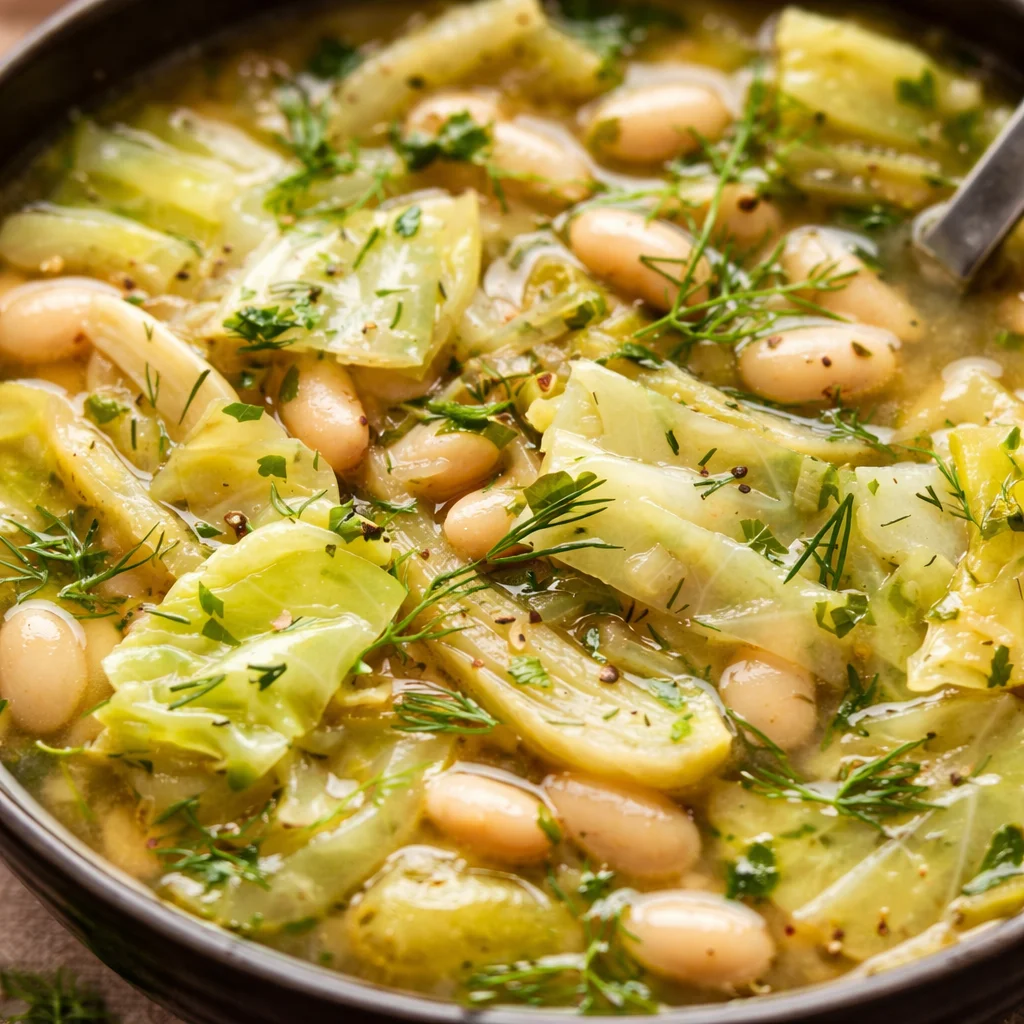
Lemon Dill Cabbage Soup is my go to fix for those weeks when my stomach feels a little grumpy and I still want something that tastes bright and fresh. You know the feeling, you want comfort food, but you do not want that heavy, sleepy after dinner slump. This soup is light, lemony, and somehow still cozy, especially when the dill hits the hot broth. It is also the kind of meal that makes you feel like you are doing something kind for your body without trying too hard. If you have cabbage hanging out in the fridge and you are not sure what to do with it, this is your sign.
Key Ingredients for Digestive Wellness: From Prebiotic Cabbage to Resistant Starch Beans
Let us talk about why this soup feels so good to eat. The base is cabbage, which is one of those humble veggies that does not get enough credit. Cabbage brings gentle bulk and prebiotic fiber, which basically means it helps feed the good gut bugs.
Then we bring in white beans. Beans add creamy comfort and plant protein, plus fiber that helps keep things moving. If you cook and cool beans, they can also develop more resistant starch, which your gut microbes love. I do not get too science-y when I cook, but I do notice I feel better when meals include beans and vegetables together.
Here is what I usually grab for this Lemon Dill Cabbage Soup:
- Green cabbage (or savoy if I have it)
- White beans (cannellini or great northern)
- Carrots and celery for that cozy soup base
- Onion and garlic
- Lemon zest and juice
- Fresh dill (or dried in a pinch)
- Broth (veg broth or chicken broth)
- Olive oil, salt, pepper
And if you are into lemony soups in general, you might also like this cozy bowl I make on repeat: Bright and Cozy Lemon Lentil Soup. It is a different vibe, but the same bright citrus comfort.
Anti-Inflammatory Benefits of Cruciferous Vegetables and Plant-Based Proteins
Cabbage is a cruciferous vegetable, like broccoli and cauliflower. These veggies are known for containing plant compounds that support the body’s natural detox systems. I am not claiming soup is magic, but I am saying meals like this can be a smart choice when you want to eat in a way that feels calming and steady.
The plant based protein from beans also helps make the soup feel like a real meal, not just a starter. I find that when I eat enough protein and fiber together, I snack less later and my energy feels more even.
For extra anti inflammatory support, I like adding small flavor boosters like garlic, dill, lemon, and sometimes turmeric. The key is not to overload the pot. You want the soup to stay bright and zesty, not muddy or bitter.
Step-by-Step Instructions for the Perfect Gut-Friendly Cabbage and White Bean Soup
This is the part where I tell you the truth. This soup is easy. Like, weeknight easy. And it tastes even better the next day, which is honestly one of my favorite qualities in a recipe.
What you will do
Follow this simple flow and you will be fine:
- Heat a little olive oil in a big pot, then add chopped onion, carrot, and celery. Cook until softened, about 6 to 8 minutes.
- Add garlic and stir for about 30 seconds, just until it smells amazing.
- Add chopped cabbage and a pinch of salt. Let it cook down for 3 to 5 minutes so it starts to soften.
- Pour in broth, bring to a gentle simmer, then cook 15 to 20 minutes until the cabbage is tender.
- Stir in rinsed white beans and simmer 5 more minutes.
- Turn off the heat. Add lemon zest, lemon juice, and chopped dill. Taste and adjust salt and pepper.
My biggest tip is to add the lemon and dill at the end. Lemon can turn a little flat if it boils too long, and dill stays more fresh and fragrant when it is not cooked forever.
Also, if you want another cozy soup with a different twist, this one is such a good dinner option: Best Cauliflower Chicken Soup for a Cozy Healthy Dinner.
The Science of Fiber: How This Recipe Supports Regularity and Reduces Bloating
So here is what is happening in a simple, real life way. This soup has fiber from cabbage, beans, carrots, and celery. Fiber helps support regularity by adding bulk and helping your digestion move along at a steady pace.
But if you are someone who gets bloated easily, fiber can be a little tricky. The trick is to increase it gently and drink enough water. That is one reason I like soups for gut support. They are hydrating by nature, so you are not just throwing fiber at your body without any fluid.
Another reason this Lemon Dill Cabbage Soup feels soothing is that it is warm, soft, and easy to chew. That matters more than people think. When I am stressed or rushing, I tend to eat too fast. Soup slows me down.
Essential Cooking Tips to Neutralize Lectins and Improve Legume Digestibility
Beans are wonderful, but if you have ever had a bean regret situation, you are not alone. The good news is you can make beans easier to digest with a few simple habits.
If you are using canned beans:
- Rinse them well in a colander. This helps remove some of the compounds that can cause gas.
- Simmer them in the soup long enough to warm through, but do not boil them into mush unless you want a creamy texture.
If you are using dried beans:
- Soak overnight if you can, then discard the soaking water.
- Cook them fully until tender before adding to the soup.
Lectins get talked about a lot online, sometimes in a scary way. In normal cooking, properly cooked beans are safe for most people. The real takeaway is simple: do not undercook dried beans, and you will be in good shape.
Best Cabbage Varieties for Gut Health: Savoy, Red, and Green Comparison
I have made this soup with almost every cabbage situation imaginable. Here is the quick and helpful breakdown:
Green cabbage is the classic. It is affordable, mild, and softens nicely without disappearing. This is my default for Lemon Dill Cabbage Soup.
Savoy cabbage is more tender with crinkly leaves. It cooks a little faster and feels slightly more delicate in soup. If you want a softer bowl, choose savoy.
Red cabbage is beautiful, but it will turn your soup pinkish purple. Flavor is a bit stronger and earthier. It is still tasty, just different. If you do not mind the color shift, go for it.
Anti-Inflammatory Flavor Boosters: Turmeric, Garlic, and Ginger Additions
This soup is already bright and herby, but sometimes I want an extra little boost, especially in colder months or when I feel run down.
Here are my favorite add ins that still keep the soup’s personality intact:
- Turmeric: Start with 1 quarter teaspoon. A little goes a long way.
- Ginger: Fresh grated ginger adds a gentle warmth that plays surprisingly well with lemon.
- Extra garlic: I mean, I rarely complain about extra garlic.
If you add turmeric, a small pinch of black pepper helps it work better in the body. Also, turmeric can stain, so do not wear your favorite white shirt while you are stirring and splashing.
If you like the idea of feel good, warming spices in soup, you might want to check out this one too: Clean Eating Golden Detox Soup Youll Love Daily. It leans into that golden, cozy vibe.
Common Mistakes to Avoid When Making Digestive Support Soups
I have made every mistake on this list at least once, so learn from my chaotic soup past.
Overcooking the cabbage can make it smell stronger and feel too soft. Simmer until tender, not lifeless.
Adding lemon too early can dull the flavor. Add it at the end for that fresh pop.
Skipping the salt is a big one. If your soup tastes flat, it probably needs salt, not more lemon.
Not rinsing canned beans can make the broth taste a little murky and can be harder on sensitive stomachs.
Going too heavy on dill can make the soup taste like a pickle jar. Start small, taste, then add more if you want.
Recipe Variations: Low-FODMAP, Vegan, and Bone Broth Options
I love a flexible recipe, especially when cooking for different bodies and preferences.
Low-FODMAP-ish option: Use the green parts of scallions instead of onion, and use garlic infused olive oil instead of garlic cloves. Beans can be tricky for low FODMAP, but some people do better with a smaller portion of canned lentils or well rinsed canned beans. You know your body best.
Vegan option: Use veggie broth and add a bit more olive oil for richness. You can also stir in a spoonful of tahini at the end for a creamy finish.
Bone broth option: Swap in chicken bone broth for extra richness and a deeper savory flavor. It makes the soup feel more grounding, especially in winter.
No matter which way you do it, the lemon and dill combo keeps it tasting fresh.
Meal Prep and Storage: How to Keep Your Gut-Healing Soup Fresh for the Week
This is one of those soups that makes you feel like you have your life together on a random Tuesday.
Storage tips:
- Cool the soup, then store in airtight containers.
- It keeps well in the fridge for about 4 days.
- For freezing, leave a little space in the container for expansion and freeze up to 2 months.
When reheating, warm it gently. If the dill flavor fades a bit, you can add a small sprinkle of fresh dill and a tiny squeeze of lemon to wake it back up.
And yes, Lemon Dill Cabbage Soup tastes better the next day. The flavors settle, the broth gets more savory, and the whole thing just feels more put together.
Foods to Pair with This Soup for a Complete Gut-Brain Axis Meal
If you want to turn this into a full meal that feels satisfying and supportive, here is what I like to serve with it.
Easy pairings:
- Simple rice or quinoa on the side if you want extra comfort
- A slice of toasted sourdough if you tolerate it well
- A small salad with olive oil and a pinch of salt
- Plain yogurt or kefir on the side if dairy works for you, for a probiotic boost
I also love adding a handful of chopped parsley or baby spinach right at the end, just for extra green goodness.
Internal Linking: Explore Our 7-Day Gut Reset and Anti-Inflammatory Food Lists
If you are in a season where you are trying to eat a little cleaner and feel a little lighter, I find it helps to keep a short list of go to meals. Soups are perfect for that because they are easy to digest and easy to repeat.
Along with this Lemon Dill Cabbage Soup, I rotate lemony lentil soup, golden spiced veggie soup, and cozy chicken based soups depending on the week. Having a mini collection of staples makes it so much easier to stay consistent without feeling bored.
Common Questions
Can I make this soup if I only have dried dill?
Yes. Use less than you think, start with about 1 teaspoon dried dill, then taste at the end. Fresh dill is brighter, but dried still works.
Do I have to blend it?
Nope. I keep it brothy and chunky. If you want it creamier, you can mash some of the beans with a spoon right in the pot.
Is this soup good for bloating?
It can be, especially because it is warm and hydrating. If beans bloat you, start with a smaller serving or reduce the beans and add more carrots and cabbage.
What if I hate cabbage smell?
Do not overcook it, and keep the simmer gentle. The lemon and dill also help a lot with freshness.
Can I add chicken?
Absolutely. Shredded cooked chicken turns it into a heartier bowl. Just add it near the end so it does not dry out.
A Bright Bowl Worth Repeating
If you want a soup that feels light but still comforting, Lemon Dill Cabbage Soup is such a solid recipe to keep in your back pocket. You get fiber, plant protein, and that fresh lemon dill flavor that makes everything taste alive. If you want more cabbage inspiration, this Cabbage Soup Recipe (Easy Kapusniak for Summer) is a fun, seasonal take, and for another herby bean moment, I also love Herby White Bean Soup with Cabbage | The Modern Proper. Make a pot, taste it the next day, and tell me you do not feel at least a little more taken care of.

Lemon Dill Cabbage Soup
Ingredients
Method
- Heat olive oil in a big pot over medium heat.
- Add chopped onion, carrot, and celery, and cook until softened, about 6 to 8 minutes.
- Add minced garlic and stir for about 30 seconds, just until fragrant.
- Add chopped cabbage and a pinch of salt. Cook for 3 to 5 minutes until it starts to soften.
- Pour in broth and bring to a gentle simmer. Cook for 15 to 20 minutes until the cabbage is tender.
- Stir in the rinsed white beans and simmer for an additional 5 minutes.
- Turn off the heat and add lemon zest, lemon juice, and chopped dill. Adjust salt and pepper to taste.