
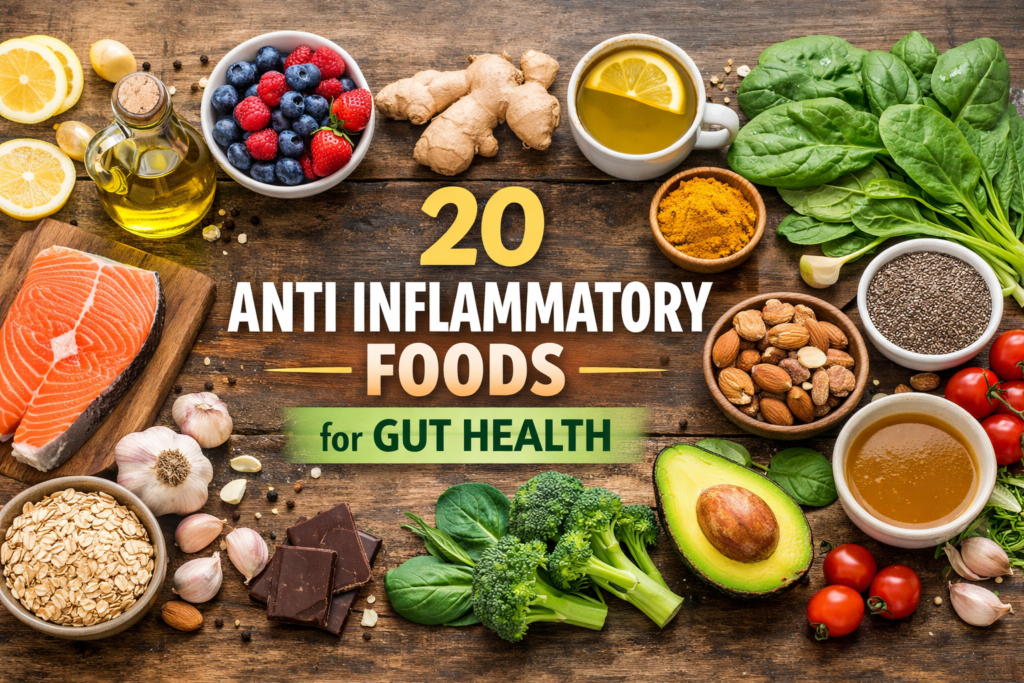
20 Anti-Inflammatory Foods for Gut Health and Energy
Introduction
Anti inflammatory foods can help reduce chronic inflammation, improve digestion, and support a healthy gut naturally. Adding anti inflammatory foods to your daily diet is one of the best ways to boost energy and heal your gut.
Many people struggle with bloating, fatigue, brain fog, skin problems, and slow digestion, thinking these issues are normal. In reality, these are often signs of internal inflammation and an imbalanced gut.
Your gut and inflammation are deeply connected. When inflammation rises in the body, it disrupts gut bacteria, weakens digestion, and affects energy and mood. Over time, this can lead to more serious digestive and metabolic problems.
The good news?
Certain anti-inflammatory foods can help repair your gut, restore healthy digestion, and support your energy naturally.
By adding the right foods to your daily diet, you can reduce inflammation, support your microbiome, and help your gut heal from the inside out.
In this complete guide, you’ll discover:
- The most powerful anti-inflammatory foods for gut health
- How these foods reduce inflammation naturally
- What to avoid if you want a healthy gut
- How to build a simple anti-inflammatory diet
- Daily habits to support gut healing
If you want better digestion, more energy, and a healthier gut, these foods can transform your health.
Why Inflammation Damages Gut Health
Inflammation is the body’s natural defense mechanism.
However, when it becomes chronic, it begins to damage tissues — especially the gut lining.
Chronic inflammation can:
- Disrupt gut bacteria balance
- Slow digestion
- Increase bloating
- Cause fatigue
- Affect metabolism
- Weaken immunity
A healthy gut requires a balanced microbiome and low inflammation levels.
That’s why your diet plays a major role in gut healing.
Anti-inflammatory foods help calm the digestive system and support beneficial gut bacteria.
How Anti-Inflammatory Foods Heal Your Gut
Certain foods contain nutrients that reduce inflammation and support gut repair.
These include:
- Antioxidants
- Fiber
- Healthy fats
- Polyphenols
- Vitamins and minerals
Together, these nutrients help restore gut balance and improve digestion.
Now let’s look at the most powerful anti-inflammatory foods you can add to your diet.
1. Avocado
Avocados are rich in healthy fats and fiber that support gut health and reduce inflammation.
Benefits:
- Supports gut bacteria
- Reduces inflammation
- Improves digestion
- Supports heart health
Add avocado to salads, toast, or smoothies.
2. Blueberries
Blueberries are packed with antioxidants that help reduce inflammation and support gut bacteria.
Benefits:
- Improve gut balance
- Support digestion
- Reduce oxidative stress
- Boost immunity
Eat them fresh or add to yogurt and smoothies.
3. Salmon (Omega-3 Power)
Salmon is one of the best anti-inflammatory foods for gut and overall health.
Benefits:
- Rich in omega-3
- Reduces inflammation
- Supports metabolism
- Improves brain health
Eat 2–3 times per week.
4. Yogurt and Kefir
Probiotic-rich foods like yogurt and kefir support gut microbiome balance.
Benefits:
- Add beneficial bacteria
- Improve digestion
- Reduce bloating
- Strengthen immunity
Choose unsweetened versions.
5. Spinach and Leafy Greens
Leafy greens provide fiber and antioxidants that support gut health.
Benefits:
- Reduce inflammation
- Improve digestion
- Support detox
- Boost energy
Add to smoothies and meals.
6. Olive Oil (Liquid Gold for Your Gut)
Extra virgin olive oil is one of the best anti-inflammatory foods you can consume daily.
Benefits:
- Reduces gut inflammation
- Supports healthy bacteria
- Improves digestion
- Protects gut lining
Use olive oil in salads, vegetables, and cooking instead of processed oils.
7. Chia Seeds
Chia seeds are rich in fiber and omega-3 fatty acids that support gut healing.
Benefits:
- Feed beneficial gut bacteria
- Reduce inflammation
- Improve digestion
- Support regular bowel movements
Add to smoothies, yogurt, or oatmeal.
8. Turmeric (Powerful Anti-Inflammatory)
Turmeric contains curcumin, one of the strongest natural anti-inflammatory compounds.
Benefits:
- Reduces gut inflammation
- Supports digestion
- Improves liver detox
- Supports immunity
Add turmeric to warm drinks, soups, or meals.
9. Ginger
Ginger helps calm the digestive system and reduce bloating.
Benefits:
- Improves digestion
- Reduces gas and bloating
- Anti-inflammatory
- Supports gut comfort
Add fresh ginger to tea or smoothies.
10. Oats
Oats contain soluble fiber that feeds beneficial gut bacteria.
Benefits:
- Improve digestion
- Support gut microbiome
- Reduce inflammation
- Stabilize blood sugar
Eat oats for breakfast with fruit and seeds.
11. Walnuts
Walnuts are rich in omega-3 and antioxidants.
Benefits:
- Reduce inflammation
- Support brain and gut health
- Improve microbiome diversity
Eat a small handful daily.
12. Green Tea
Green tea contains powerful antioxidants that reduce inflammation.
Benefits:
- Supports metabolism
- Reduces gut inflammation
- Supports detox
- Improves digestion
Drink 1–2 cups daily.
13. Garlic
Garlic acts as a natural prebiotic that feeds beneficial gut bacteria.
Benefits:
- Supports microbiome balance
- Reduces inflammation
- Improves digestion
- Supports immunity
Add fresh garlic to meals.
14. Sweet Potatoes
Sweet potatoes are rich in fiber and antioxidants.
Benefits:
- Support digestion
- Reduce inflammation
- Improve gut bacteria
- Stabilize energy
Great roasted or baked.
15. Almonds
Almonds support gut health and provide healthy fats.
Benefits:
- Reduce inflammation
- Support digestion
- Provide fiber
- Improve energy
Eat raw or soaked almonds.
16. Broccoli
Broccoli contains compounds that support gut detox and reduce inflammation.
Benefits:
- Supports liver detox
- Improves gut bacteria
- Rich in fiber
- Anti-inflammatory
Steam lightly for best digestion.
17. Dark Chocolate (70%+)
High-quality dark chocolate contains antioxidants that support gut health.
Benefits:
- Supports beneficial bacteria
- Reduces inflammation
- Improves mood
Eat in moderation.
18. Apples
Apples contain pectin fiber that supports digestion.
Benefits:
- Feed good bacteria
- Improve digestion
- Reduce inflammation
Eat with skin.
19. Bone Broth
Bone broth supports gut lining repair.
Benefits:
- Supports gut healing
- Improves digestion
- Reduces inflammation
- Rich in collagen
Drink warm.
20. Berries (Strawberries, Raspberries)
Berries are rich in antioxidants and fiber.
Benefits:
- Support microbiome
- Reduce inflammation
- Improve digestion
- Boost immunity
Add daily to breakfast or smoothies.
Anti-Inflammatory Daily Diet Plan (Simple)
Morning
- Gut healing breakfast
- Smoothie or oats
- Green tea
Lunch
- Protein + vegetables
- Olive oil
- Avocado
Snack
- Yogurt or nuts
- Fruit
Dinner
- Salmon or eggs
- Vegetables
- Sweet potato
Consistency reduces inflammation quickly.
Foods That Increase Inflammation and Damage Your Gut
If you want to heal your gut and reduce inflammation, removing harmful foods is just as important as adding healthy ones.
These foods increase inflammation, disrupt gut bacteria, and slow digestion.
Avoid or reduce:
- Refined sugar
- Soda and sugary drinks
- Ultra-processed foods
- Fast food
- Fried foods
- Artificial sweeteners
- Excess alcohol
- Processed meats
These foods feed harmful bacteria and weaken your gut lining over time.
Replacing them with anti-inflammatory foods can dramatically improve digestion and energy.
Signs Your Body Is Reducing Inflammation
When you start eating anti-inflammatory foods consistently, your body begins to respond within days or weeks.
Here are positive signs your gut and body are healing:
- Less bloating after meals
- Better digestion
- More stable energy
- Reduced sugar cravings
- Clearer skin
- Better focus
- Improved sleep
- Lighter feeling body
These changes indicate your gut microbiome and inflammation levels are improving.
7-Day Anti-Inflammatory Diet Plan for Gut Health
Follow this simple plan to start reducing inflammation and healing your gut.
Day 1–2
Focus on whole foods:
- Oats or gut-healing smoothie
- Vegetables
- Salmon or eggs
- Olive oil
Day 3–4
Add more fiber:
- Avocado
- Berries
- Yogurt or kefir
- Nuts and seeds
Day 5–7
Remove inflammatory foods:
- No soda
- No fast food
- Reduce sugar
- Drink more water
Most people notice less bloating and better digestion within the first week.
Daily Habits That Reduce Inflammation Fast
Food is powerful — but habits matter too.
For best results:
- Drink enough water
- Sleep 7–8 hours
- Walk daily
- Reduce stress
- Avoid late heavy meals
- Eat slowly
Small daily habits support long-term gut healing.
FAQ
What is the best anti-inflammatory food for gut health?
Foods rich in fiber, omega-3, and antioxidants like berries, salmon, yogurt, and olive oil are among the best for reducing inflammation and supporting gut health.
How long does it take to reduce inflammation in the gut?
Many people notice improvements in digestion and energy within 2–3 weeks of following an anti-inflammatory diet.
Can anti-inflammatory foods heal gut health?
Yes. Anti-inflammatory foods support gut bacteria balance, reduce irritation, and help repair the gut lining naturally.
What should I avoid to reduce inflammation?
Avoid excess sugar, processed foods, soda, and fried foods, as they increase inflammation and damage gut bacteria.
Is an anti-inflammatory diet good for energy?
Yes. Reducing inflammation improves digestion and nutrient absorption, leading to better energy and focus.
Conclusion (STRONG GOOGLE ENDING)
Chronic inflammation can silently damage your gut, digestion, and energy levels.
However, the right foods can help restore balance and support your body naturally.
By adding anti-inflammatory foods to your daily diet and reducing processed foods, you can improve digestion, boost energy, and support long-term gut health.
Start small.
Stay consistent.
Your gut — and your entire body — will feel the difference.
20 Anti-Inflammatory Foods That Heal Your Gut Naturally