
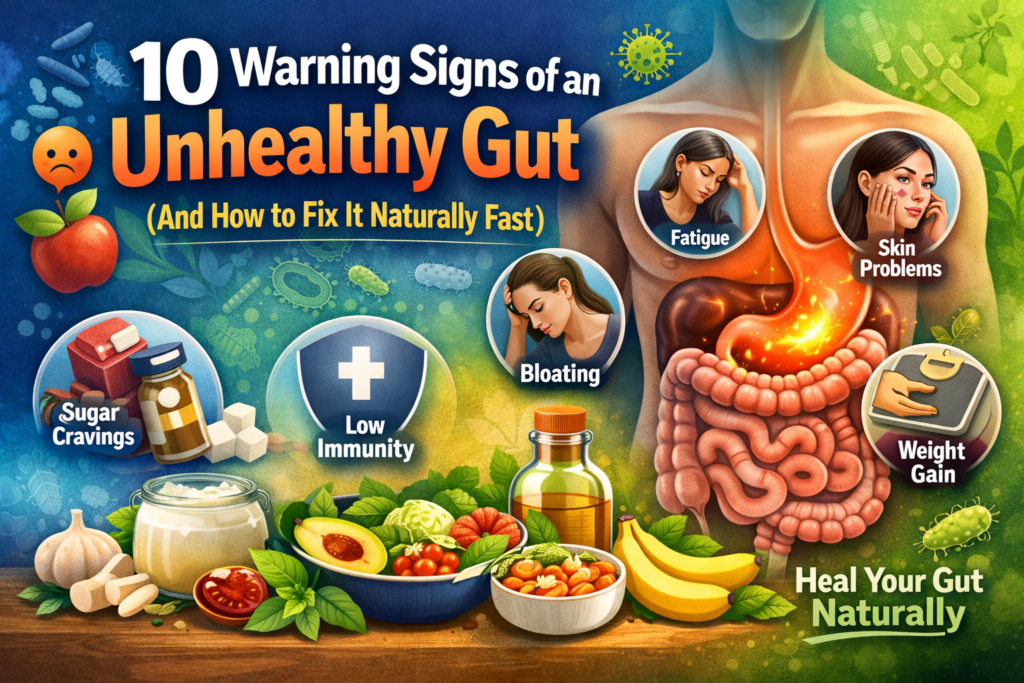
10 Signs of an Unhealthy Gut (And How to Fix It Naturally Fast)
Introduction
Your gut health affects almost every part of your body — from digestion and energy levels to immunity, skin health, and even mood. When your gut is balanced and healthy, your body functions smoothly. But when it’s not, you may experience bloating, fatigue, sugar cravings, skin issues, and weight problems.
Many people don’t realize that poor gut health is often the hidden cause behind common daily symptoms. The good news? Once you recognize the warning signs of an unhealthy gut, you can start fixing it naturally with simple diet and lifestyle changes.
In this complete guide, you’ll discover:
- The most common unhealthy gut signs
- What causes poor gut health
- How to fix gut health naturally
- The best foods to improve digestion and gut microbiome balance
If you want to improve digestion naturally, boost energy, and feel better overall — this guide is for you.
Why Gut Health Is So Important
Your gut is home to trillions of bacteria known as the gut microbiome. These beneficial bacteria help:
- Break down food
- Absorb nutrients
- Regulate inflammation
- Support immune function
- Produce mood-supporting neurotransmitters
When your gut microbiome is balanced, you may notice:
- Better digestion
- Stable energy levels
- Stronger immunity
- Less bloating
- Healthier skin
- Easier weight management
But when harmful bacteria dominate, signs of an unhealthy gut begin to appear throughout your body.
10 Warning Signs of an Unhealthy Gut
1. Constant Bloating and Gas
Frequent bloating is one of the most common unhealthy gut signs.
If you feel swollen or uncomfortable after meals regularly, your gut bacteria may be imbalanced.
How to fix it naturally
- Reduce ultra-processed foods
- Eat more fiber-rich foods
- Add probiotic foods like yogurt and kefir
- Drink more water
- Eat slowly and chew properly
Many people notice reduced bloating within 1–2 weeks.
2. Constipation or Irregular Bowel Movements
A healthy gut should eliminate waste regularly and comfortably.
Constipation, diarrhea, or irregular digestion often signal gut imbalance.
How to fix gut health
- Increase fiber gradually (vegetables, oats, chia seeds)
- Stay hydrated
- Add prebiotic foods like bananas and garlic
- Walk daily
- Reduce fast food and fried foods
Consistency helps restore natural digestion.
3. Constant Fatigue and Low Energy
Feeling tired even after sleeping well can be linked to poor gut health.
When your gut doesn’t absorb nutrients properly, your energy levels drop.
How to fix it
- Improve diet quality
- Reduce sugar and refined carbs
- Add healthy fats (olive oil, avocado, nuts)
- Sleep at consistent times
- Eat gut-friendly foods
Better gut health often improves energy within weeks.
4. Skin Problems (Acne, Eczema, Dull Skin)
Your skin reflects your internal health.
Inflammation and toxins from poor digestion often show up as skin issues.
How to fix it naturally
- Drink more water
- Reduce sugar and dairy if sensitive
- Eat anti-inflammatory foods
- Add probiotic foods
- Eat more fruits and vegetables
Improving gut microbiome balance often improves skin clarity.
5. Frequent Sugar Cravings
Bad gut bacteria feed on sugar and can trigger strong cravings.
The more sugar you eat, the more harmful bacteria grow.
How to fix it
- Reduce added sugar gradually
- Eat protein-rich meals
- Add fiber and healthy fats
- Stay hydrated
- Improve sleep
Cravings usually decrease within 1–2 weeks.
6. Weak Immune System
About 70% of your immune system lives in your gut.
Frequent colds or infections may signal poor gut health.
How to improve immunity
- Eat probiotic foods regularly
- Add garlic, ginger, and turmeric
- Sleep well
- Reduce stress
- Eat whole natural foods
A balanced gut supports strong immunity.
7. Difficulty Losing Weight
Gut imbalance can affect metabolism, hunger hormones, and fat storage.
How to support weight balance
- Increase fiber intake
- Reduce sugar
- Avoid ultra-processed foods
- Improve sleep
- Stay active daily
Healthy gut bacteria help regulate weight naturally.
8. Brain Fog and Mood Changes
Your gut and brain are connected through the gut-brain axis.
Poor gut health can affect mood, focus, and mental clarity.
How to fix it
- Eat whole foods
- Reduce processed foods
- Manage stress
- Add omega-3 foods
- Get quality sleep
A healthy gut supports a clear mind.
9. Bad Breath (Even After Brushing)
Persistent bad breath may originate from the gut rather than the mouth.
How to fix it
- Improve digestion
- Drink more water
- Reduce sugar
- Add probiotic foods
- Eat slowly
Improved digestion often leads to fresher breath.
10. Food Intolerances
If certain foods suddenly cause discomfort, your gut lining may be irritated.
How to heal your gut naturally
- Identify trigger foods
- Eat simple whole meals
- Add fermented foods
- Avoid ultra-processed foods
- Give your gut time to heal
Gut healing requires consistency.
Best Foods for Gut Health
| Food | Benefit for Gut |
|---|---|
| Yogurt | Probiotics for microbiome |
| Kefir | Restores gut bacteria |
| Oats | Rich in fiber |
| Bananas | Natural prebiotics |
| Garlic | Feeds good bacteria |
| Olive oil | Anti-inflammatory |
| Chia seeds | Fiber + omega-3 |
| Avocado | Healthy fats |
| Vegetables | Improve digestion naturally |
Adding these foods daily helps restore gut balance.
Daily Habits to Fix Gut Health Naturally
Morning
- Warm water with lemon
- Light healthy breakfast
- Avoid sugary drinks
During the Day
- Eat whole foods
- Add fiber-rich vegetables
- Drink enough water
- Walk daily
Evening
- Light dinner
- Avoid heavy late meals
- Reduce sugar
- Sleep at regular time
Small daily habits create powerful gut improvements.
How Long Does It Take to Heal Gut Health?
Most people notice improvements within 2–4 weeks after improving their diet and lifestyle.
Long-term gut healing depends on consistency and healthy habits.
FAQ
What are the main signs of an unhealthy gut?
Bloating, fatigue, sugar cravings, digestive problems, skin issues, and weak immunity are common signs.
How can I fix gut health naturally?
Focus on whole foods, fiber, probiotics, hydration, sleep, and stress management.
What foods damage gut health?
Processed foods, excess sugar, artificial sweeteners, soda, and fried foods can harm gut bacteria.
Can gut health affect mood?
Yes. The gut and brain are closely connected, and poor gut health can impact mood and focus.
How do I reset my gut health?
Reduce processed foods, eat fiber-rich meals, add probiotics, sleep well, and stay hydrated.
Conclusion
Taking care of your gut is one of the most powerful ways to improve your overall health.
When your gut is balanced, digestion, energy, mood, and immunity all improve.
By recognizing the warning signs early and following simple daily habits, you can restore your gut naturally and feel better within weeks.
Start today.
Small daily changes can transform your gut health — and your life.