
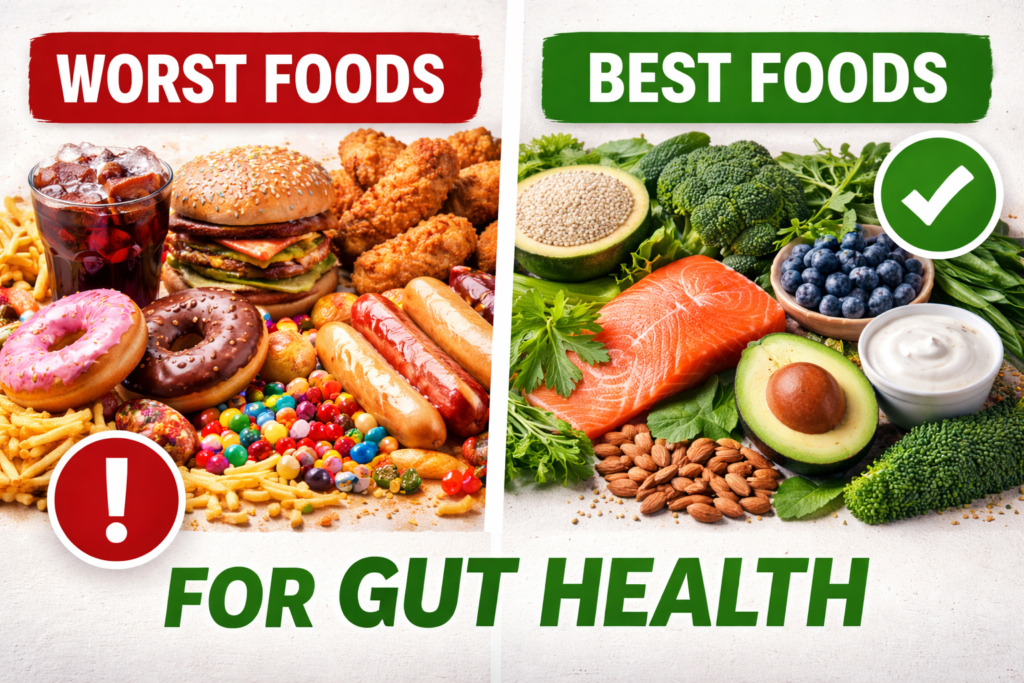
Worst Foods for Gut Health (Avoid These for Better Digestion)
Introduction
Your gut health affects almost every part of your body — from digestion and immunity to energy and mood. When your gut microbiome is balanced, you feel lighter, healthier, and more energized. But when it’s not, you may experience bloating, fatigue, inflammation, and digestive discomfort.
Many people focus on what to eat for gut health, but knowing what to avoid is just as important. Certain foods can damage your gut bacteria, increase inflammation, and disrupt digestion.
In this guide, you’ll discover the worst foods for gut health and what to eat instead to support a healthier digestive system naturally.
Why Gut Health Matters
Your gut is home to trillions of beneficial bacteria that help break down food, absorb nutrients, and support your immune system. This ecosystem is known as the gut microbiome.
When the microbiome becomes unbalanced, harmful bacteria can grow and cause problems such as:
- Bloating
- Constipation
- Gas
- Low energy
- Inflammation
- Digestive discomfort
Avoiding gut-damaging foods is one of the fastest ways to improve digestion and restore balance.
10 Worst Foods for Gut Health
1. Highly Processed Foods
Ultra-processed foods often contain preservatives, additives, and artificial ingredients that harm beneficial gut bacteria.
Examples:
- Packaged snacks
- Fast food
- Frozen processed meals
- Instant noodles
These foods reduce healthy gut bacteria and increase inflammation.
2. Excess Sugar
Too much sugar feeds harmful bacteria in the gut and can disrupt microbiome balance.
High-sugar foods to limit:
- Candy
- Soda
- Pastries
- Sugary cereals
- Sweetened drinks
Reducing sugar can quickly improve gut health and energy levels.
3. Artificial Sweeteners
Artificial sweeteners may negatively affect gut bacteria and digestion.
Common examples:
- Aspartame
- Sucralose
- Saccharin
- Diet sodas
They can disrupt microbiome balance and increase digestive discomfort.
4. Fried Foods
Fried foods are high in unhealthy fats that can increase inflammation and slow digestion.
Examples:
- French fries
- Fried chicken
- Fast food
- Deep-fried snacks
These foods are harder to digest and may cause bloating.
5. Processed Meats
Processed meats often contain preservatives and additives that may harm gut health.
Examples:
- Sausages
- Hot dogs
- Bacon
- Deli meats
Eating them frequently can negatively impact gut bacteria.
6. Refined Carbohydrates
Refined carbs lack fiber, which is essential for feeding good gut bacteria.
Examples:
- White bread
- White pasta
- Pastries
- White rice
Replacing refined carbs with whole grains supports digestion.
7. Alcohol (Excessive)
Too much alcohol can irritate the gut lining and disrupt microbiome balance.
Effects:
- Increased inflammation
- Poor digestion
- Reduced beneficial bacteria
Moderation is key for gut health.
8. Dairy for Sensitive Individuals
Some people experience bloating or discomfort from dairy products.
Common triggers:
- Milk
- Cream
- Ice cream
If you notice symptoms, try lactose-free or fermented options like yogurt.
9. Fast Food
Fast food is often high in unhealthy fats, sugar, and additives that harm gut bacteria.
Frequent consumption can:
- Increase inflammation
- Slow digestion
- Cause bloating
Choosing whole foods instead supports a healthier gut.
10. Low-Fiber Diet
A diet low in fiber starves beneficial gut bacteria and affects digestion.
Fiber supports:
- Regular bowel movements
- Healthy microbiome
- Reduced inflammation
Adding fiber-rich foods is essential for gut health.
Better Alternatives for Gut Health
| Avoid | Choose Instead |
|---|---|
| Sugary snacks | Fresh fruits |
| Soda | Water or herbal tea |
| White bread | Whole grains |
| Fried foods | Grilled foods |
| Processed foods | Whole natural foods |
These simple swaps can improve digestion quickly.
Signs Your Diet Is Hurting Your Gut
You may need to change your diet if you experience:
- Frequent bloating
- Gas
- Constipation
- Low energy
- Food sensitivities
Improving your food choices can restore gut balance.
Tips to Heal Your Gut Naturally
- Eat more fiber-rich foods
- Add probiotic foods
- Drink enough water
- Reduce processed foods
- Manage stress
- Sleep well
Consistency is key to long-term gut health.
FAQ
What foods damage gut health the most?
Highly processed foods, sugar, artificial sweeteners, and fried foods can harm gut bacteria and digestion.
How can I heal my gut quickly?
Focus on whole foods, fiber, probiotics, and hydration while reducing sugar and processed foods.
Is sugar bad for gut health?
Excess sugar can disrupt microbiome balance and increase inflammation.
How long does it take to improve gut health?
Many people notice improvement within a few weeks of changing diet and lifestyle.
Conclusion
Your gut health plays a major role in your overall well-being. Avoiding foods that damage your gut is one of the fastest ways to improve digestion and feel better.
By reducing processed foods, sugar, and unhealthy fats while focusing on whole foods and fiber, you can restore balance and support a healthier gut naturally.
Small daily changes can lead to big improvements in digestion, energy, and overall health.